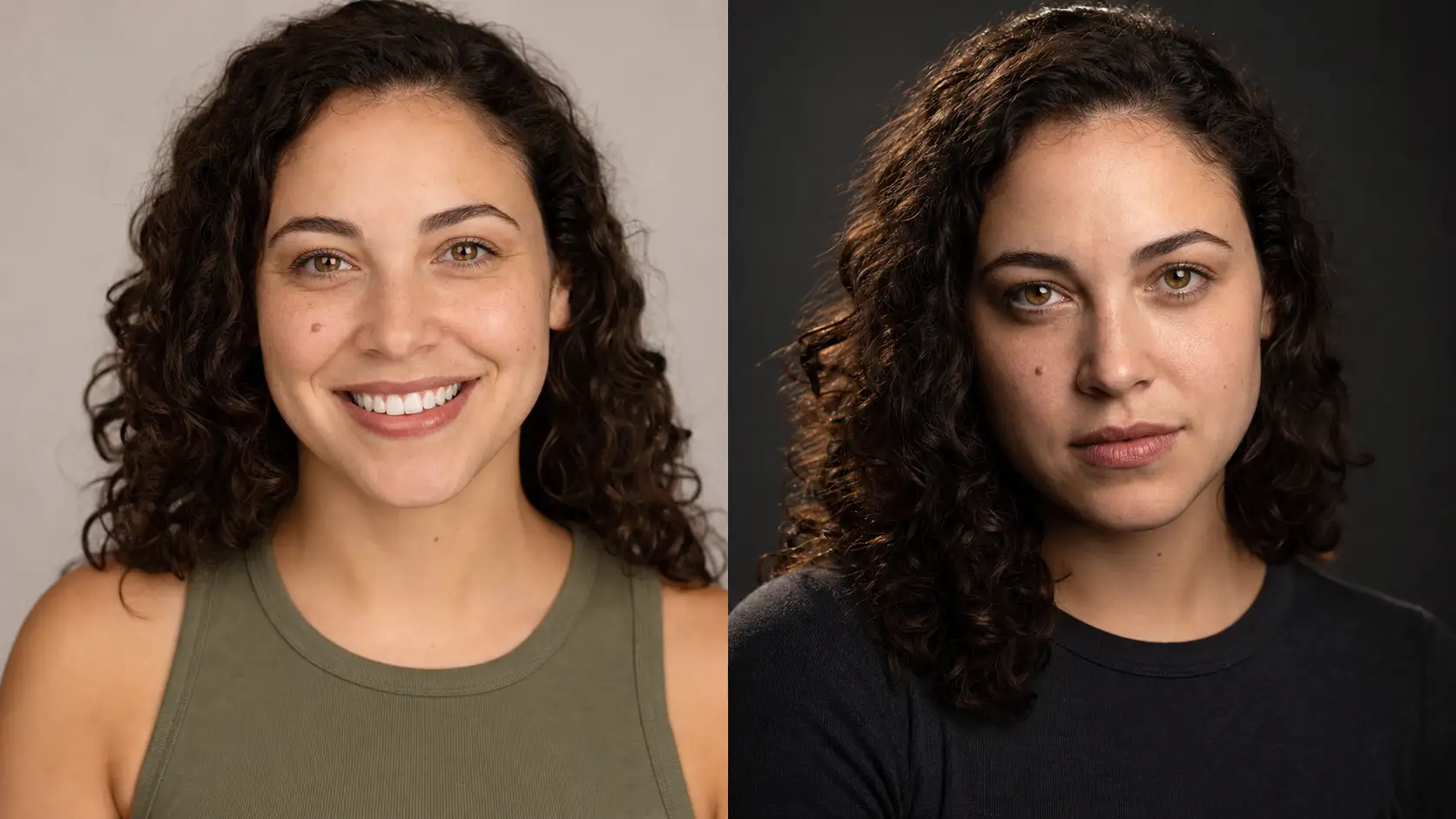
A good acting headshot is the photo that makes a casting director believe the person who walks into the room will be the person in the picture. Not the most flattering shot of you ever taken. The most recognizable one. It is current, it looks like you on an ordinary day, your eyes are alive and on the lens, the retouching is light enough that nobody can see it, and you have two of them: one commercial, one theatrical. Everything else is detail.
What casting directors mean by a “good” headshot
A headshot is not a glamour shot. It is a matching tool. The casting director has a stack of them and a role to fill, and the photo’s only job is to promise that the human attached to it is worth bringing in, and that the human will look like the photo when they arrive.
That second half is the whole game. The photographer Christopher Todd, who interviewed hundreds of casting directors for their single most important piece of advice, found the same answer come back more than any other: look like your headshots. When you walk in and the casting director cannot reconcile your face with the photo they picked, you have not impressed them. You have confused them, in the first two seconds, before you have said a word.
This is why the flattering version works against you. Casting directors hope you have not airbrushed or retouched away the thing you think is a flaw, because the gap in your teeth or the line on your forehead is often the exact thing that makes you castable. The job of the headshot is not to fix you. It is to introduce you.
So “good” comes down to a short list. The photo is current, within about a year, or sooner if your look has changed. The background is simple and does not pull focus. The framing is head-and-shoulders. The makeup is minimal and natural. And the eyes are engaging the lens, awake, present. Every other decision in this guide is that one rule applied to a smaller question.
The two looks every actor needs: commercial vs theatrical
Most working actors carry two headshots, and they are not two photos of the same mood. They are two arguments. According to Backstage’s guidance on the difference, a commercial headshot says trust me and a theatrical headshot says watch me.
Here is the split, and then I will walk each one.
| Dimension | Commercial headshot | Theatrical headshot |
|---|---|---|
| What it sells | ”Trust me”: friendly, relatable, sells a product or brand | ”Watch me”: character, range, emotional depth |
| Used for | Advertising, brand spots, on-camera commercial roles | Film, TV, and stage / dramatic roles |
| Expression | Smiling is usually recommended; energy and charisma | Usually no smile; confidence and depth (a knowing smirk is allowed by type) |
| Lighting | Brighter, more even, lower-contrast | More dramatic, directional, higher-contrast |
| Wardrobe | Bright, clean, simple, non-distracting | Muted, darker, richer; earthy tones; texture |
| Background | Lighter, clean | Neutral or darker so the face carries it |
The commercial look
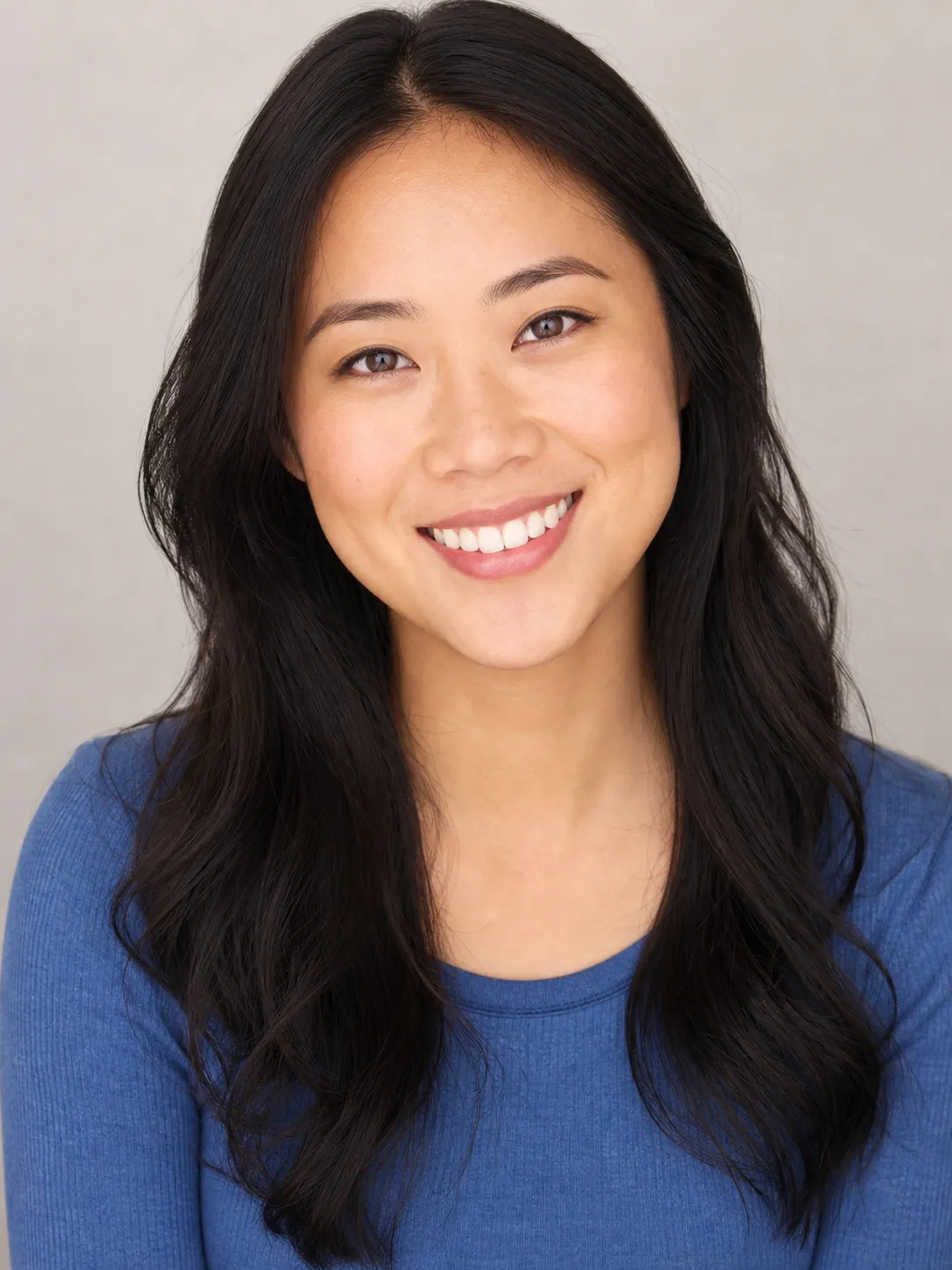
The commercial headshot is the friendly one. It sells you for advertising and brand work, the roles where you are the relatable face that makes a product feel trustworthy. Backstage recommends smiling in it for most types, because the currency here is energy and approachability. Getting that smile to read as real rather than held — eyes included, not just the mouth — is its own skill: how to smile in photos. The lighting is brighter, more even, lower in contrast. The wardrobe is clean and simple. Think of the person a stranger would happily take directions from.
The theatrical look
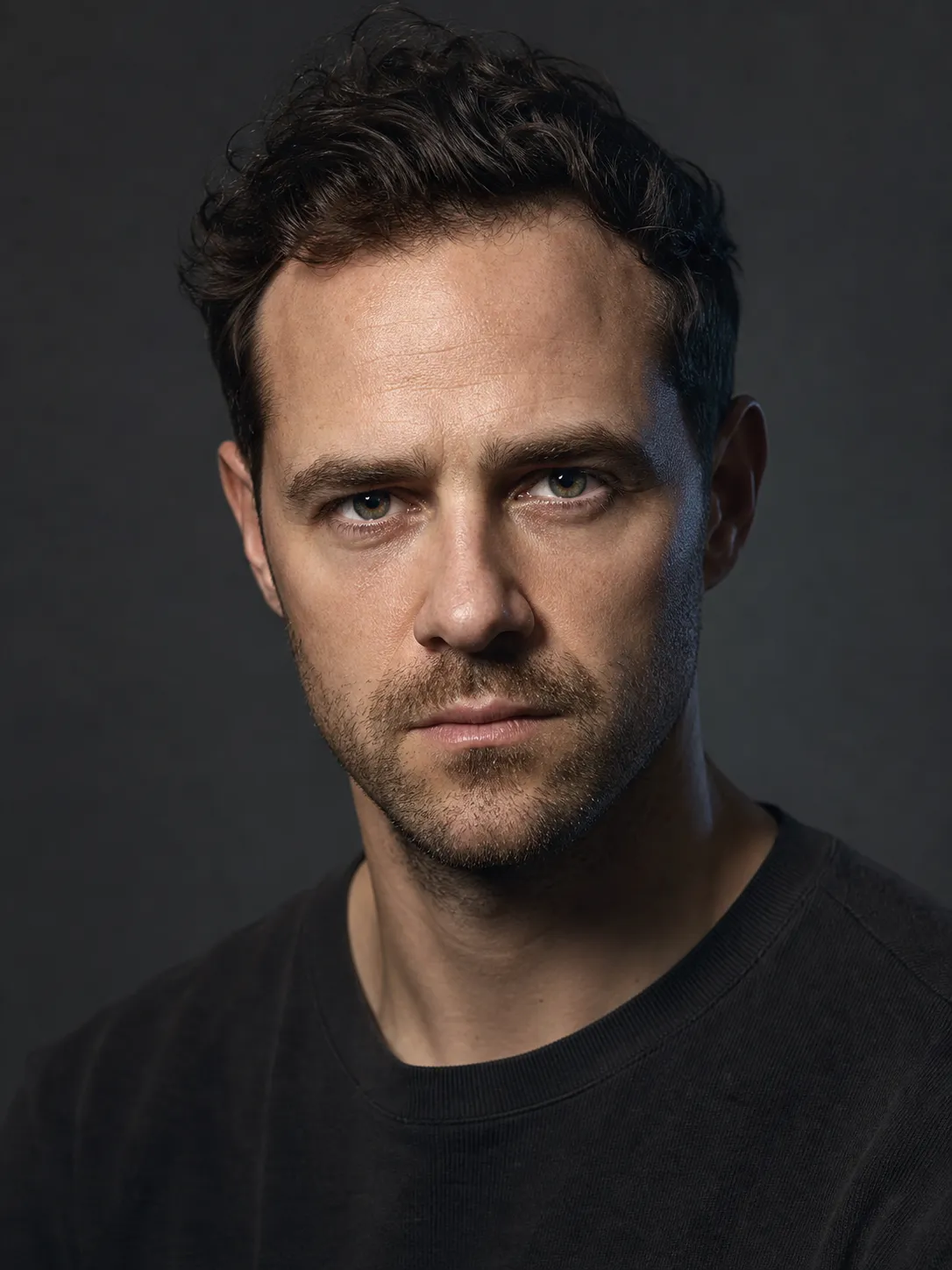
The theatrical headshot is the one that gets you cast in film, television, and stage. Backstage describes it as usually unsmiling, carrying more emotional depth, with lighting that is more dramatic and directional to sculpt the face. The wardrobe runs muted, darker, richer, often with a texture that hints at a character type. It is not stiff or grim by rule. A knowing look behind the eyes counts. The point is that you can see layers in you.
There is a third, in-between option Backstage names for sitcom and rom-com work, the comedic headshot, but the two above are the load-bearing pair. And both of them still answer to the same rule from the last section. They are two real sides of you, not two retouched strangers.
Acting headshot requirements: the format that gets you past the filter
Before a casting director ever reaches your face, your photo has to clear a format filter, and the conventions here are settled enough to write down. This is the part that does not change with your type or your market, so it is the part worth getting exactly right.
The single most common mistake is the easiest to fix. Your headshot should be in color. Backstage is blunt about this: black-and-white has become almost completely obsolete, for the practical reason that a casting director needs to see your real hair and eye color. The old black-and-white look survives only as a stylistic relic, not a standard.
The rest of the printed conventions are quick. The industry print size is 8 by 10 inches. The orientation is vertical, with your acting résumé printed on the back, so the casting director can flip a single card. No heavy borders, no name banners stamped across the image.
Online is where it gets specific per platform, and where you should not trust a number you read on a blog. Actors Access, in its own help documentation, gives an optimal upload size of 500 by 700 pixels. Casting Networks does not publish one universal number the same way; its support team’s guidance is that the exact required dimensions appear on the upload page itself, and third-party figures for it openly conflict. The honest instruction is the unglamorous one: read the spec each platform shows you at the moment you upload, because it is the only spec that counts.
| Spec | The current convention | Verified source |
|---|---|---|
| Color vs black-and-white | Color. Black-and-white is now almost completely obsolete; casting directors need to see your real hair and eye color | Backstage |
| Print size | 8 × 10 inches, the long-standing industry print standard | Backstage |
| Orientation | Vertical, with your acting résumé printed on the back | Backstage |
| Aspect ratio | 4:5 vertical (the ratio of an 8×10) | Backstage |
| Actors Access profile photo | Optimal upload size 500 × 700 pixels | Actors Access (official support) |
| Casting Networks profile photo | No single public number; the exact required dimensions are shown on the upload page itself, and third-party figures conflict | Casting Networks Support |
| Borders / frames | No heavy borders, name banners, or graphic frames on the image | Backstage |
The specs get you through the gate. The rule from section one is what gets you the callback once you are in.
What to wear for an acting headshot
Wardrobe is the same rule applied to fabric. Nothing you wear should out-shout your face. That single test answers almost every clothing question an actor has.
In practice that means solid colors over busy patterns, and no logos or text, which date the photo and pull the eye. It means skipping the distracting jewelry that competes with your eyes. And it means avoiding pure white when your background is light, because the shirt blends into the backdrop and your head floats. The two looks split here too: Backstage points commercial wardrobe toward brighter, cleaner, simpler pieces, and theatrical wardrobe toward muted, darker, richer tones, sometimes with texture that suggests a character.
Which specific color flatters your face is its own question, and the answer depends on your skin tone and your background more than on fashion. We worked through that in detail in our guide to what color to wear for a professional headshot. For an acting headshot, start with the test above: pick the top that lets the casting director look at you, not at it.
The recipe: a casting-ready headshot from one photo
A full session runs real money. Thumbtack’s 2025 pricing data puts the U.S. average at $304, with most sessions landing between $216 and $427, and Backstage notes a complete multi-look session can run from $400 to $1,500. The trouble is not the first bill. It is that you owe it again every time your look changes, and an actor’s look is supposed to change.
This is the exact spot an AI image tool can help, and the exact spot it usually fails. Left to its defaults, it beautifies and smooths your face into a porcelain near-stranger, which is the one outcome a casting director is built to reject on sight. The mechanism behind that waxy look, and why it happens, is the subject of our piece on why AI images look fake and the anti-plastic method that defeats it. The short version: you have to lock your identity first and force real skin texture back in.
Here is the recipe, built around that. Upload one clear, current, front-facing photo. Paste the block below into ChatGPT or another AI image tool. Then swap a single line for the commercial look or the theatrical look. If you would rather stage it with a phone and a window, the at-home headshot setup covers the light and the framing.
Show the full promptTap to expand
Paste this into your AI (ChatGPT, Claude, Gemini, or any image tool).
REQUIRED upload before pasting: one clear, well-lit, current, front-facing photo of your face. This is the face the AI keeps; without it the headshot will not be you.
Then swap one line: {LOOK} for either the commercial look or the theatrical look (both options are spelled out below the rules).
Generate this image:
A single 4:5 vertical acting headshot of the person from the uploaded reference image, head-and-shoulders, with exact face likeness: match the bone structure, eyes, nose, lips, hair, hairline, and skin tone exactly, no beautification, no age adjustment, no slimming, no smoothing; this headshot has to look like the person who would walk into the audition room today. The person is centered, three-quarter to near-frontal, eyes engaging the lens directly. {LOOK}. The background is a simple uniform seamless studio backdrop with no objects and no pattern. The person wears one solid mid-tone top, no logos, no busy patterns, no distracting jewelry. Skin shows realistic natural texture: visible pores, faint micro-asymmetry, fine natural lines kept, a natural skin mark or two left in, no porcelain smoothing and no plastic beauty-filter finish. Camera: 85mm-equivalent lens at f/2.8, eye-level, shallow depth of field, no perspective distortion. Single 4:5 vertical acting headshot, head-and-shoulders, simple seamless backdrop, real unretouched-looking skin, unmistakably the same person as the uploaded photo.
Rules the AI must follow:
- Aspect ratio 4:5 vertical: strict, locked at the start and the end of the prompt
- Identity preservation is the highest-priority constraint: match the uploaded reference photo’s face, bone structure, eyes, nose, lips, hair, hairline, and skin tone exactly; no facial changes, no beautification, no age adjustment, no slimming, no removing of moles, freckles, or lines
- Realistic natural skin texture required: visible pores, faint freckles or skin micro-detail, slight micro-asymmetry; no porcelain skin, no plastic smoothing
- Keep makeup minimal and natural; this is a headshot, not a glamour or beauty shot
- Eyes open, engaging the lens directly and alive; head-and-shoulders framing with clear space above the hair
- Background is a simple uniform seamless studio backdrop, no objects, no pattern, no heavy border or name banner
- Single image output: no contact sheet, no variant grid, no before/after split, no multiple angles in one frame
- Output the image directly without explaining the prompt back
Replace these placeholders with your details:
{LOOK}= the commercial look: warm, bright, even, low-contrast frontal lighting, an open natural friendly smile with warmth in the eyes, a light warm-grey backdrop, a simple light-colored solid top- Or
{LOOK}= the theatrical look: directional higher-contrast key light from the upper left at 45 degrees with a cooler fill on the shadow side, a serious present expression with no smile and depth behind the eyes, a darker charcoal-grey backdrop, a muted darker solid top
Bonus tips. Run it twice, once with each {LOOK}, to build the commercial-plus-theatrical pair from the same upload. If the result looks too smooth, add “very visible natural skin texture, pronounced pores, completely unretouched.” Over-smoothed skin is the most common reason an AI headshot reads as fake.
The whole recipe exists to satisfy one rule. It has to still be you in the room.
One paste-ready AI move lands in your inbox every week, the kind you can use on a Tuesday or a Sunday, and the moment you subscribe you also get the Independent Brand Visual Kit, twelve copy-ready prompts for headshots, listing photos, and brand mockups. Subscribe to the newsletter.
Notes for women, men, and child actors
The rule does not change across who you are. The application shifts a little.
Acting headshots for women
The trap is the beauty shot. Casting directors want minimal, natural makeup that reads as your skin on a good day, not a full face that erases the texture and the features they would actually cast. The headshot is not the place to look like a magazine cover. It is the place to look like the woman who shows up to read.
Acting headshots for men
Grooming continuity is the thing to watch. Whatever your facial hair and hairline are in the photo should be what they are now, because the headshot is a promise about the present. If you grow the beard out or shave it off, the headshot stops matching, and you are back to the confusion problem from section one.
Acting headshots for child actors
Kids change fast, so the currency rule tightens. A child’s headshot can go stale in months, not a year, and an outdated one sends the child in for a look they have already grown out of. Keep the styling natural and age-appropriate, skip the heavy retouching entirely, and update it as often as the face changes. Across every one of these, the test is identical: does it look like who walks in today.
FAQ
Q: What makes a good acting headshot?
A: A good acting headshot is current, recognizable, and minimally retouched, with your eyes engaging the lens and a simple background that keeps the focus on your face. Its real job is to match the person who walks into the audition room, so casting directors consistently say the most important thing is that you look like your headshot. Most actors carry two: a warmer commercial look and a more dramatic theatrical look.
Q: Should acting headshots be in color or black and white?
A: Color. Backstage describes black-and-white headshots as almost completely obsolete, because a casting director needs to see your real hair and eye color. Black-and-white survives only as a stylistic choice, not an industry standard, and submitting one today reads as out of date.
Q: What’s the difference between a commercial and a theatrical headshot?
A: A commercial headshot is brighter, usually smiling, and sells approachability for advertising and brand roles. A theatrical headshot uses more dramatic, directional lighting and a more serious expression to suggest character and emotional depth for film, television, and stage. Backstage’s shorthand is that commercial says “trust me” and theatrical says “watch me,” and most working actors carry one of each.
Q: What should you wear for an acting headshot?
A: Solid colors with no logos or busy patterns, nothing that competes with your face. Skip distracting jewelry, and avoid pure white against a light background because your shirt blends into the backdrop. Commercial wardrobe leans brighter and cleaner; theatrical leans muted and richer. The test for any piece is simple: does it let the casting director look at you instead of at it.
Q: How often should you update your acting headshot?
A: Roughly once a year, and sooner whenever your look changes, because the headshot is a promise that you will match it in the room. A new haircut, weight change, beard, or color is enough reason to reshoot. For child actors the window is shorter still, since a young face can outgrow a photo in a matter of months.
Key Takeaways
- A good acting headshot is a matching tool, not a glamour shot. Casting directors consistently name “look like your headshots” as the rule that matters most, so recognizable beats flattering every time.
- Carry two looks. A commercial headshot (bright, smiling, “trust me”) and a theatrical one (dramatic light, serious, “watch me”), per Backstage. Most working actors need both.
- The format is settled: color, not black-and-white; 8 by 10 inches, vertical, résumé on the back. Online, Actors Access wants 500 by 700 pixels, and Casting Networks shows its spec on the upload page.
- Wear solids, no logos, no loud jewelry, and avoid pure white against a light backdrop. Nothing on you should out-shout your face.
- AI defaults beautify and smooth your face into someone who won’t match you in the room. Lock your identity first and force real skin texture back in, or the photo fails the one test that counts.
The version that books the room
Picture the headshot that goes wrong. It is gorgeous. The skin is flawless, the jaw is sharper than yours, the whole thing is the best you have ever looked. The casting director loves it, brings you in, and spends the first two seconds adjusting to the fact that the gorgeous photo and the real person are not quite the same. You spend the audition climbing out of that small hole.
Now picture the one that works. It is just you, on a good day, lit well, eyes awake, in color, in the two looks the work requires. You walk in and there is no gap to close. The photo did its only job, which was to be true.
So which one is in your file right now? If you want to build both looks from a single current photo, the acting headshot prompt is one of the career-photo prompts in the Image Prompt Pack for $19.