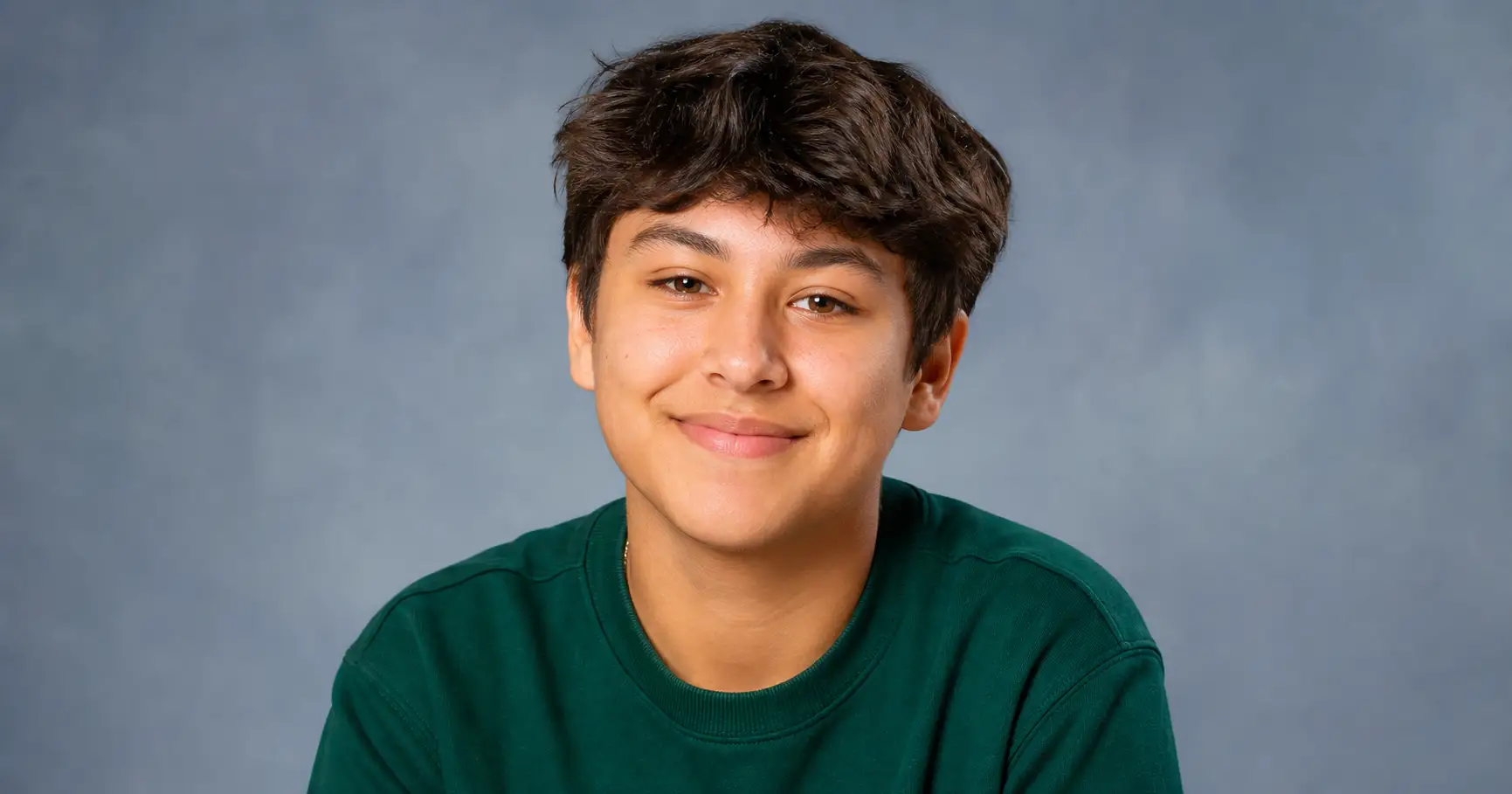
Picture day works like this: you sit down, the photographer counts to two, the shutter clicks, and that one frame goes in the yearbook, on the fridge, and in a grandparent’s wallet for a year. You do not get a reshoot. So you do not leave the frame to luck. You stack the odds before you sit down, with a short checklist and the three things you can control in the chair: your angle, your light, and your expression.
The good news is that almost none of this is about your face. People who come out of picture day happy did not win a genetic lottery. They wore the right top, slept the night before, and pushed their chin forward when it counted. All of that is learnable, and most of it fits on one card. Here it is.
Two of those five do most of the work, so they get the rest of this article. The other three are quick: a solid color reads cleaner than a busy pattern, a comb fixes flyaways in the hallway, and a blotting sheet kills shine the camera loves to catch. The two that decide the photo are how you set your face in the chair, and what you did the night before.
The three things you actually control
Picture day feels out of your hands because someone else owns the camera, the backdrop, and the lighting. You own three things anyway, and they are the same three that fix any photo: angle, light, and expression. The full version of this lives in how to be photogenic. Here is the picture-day version.
Angle is mostly your chin. The instinct when a camera points at you is to pull your head back, which stacks your neck and softens your jaw into a double chin the lens invents. Do the opposite. Push your chin forward and slightly down. It feels wrong and looks right. It matters more than usual on picture day because the camera is fixed: you cannot raise it, so you adjust the only thing you can, which is your head.
Light is already set for you, and usually it is decent. School photographers point a soft, front-facing light at you on purpose, because soft front light fills the shadows under your eyes and nose. Your job is to face it squarely and not duck your head into your own shadow.
Expression is where most people lose the photo. A posed grin, the kind that follows the word “cheese,” pulls your mouth wide and leaves your eyes flat, and everyone reads that as fake. A real smile reaches the eyes. Paul Ekman’s research on the genuine, or Duchenne, smile pinned down why: the muscle that crinkles the corner of your eye only fires when you mean it. You cannot pose it. You can prime it. Photographer Peter Hurley calls the trick the “squinch,” a slight tightening of your lower eyelids, as if you are about to smile at someone you like. Add a real thought a half-second before the click, not a held grin. The deeper version is in how to smile in photos.
One paste-ready AI move a week, the kind you can use on a Tuesday or a Sunday. Subscribe to the newsletter.
What to wear, and what to do the night before
Wardrobe is the easiest win, and it is mostly about subtraction. A solid jewel tone photographs cleanly: emerald, sapphire, burgundy, deep teal. Busy patterns and thin stripes can shimmer or buzz on camera, logos date the photo, and pure white and neon pull the camera’s eye off your face. Pick one solid color you like and stop there. The full breakdown of colors by skin tone lives in what colors to wear in photos; for one frame, “solid jewel tone” is enough. For a full sit-down session rather than one school photo, the same rules scale to what to wear for pictures and, for seniors, what to wear for senior pictures.
The night before matters more than the morning. Sleep, then drink water. This is the one piece of picture-day advice with hard research behind it. In a Karolinska Institutet sleep-lab study published in the BMJ in 2010, John Axelsson’s team photographed the same people after a normal night and after a night of lost sleep, then had 65 strangers rate the photos. The tired versions were rated as less healthy, less attractive, and more tired, from nothing but the face.
A follow-up by Tina Sundelin, published in the journal SLEEP in 2013, named the exact tells: after sleep loss, the same faces showed darker circles under the eyes, paler skin, and more hung, red eyes. Those are the things you cannot fix with a comb at 8 a.m. You fix them at 10 p.m. the night before. Lay your jewel-tone top out then too, so the morning has one less decision in it.
When you only get one frame
The hard part of picture day is not the levers. It is that you only get one or two frames, with no slow warm-up. So you run the moves in the gap between the photographer’s “ready” and “go.” Drop your shoulders. Push your chin forward. Squinch slightly, think of one real thing, and let a small genuine smile land right as the shutter trips. If your school offers a retake day, treat your goal as not needing it.


One more thing, because it trips up everyone who has ever hated their school photo. A still frame can catch a microsecond your moving face never shows. Psychologists led by Robert Post described this “frozen face effect” in a 2012 paper in Frontiers in Psychology: people are rated more flattering in short videos than in the single frames pulled from those same clips. So if your picture comes back and it does not look like the you in the mirror, that is the camera freezing one instant, not the truth about your face. The longer version is in why you look bad in photos.
If the photo already came back bad
The checklist is for the next picture day. But if this year’s frame already came back and you are stuck with it until the next round, you are not actually stuck. An AI photoshoot rebuilds the angle, the light, and the setting from one clear selfie into a polished portrait while keeping your real face, which is the version of picture day where you get as many frames as you want. It is the same three levers, applied for you, on a photo you cannot reshoot.
FAQ
Q: How to look perfect for picture day?
A: There is no perfect, but there is a near-sure thing. Run the five-point checklist: wear a solid jewel-tone top, sleep and drink water the night before, use the squinch-smile, push your chin forward and down, and pack a comb and a blotting sheet. The night before sets your face; the chair is just the three levers, angle, light, and expression, run once.
Q: Why do I look bad in the front camera but good in the mirror?
A: The mirror shows you a flipped, moving face you have seen your whole life. A photo shows it un-flipped and frozen, so it looks slightly wrong even though it is more accurate. A close front camera also widens your features. On picture day the camera is further back and at a better height, which is part of why a good picture-day shot can beat your own selfies.
Q: Can I be pretty but not photogenic?
A: Yes, and it is common. Looking good in person and looking good in one frozen frame are two different skills. People who photograph well have usually learned the angle, the light, and the expression that work for them. It is learnable, which is the whole point of a checklist you run before you sit down.
Q: What should I do the night before picture day?
A: Sleep and drink water, then lay out a solid jewel-tone top. In a Karolinska sleep-lab study published in the BMJ in 2010, observers rated the same people as less healthy and less attractive after one bad night, mostly from tired eyes and paler skin. Eight hours does more for your photo than anything you do that morning.
Key Takeaways
- Picture day is a coin flip only if you leave it to luck. Five small moves stack the odds before you sit down.
- The night before beats the morning. Sleep and water fix the tired eyes and pale skin a Karolinska BMJ study tied to looking less healthy and less attractive.
- In the chair, run the three levers you control: chin forward and down, face the light the photographer set, and use the squinch with a real smile instead of “cheese.”
- Wear a solid jewel tone. Skip busy patterns, logos, pure white, and neon, which pull the camera off your face.
- If the frame already came back bad, an AI photoshoot rebuilds it from one selfie while keeping your real face, until the next picture day comes around.
- For the posing part, photo poses and ideas covers what to do with your body once you’re in the chair.
So what’s your one move?
Most people walk into picture day bracing to hate the result, then do nothing they could have done. You have the opposite option. Lay out the jewel-tone top tonight, sleep, and pack a comb. Then, in the chair, push your chin forward and smile with your eyes.
What’s the one move you’ll run before you sit down?