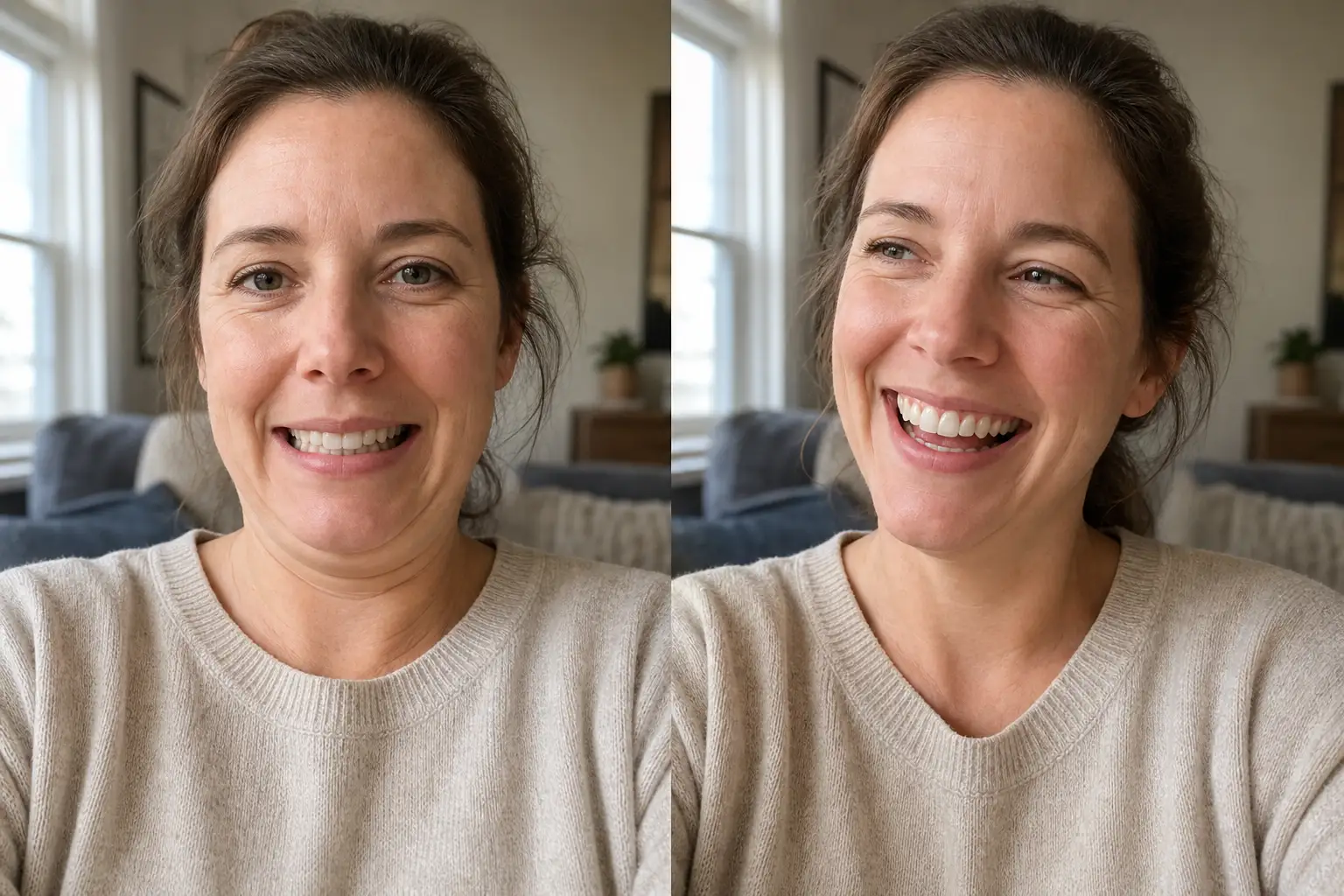
You raise your phone at someone you love, say “act natural,” and watch their face lock up the second the words land. The bad photo is already happening. Here is what nobody tells you about photographing people: it is almost never your camera or their face. You handed them a job no one can do, to look relaxed on command. Good photos come from three moves you make, not from anything they do.
Hold onto the distinction under all three. You are not capturing a face. You are directing one.
30-second diagnostic
Which move would fix your photos fastest?
Answer three quick questions and find the one directing habit you're missing.
When you look back at a photo you took of someone, what's usually wrong?
What do you usually say right before you press the shutter?
Where is your phone when you take the shot?
Move 1: Give them a task, not a pose
“Stand there and look natural” is the one instruction that guarantees the opposite. The person hears it, freezes, and starts auditing their own hands. The fix is to give them something to do instead of something to be.
This is the move professional photographers fall back on with people who have never modeled. PetaPixel, in its guide to posing non-models, puts it directly: give your subject a role to play or an emotion to act out instead of a pose to strike, and you get a far more natural-looking expression. A person busy acting stops auditing their own face, and the face loosens on its own.
The prompts that work are small and specific. A few that pull a real reaction out of almost anyone:
- “Walk toward me, and stop when I say.” Then shoot the third or fourth step, not the first.
- “Look out the window, then back at me.” The turn buys you a half-second of an unguarded face.
- “Pretend you just spotted an old friend across the street.” It manufactures surprise, which is hard to fake and easy to act.
- “Tell me about your day.” Then shoot while they answer instead of while they pose.
The groundwork happens before any of that. The team at SLR Lounge makes the same point about non-models: talk to them, ask them questions, and stay laid-back and approachable, because a subject who reads you as relaxed relaxes too. Tension in you shows up as tension in them.
A prop is just a task you can hold. A coffee cup, a dog’s leash, a hat, a railing to lean on. It answers the silent question every nervous subject is asking, which is what do I do with my hands.
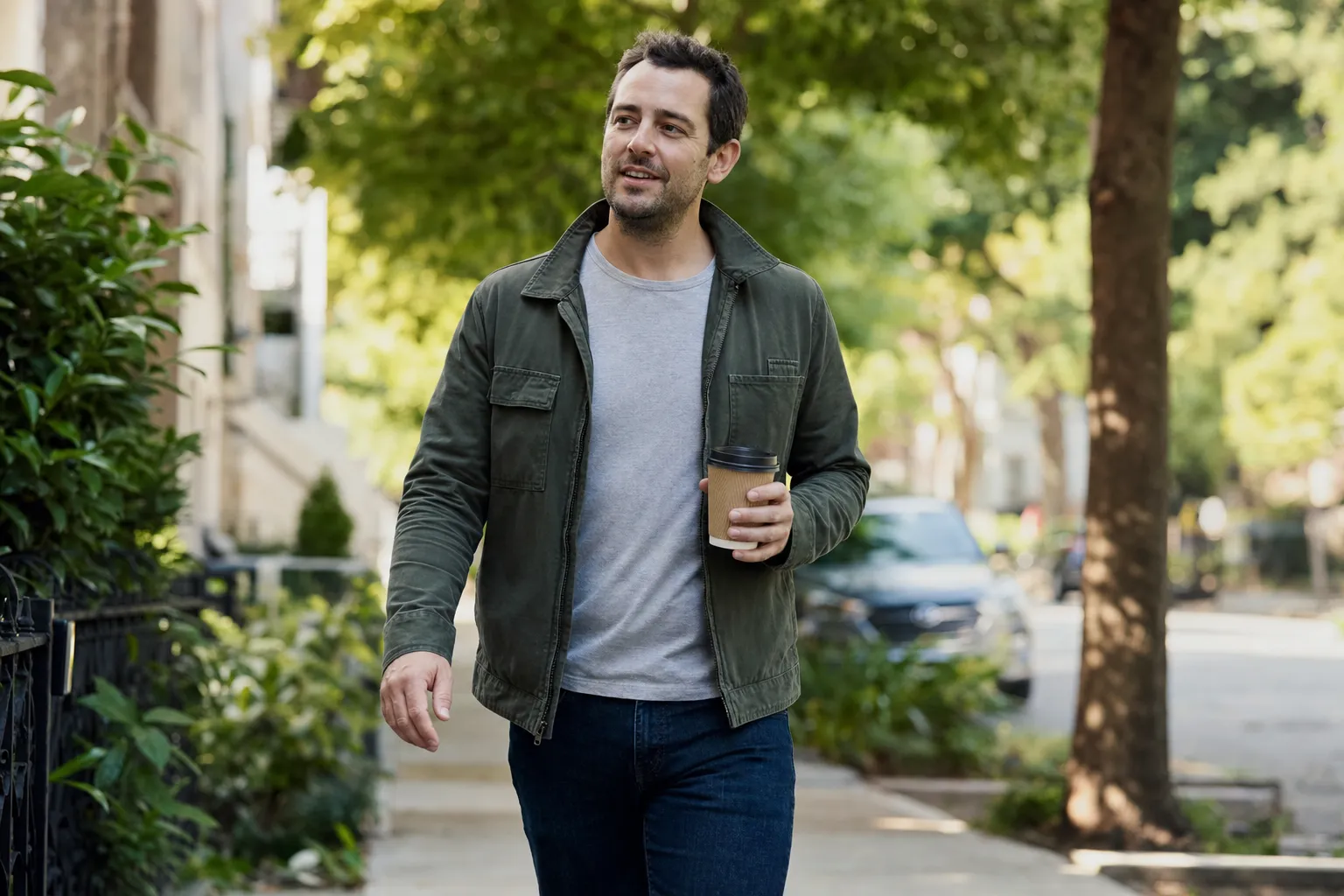
Give them a job and they forget the lens. Now you just have to be standing in the right place when they do.
Move 2: Get slightly above their eyeline
Most people shoot from where their arm naturally hangs, around chest height, tilted up. That angle does the unflattering thing on purpose. The fix is one small lift.
The most reliable height for a flattering photo is eye level or slightly above it, with the camera tipped gently down. Digital Photography School’s guide to facial view and camera angle says it plainly: for a portrait of one or two people, the camera at eye level or slightly higher is usually the most flattering option.
Its companion visual guide to portrait angles explains what each direction does to a face. A higher angle puts the focus on the face rather than the body and tends to read as slimming. Shooting from below does the reverse: it can create double chins and make people look larger than they are, which is exactly what the chest-height, tilted-up reflex produces.
There is a ceiling on the lift. The same visual guide warns that going too high makes the head look oversized against the body, the “bobblehead” look that is very rarely flattering. Slightly is the whole instruction. A few inches above the eyes, not a foot above the head.
One more habit compounds it. Get back and zoom with your feet instead of crowding in close, and turn the person off-square. Digital Photography School’s facial-view guide walks through the three-quarter view, the subject turning their face just until you can no longer see their far ear, which reads far more naturally than a face squared flat to the lens.


Get the height right and the face reads the way it does in person. A flattering angle on a frozen grin still fails, which brings us to the last move.
If you want one of these small, paste-ready moves in your inbox every week, that is what the newsletter is for. Subscribe and the first thing you get is the Independent Brand Visual Kit, twelve copy-ready prompts for the founder portraits, listing photos, and pins you keep meaning to make. Get it here.
Move 3: Keep talking, and never say “cheese”
A “say cheese” smile only fires the muscles around the mouth. A real one fires the muscles around the eyes too, and that second set is the tell.
The distinction has a name. The Paul Ekman Group, whose founder built the standard system for coding facial movement, describes the genuine smile as a Duchenne smile: the muscle that orbits the eye contracts, the cheeks lift, and the skin crinkles into crow’s feet at the outer corners. A non-enjoyment smile, it explains, makes the same lip-corner movement but skips those changes around the eyes.
Here is why you cannot fake your way around it. The Ekman Group describes the face running on two separate pathways, one for voluntary, willed expressions and one for involuntary, emotional ones, and the eye-crinkle of a real smile rides the involuntary track. You cannot ask for it. You can only cause it.
So cause it. Keep up a steady stream of talk and the subject keeps reacting, and somewhere in those reactions is the photo. Crack a bad joke. Ask them something they actually have an opinion on. Tease them about being bad at photos. The talking does double duty: it pulls their attention off their hands and their chin, and it produces the real expressions you are waiting for.
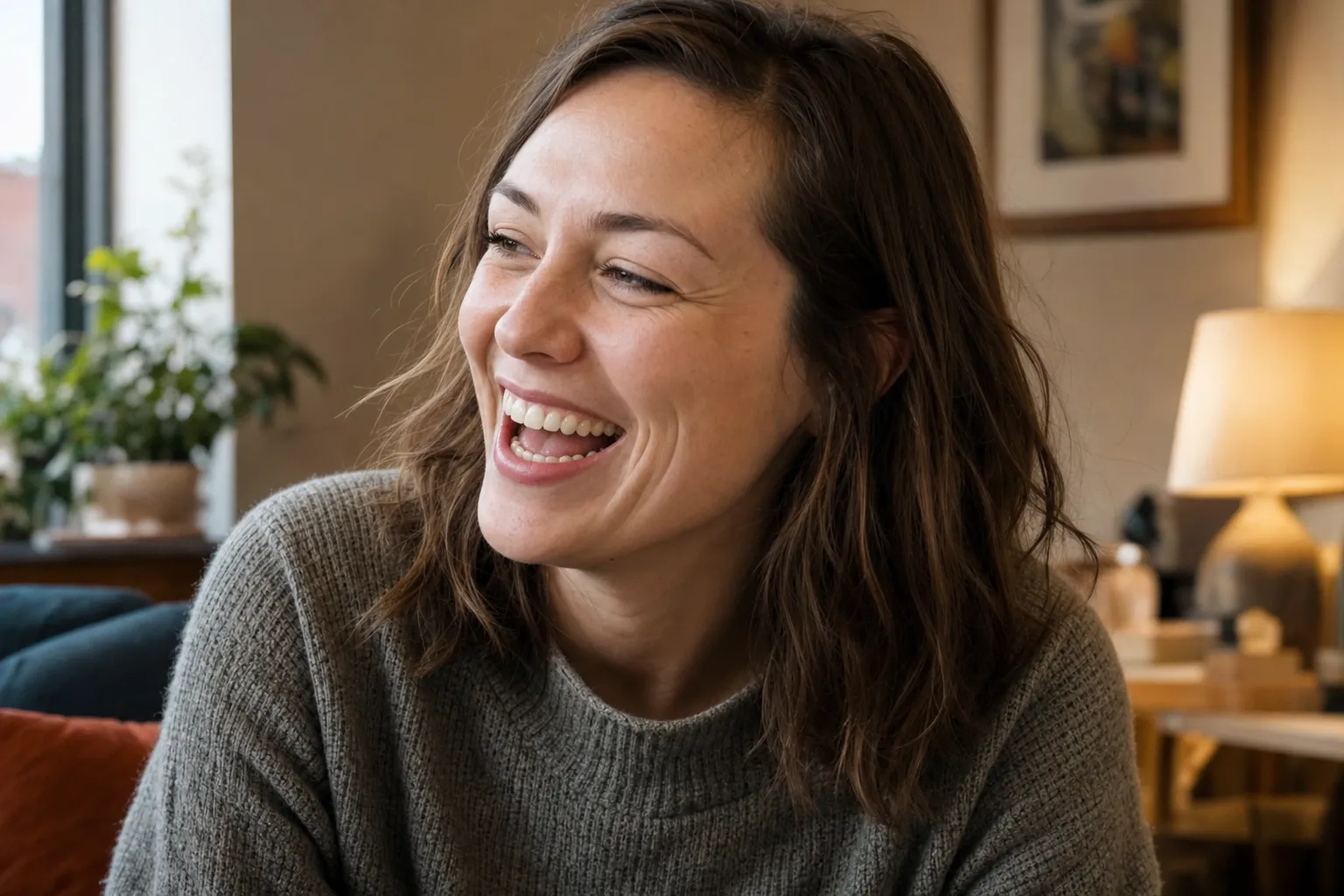
Photographers keep a quiet trick for the first real frame. They fire a few “test” shots while the subject still thinks the camera is being set up, so the person hears the shutter with no pressure to perform. The first time they laugh for real, that is the first keeper, and they never felt it start.
A couple of habits make the rest easier. Shoot in burst so you catch the half-second between expressions instead of betting everything on one press. And loosen the face before you start: SLR Lounge suggests having a stiff subject physically move their face, tilting it and shifting the chin up and down, since we move our faces constantly when we talk and freeze them the moment a camera appears. SLR Lounge also leans hard on constant positive feedback, telling a nervous subject the instant they do something you love, because they cannot see what you see and the reassurance loosens them faster than any direction.
Talk the real face out of them and you have run all three moves. The rest is knowing how they bend for the people closest to you, and for a crowd.
Photographing someone you’re close to
Your partner, your best friend, your mum. You would think the people who love you are the easiest to photograph. They are often the hardest, because the comfort cuts both ways: they trust you enough to drop the polite stranger-smile, and they also expect you to be done in four seconds.
With a stranger, the early minutes go to breaking the ice. SLR Lounge builds its whole approach to non-models around that first friendly connection. With someone close, you already have the connection, so spend that credit on patience instead. Keep them moving and doing, the same as anyone else, and resist the urge to fire one frame and call it. The trust gets you a real face. The patience gets you the photo of it.
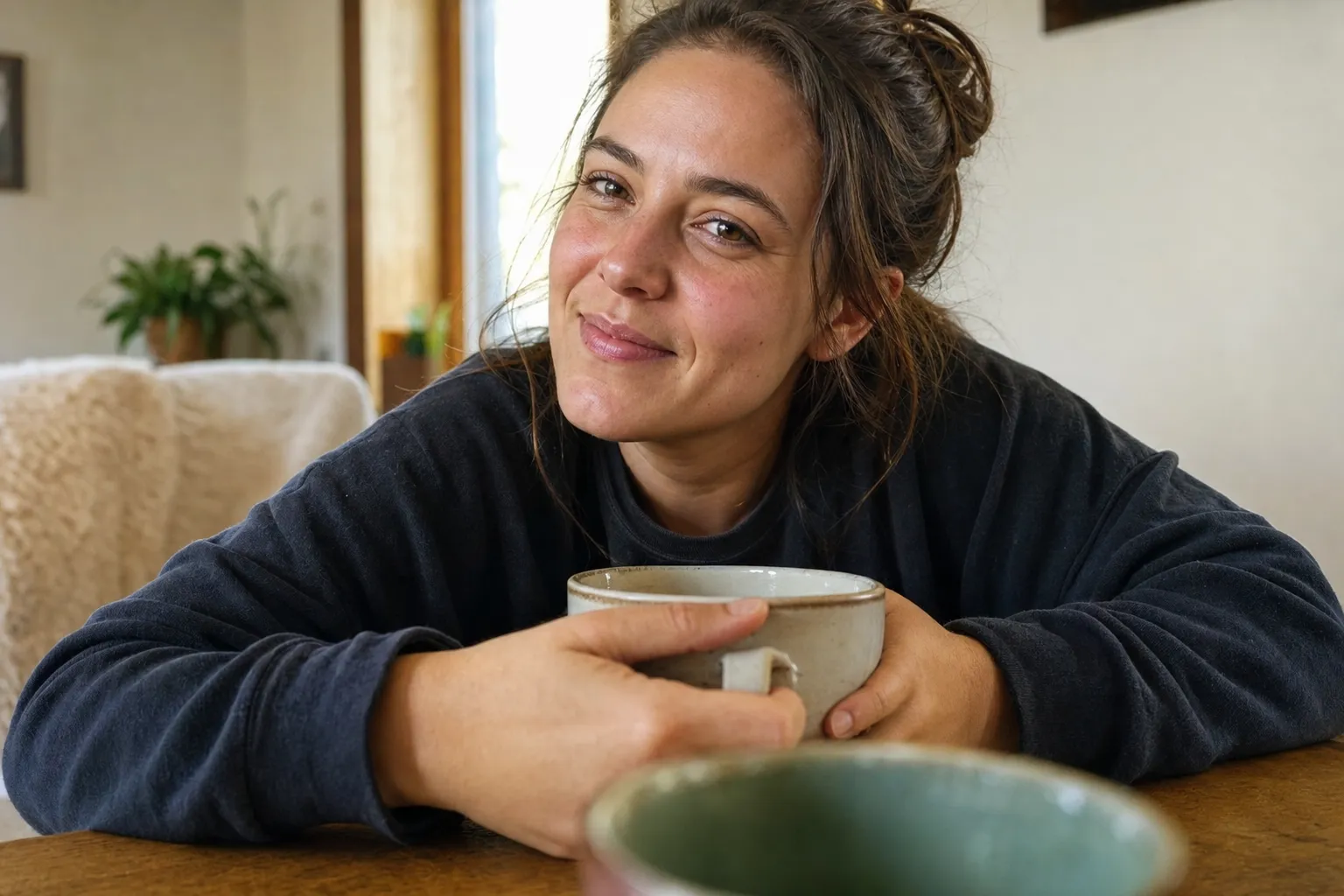
One rule worth borrowing from the pros, and the one close family forgets first: don’t reach over and fix their hair or their collar yourself. Tell them what to adjust and let them do it. It keeps the person feeling in control rather than handled, and a person who feels in control relaxes. That holds double for someone who already knows exactly how you boss them around.
The comfort is your head start. Don’t waste it by being in a hurry.
When it’s more than one person
Groups freeze worse than individuals, because now everyone is waiting on everyone else and nobody knows where to look. The same role-and-action principle PetaPixel recommends for one person scales straight up. You just give the job to the whole group at once.
Hand them a shared action instead of a formation. “Everyone walk toward me and talk.” “Tell the person next to you the dumbest thing you did this week.” “On three, all look at her, not me.” A group doing something together stops performing as a lineup and starts being a group. Stagger their heights so it is not a flat row, get a couple of them sitting or leaning, and shoot a burst through the motion. The frame where two of them are laughing at the third is the one you keep.

The principle never changes from one person to four. You are still directing the action and letting the faces follow.
When the shot still won’t come
Some people stay camera-shy no matter how well you direct. And sometimes you need a good photo of yourself, with nobody around to direct you at all. It helps to know what these three free moves are standing in for.
When the problem is the subject, not the technique, the answer is usually patience plus the moves, not a better camera. If you want the subject’s side of the equation, the work the person in front of the lens can do, that lives in how to be photogenic and how to take good photos of yourself. And when you are the one who needs to be in the frame with no one to direct you, our free AI photoshoot builds a clean photo of you from a single selfie while keeping your real face.
The three moves are still the cheapest, fastest fix you carry. Use them first.
FAQ
Q: How do people take such good photos?
A: They direct the moment instead of freezing it. The people whose photos always look good are almost never working with better faces or better phones. They give the subject something to do, they shoot from slightly above the eyeline, and they keep the person talking so a real expression surfaces. The skill is in the directing, and it is learnable in an afternoon.
Q: How to take better pictures of people on camera?
A: Change three things in this order. Stop asking for a pose and give an action (“walk toward me,” “look out the window”). Lift the camera to just above their eyes and tip it gently down. Then talk to them continuously and press the shutter between sentences, never on “cheese.” Those three moves fix most stiff photos before you touch a single setting.
Q: How do you get someone to relax in front of the camera?
A: Take the pressure off them and put the work on you. Talk to them before you ever raise the camera, give them an action instead of a pose, and let them move. Photographers also use a “test shot” trick, firing a few frames while the person thinks you are still adjusting settings, so the first real photo happens before they brace for it.
Q: Why do my photos of people always come out stiff?
A: Because you are asking them to perform relaxation, which no one can do. The instant a person is told to “act natural” or “smile,” they become self-conscious and their face tightens. Take the job off them. Give them a task, get the angle right yourself, and let a real reaction happen instead of demanding a posed one.
Q: Where should I stand to take a flattering photo of someone?
A: Slightly above their eyeline, with the camera tipped gently down, and a step or two back rather than up close. Digital Photography School notes that eye level or slightly higher is usually the most flattering height, while shooting from below adds a double chin and visual weight. Avoid going too far above, too, which makes the head look oversized.
Key Takeaways
- A bad photo of a person is almost always a directing problem, not a camera or a face problem.
- Give the subject a task or a prop instead of a pose, so they stop performing and start existing.
- Shoot from slightly above the eyeline and tip the camera down. A low angle adds a double chin, too high turns the head into a bobblehead.
- Keep talking and shoot between sentences. A real smile reaches the eyes, and you cannot order one up.
- The people closest to you and groups of people bend the same way: direct the action, let the faces follow.
So who’s the next person you’ll photograph?
The next time someone hands you their phone, or you raise yours at a friend, you have a choice in that half-second. You can ask them to pose and watch them freeze. Or you can give them something to do, step half a foot to the side and up, and keep talking until they forget you are there.
One of those produces a photo they ask you to delete. The other produces the one they make their profile picture. Which director are you going to be?