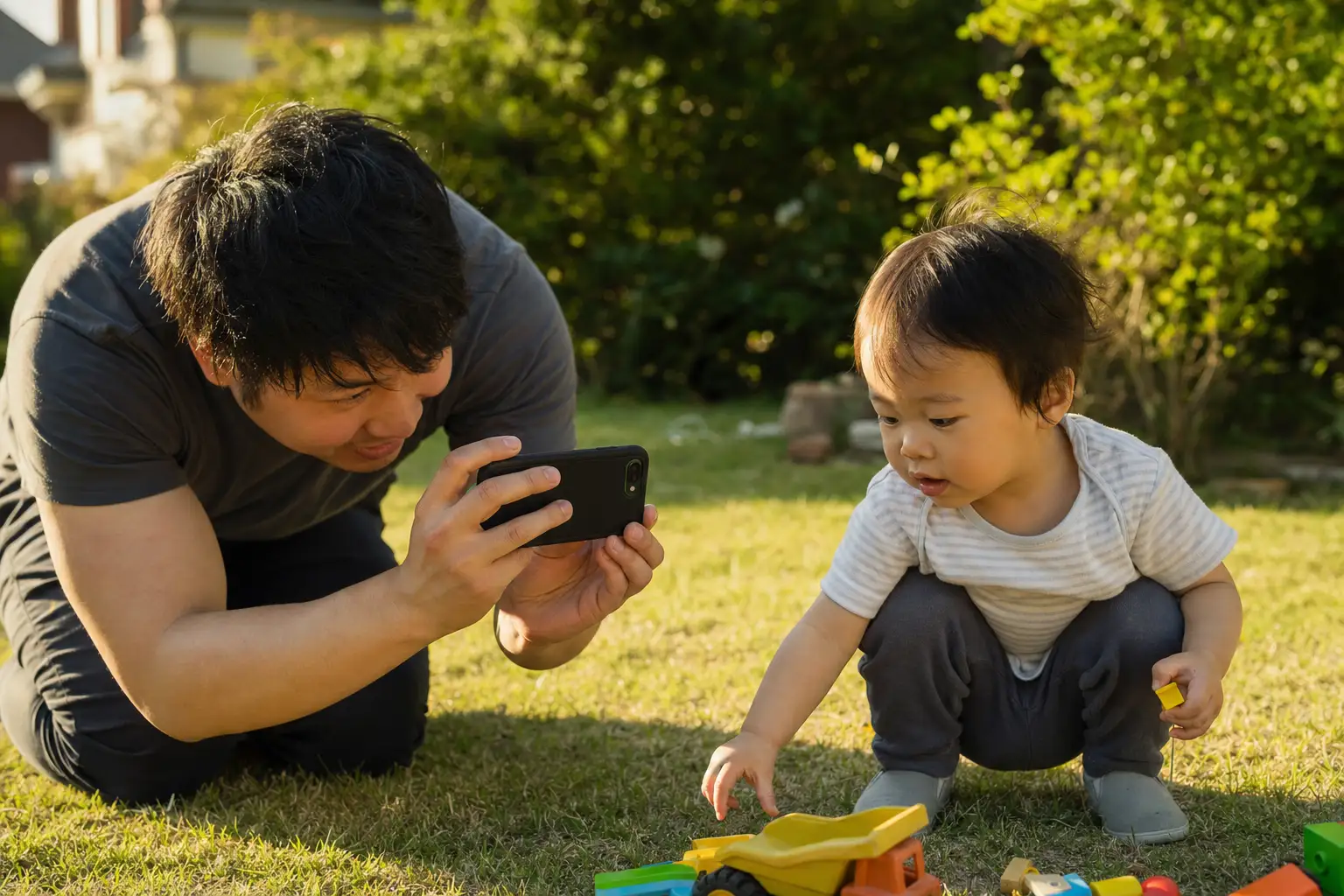
You crouch a little, hold up your phone, and say “smile for mommy.” Your three-year-old either clamps into a tight fake grin or turns and bolts. You take the shot anyway. It is the top of their head, again. The version of them you actually wanted, mid-giggle two seconds earlier, is already gone. Here is the part nobody warns you about: the problem is never the kid, and never the phone. It is that you asked a small child to perform, and they can’t, and they shouldn’t have to. Good photos of your kids come from three moves you make, not anything they do.
Hold one idea under all three. You are not posing a child. You are following one.
Get down to their eye level
The single most common reason your kid photos look bad is the height you shoot from. You are a grown adult standing over a toddler, so the camera looks down at the crown of their head, a foreshortened little body, and a wide field of floor. That is the top-of-head shot you keep getting, and no amount of “say cheese” fixes it.
The fix takes one second and costs nothing. Get down. Crouch, kneel, or lie flat on the grass so the lens sits at the child’s eye level. Click Love Grow calls getting down to the child’s level the one professional tip that will improve your photos of your children instantly, and they mean it literally: you can do it today. Digital Photography School makes the same point in its guide to photographing kids, noting that getting down to their level puts you more on equal ground and pulls their whole face and world into the frame instead of the back of their head.
Here is where photographing a child flips the rule for photographing an adult. With grown-ups, the flattering move is to lift the camera slightly above their eyeline and tip it down. We cover why in the companion guide to taking good photos of people, where directing a willing adult is the whole game. A small child is the opposite case. They are already far below you, so you go down, not up, until you are in their world rather than looming over it.
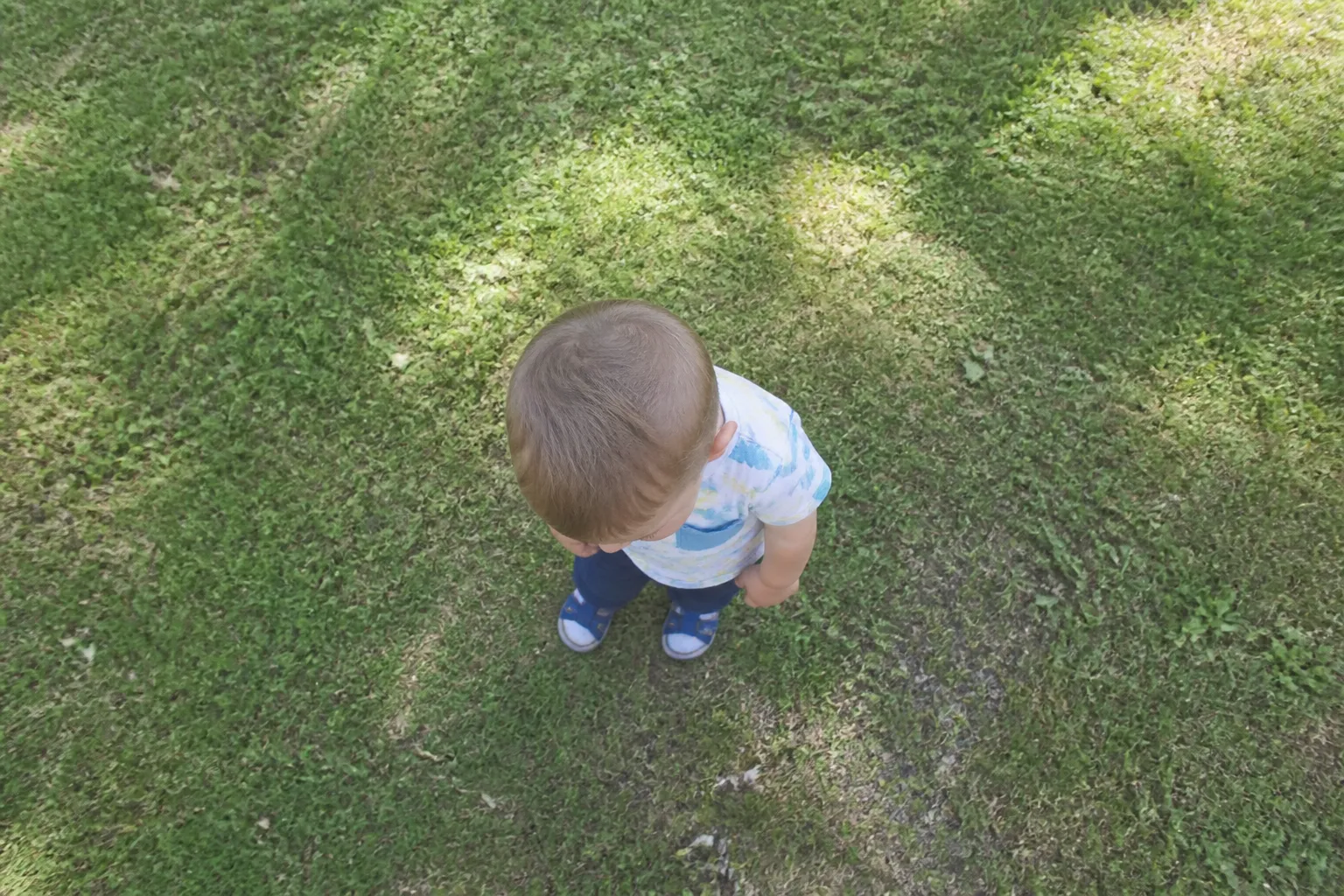
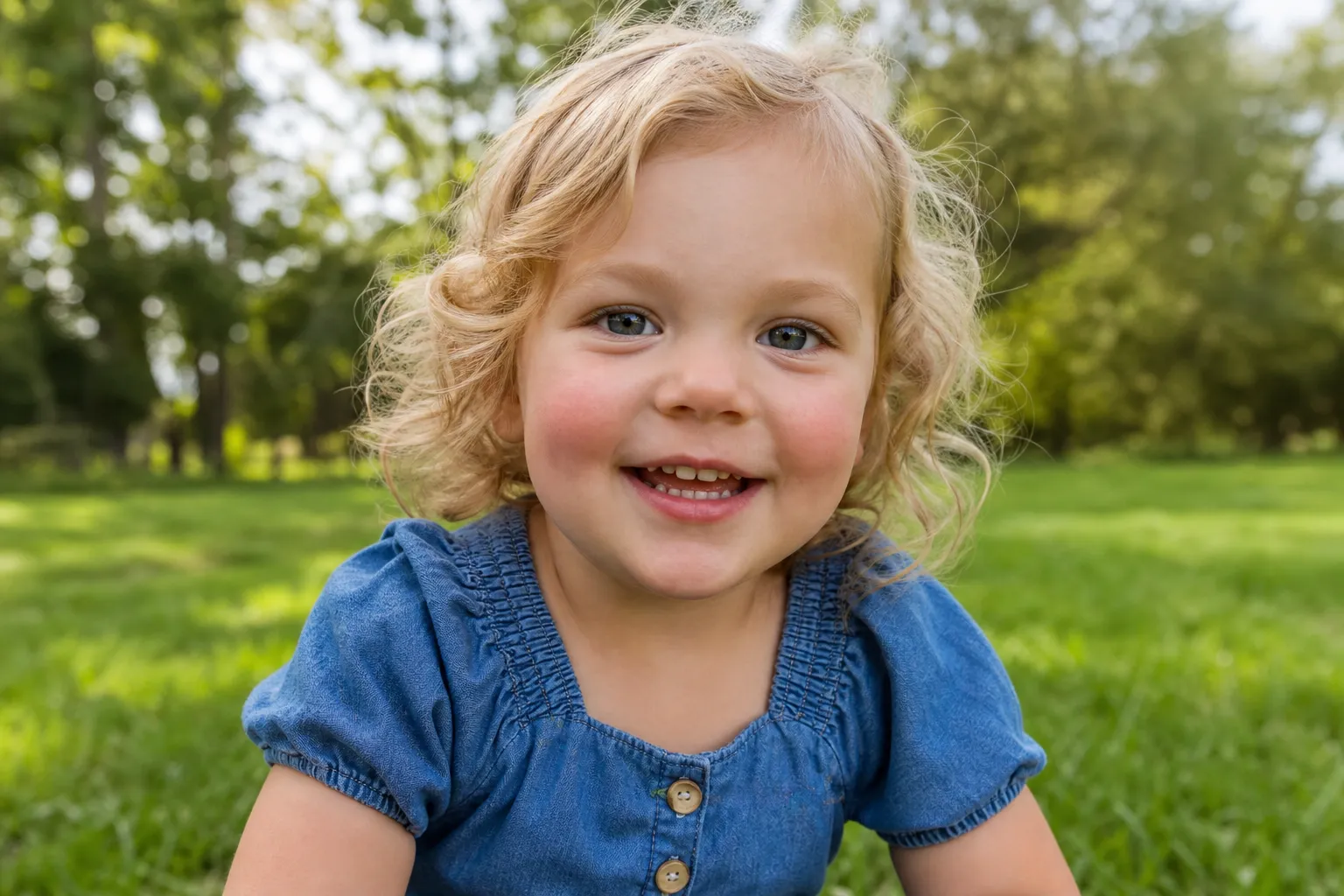
Get the camera where the child actually lives and their face comes back to you. But a kid at eye level who is frozen and waiting is still no photo, which is the next move.
Shoot in burst, through the motion
Kids do not hold still, and they do not warn you before the good half-second happens. One careful press almost always lands on a blink, a turn, or a blur. So stop betting everything on one press.
Hold the shutter down and let the camera fire a run of frames straight through the running, the spinning, the laughing. Click Love Grow, in its guide to sharper photos of kids in motion, says to choose continuous burst mode and pair it with continuous focus so the camera keeps tracking as the child moves. You shoot a dozen frames, you keep the one or two keepers, you delete the rest. That is not cheating. That is how the people whose kid photos always look good actually get them.
The reason a burst works is shutter speed. A blurry kid photo is almost always a shutter that stayed open too long while the child moved across it. Digital Photography School, in its guide to avoiding blurry photos of kids, puts the floor at around 1/125 to 1/250 of a second once a child is running or jumping. Click Love Grow goes further for fast action: about 1/500 for dancing, 1/1000 for a child running at full speed. The faster they move, the faster the shutter has to be to freeze them.
Light is what buys you that speed. A fast shutter lets in less light, so a dim living room forces the camera to slow back down and the blur returns. Get the child near a big window or, better, outside in daylight. Digital Photography School’s own fix for blur is to raise the light first, through brighter surroundings, a wider aperture, or a higher ISO, so the shutter is free to move fast. Bright light plus burst is most of the battle.
One paste-ready photo move like this lands in my newsletter every week, the kind you can use on a Tuesday afternoon at the park. Subscribe and the first thing you get is the Independent Brand Visual Kit, twelve copy-ready prompts for the founder portraits, listing photos, and pins you keep meaning to make. Get it here.
Stop posing them. Bribe and play
This is the move that changes everything, and it is the hardest to accept, because it means giving up the photo you think you want. You will never get a good picture by telling a small child to sit still and say cheese. A posed kid performs. A playing kid forgets you exist. That second face is the one you actually want.
So do not pose them. Give them a job and photograph them doing it. The photographers at The Click Community, in their guide to shooting uncooperative kids, put it as bluntly as it can be put: don’t make them pose, make them play instead. A child will never be uncooperative as long as the session looks like a fun game.
The prompts that work are small, specific, and a little sneaky. A few that pull a real face out of almost any kid:
- Blow a stream of bubbles and shoot them chasing it. Movement, delight, and a reason to ignore you, all at once.
- “Can you find me three red things?” The Click Community leans on these little find-it games; the concentration on their face is the photo.
- A small bribe, openly. Mini marshmallows and a square of chocolate are on The Click Community’s own list. A snack buys you ninety seconds of a kid who has somewhere else to put their attention.
- Get the silly posed shot out of the way first. The Click Community recommends letting a ham kid mug for one or two frames, see them on the screen, and then move on, so the urge to perform is spent before you start catching the real moments.
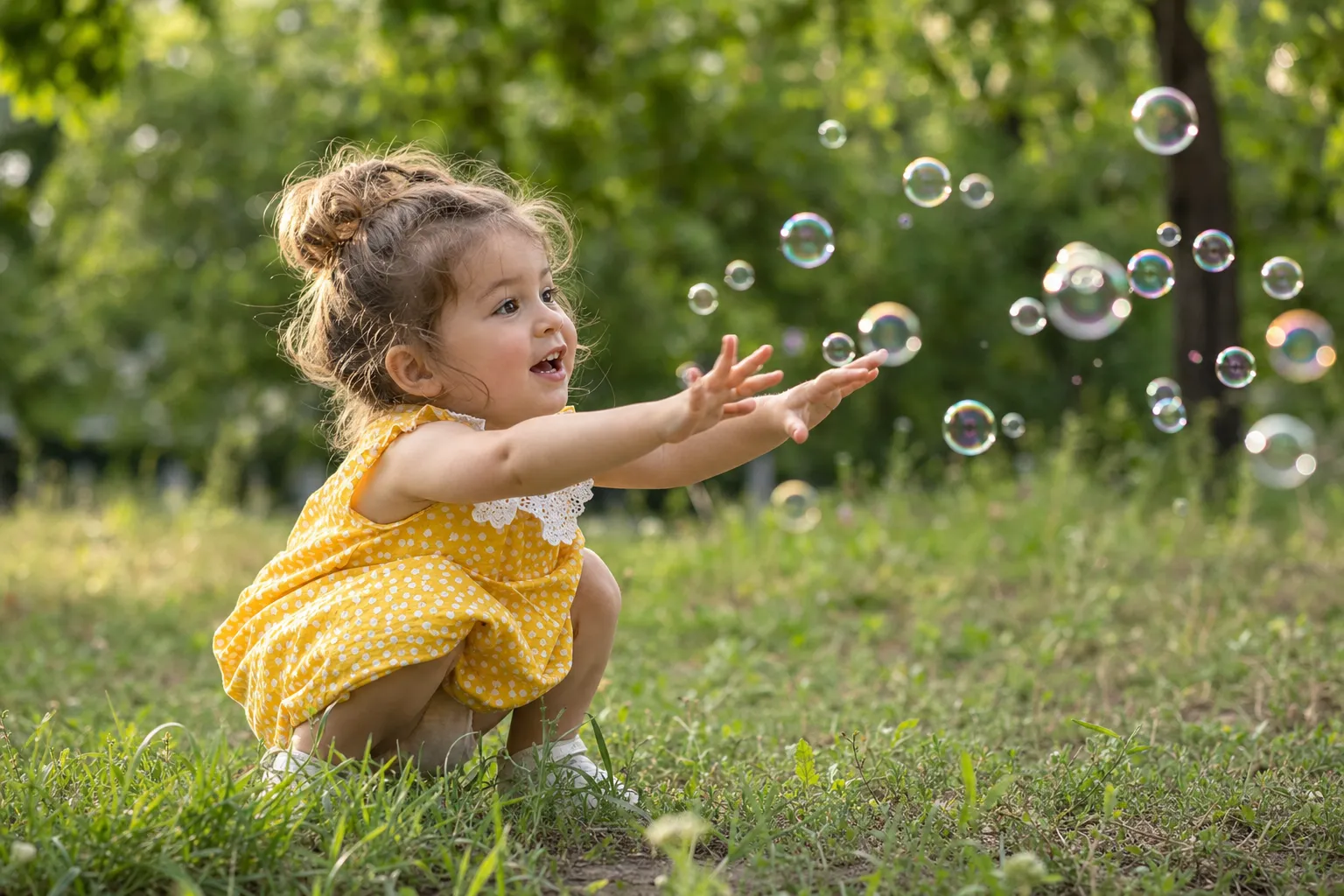
A prop is just a job they can hold. Bubbles, a favorite toy, a dandelion to blow, a puddle to stomp. It answers the only question a self-conscious kid is really asking, which is what am I supposed to do right now. Answer it with play and the real child shows up. That is the whole game, and these three free moves together do most of what a paid session would have charged you for.
When the photo still won’t come
Some days none of it lands. The kid is overtired, mid-meltdown, or simply done with you and the camera, and the right move is to put the phone away and try another afternoon. That is normal. It is not a failure of technique.
It does help to know what these three free moves are standing in for.
When the problem is the child and not the technique, the answer is patience plus the moves, not a better camera. The directing tricks that work on a cooperative adult live in how to take good photos of people; this kid version is what you reach for when the subject can’t follow a single instruction. And if it is your own face that never comes out right in the family photos, the levers you actually control are in how to be photogenic. For the rarer case where you need a clean photo of yourself and there is no one to take it, our free AI photoshoot builds one from a single selfie while keeping your real face. There is no tool that fixes a blurry photo you took of your kid, though. That one is on the three moves.
FAQ
Q: How do I get my toddler to look at the camera?
A: Mostly, you don’t, and you stop trying. A toddler told to look at the lens and smile will freeze or look away. The fix is to make the camera irrelevant. Give them something to do, get down to their eye level, and fire a burst while they play. The best frame is usually the one where they glance up at you for half a second on their own, not because you asked.
Q: Why are all my photos of my kids blurry?
A: Your shutter is too slow for how fast they move, usually because you are indoors in dim light. Digital Photography School recommends at least 1/125 to 1/250 of a second once a child is running or jumping, and Click Love Grow goes to 1/1000 for full-speed running. Get into brighter light, turn on burst mode, and the blur mostly disappears.
Q: What is the best way to take pictures of toddlers who won’t sit still?
A: Stop asking them to sit still. The photographers at The Click Community put it plainly: don’t make them pose, make them play instead. Hand them bubbles, a snack, or a small game like finding three red things, then photograph them absorbed in it from their eye level. A moving, playing toddler gives you a real face. A still, posed one gives you a fake smile.
Q: Should I make my kids pose for photos?
A: One or two posed shots are fine, and getting the ham instinct out of the way early can help. But the keepers are almost always candid. The Click Community and Digital Photography School both build their whole approach around letting kids run the session and catching the in-between moments, because a posed kid performs and a playing kid forgets the camera is there.
Key Takeaways
- A bad photo of your kid is almost always a height problem, a shutter problem, or a posing problem, not a camera or a face problem.
- Get down to their eye level. Shooting down from adult height gives you the top of their head; dropping to their eyes gives you their face.
- Turn on burst mode and shoot through the motion in good light. A fast shutter, around 1/500 for active play, freezes the wriggling that one careful press always misses.
- Stop posing them. Hand them bubbles, a snack, or a small game, and photograph them absorbed in it. The candid is the photo, not the consolation prize.
So what’s your kid doing this afternoon?
The next ordinary afternoon with your kid is the whole opportunity. Not a studio, not a holiday, not a matching-outfit portrait day. Just a normal hour where they are busy being three.
Get low. Turn on burst. Hand them something to do and stop asking them to look at you. Then wait for the half-second they forget the phone is there. That is the photo you will still want on the wall in ten years. Who’s going to take it, the one telling them to smile, or the one waiting for them to mean it?