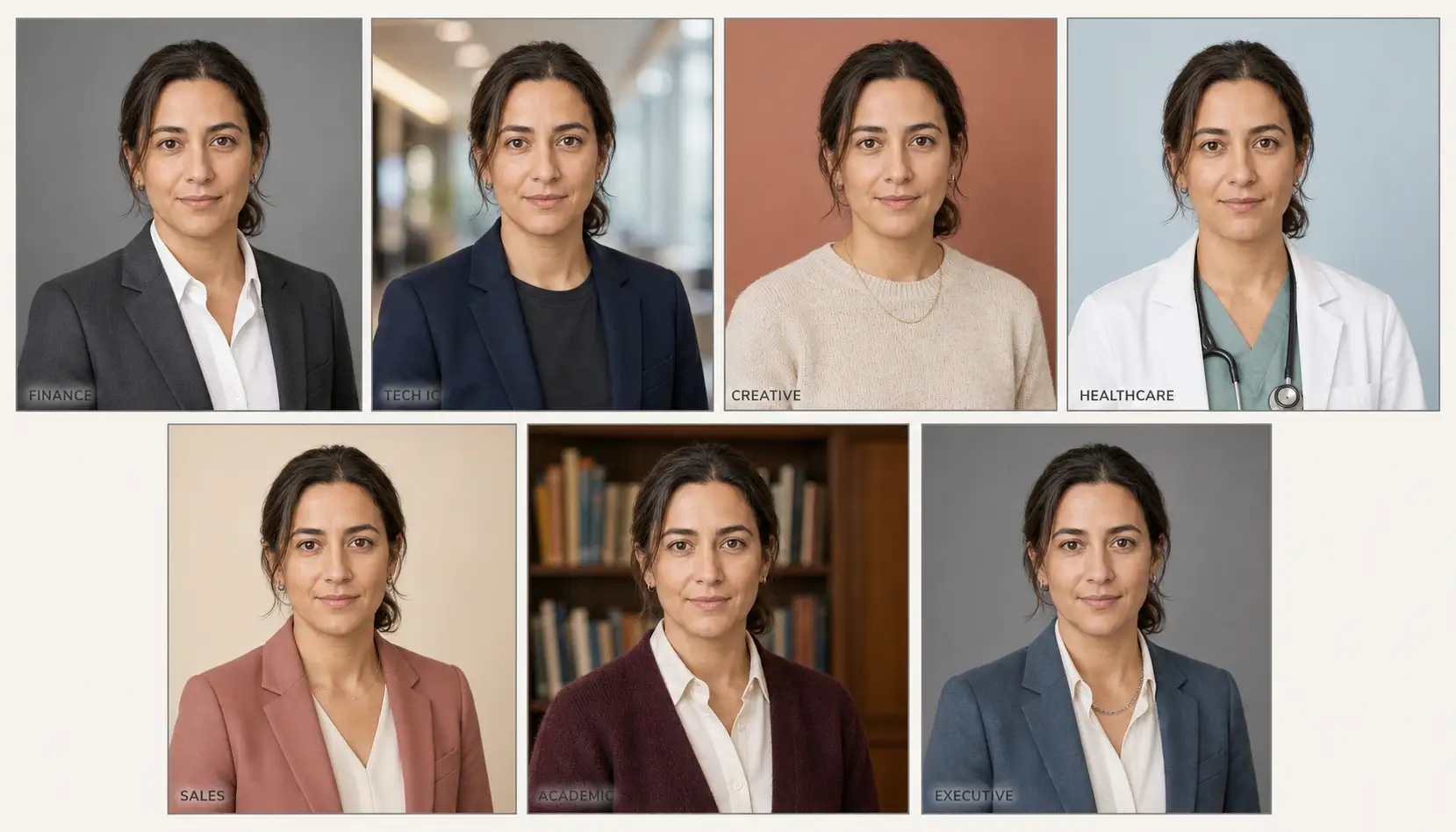
The recruiter looks at your LinkedIn photo for about six seconds. That number is from TheLadders’ 2012 eye-tracking study, updated to 7.4 seconds in their 2018 follow-up. Either number is short. The face on the thumbnail does the work the bio does not get a chance to do. The face has to pattern-match the archetype the recruiter is hunting for. The generic blue-blazer recruiter-stock look fails that pattern-match for about half the jobs on this earth, and the reader who pasted it in is being skipped without knowing why.
The Six-Second Scan
A recruiter on Tuesday morning has eighty-seven LinkedIn profiles open in twenty-two minutes. She is not reading. She is scanning. TheLadders’ 2012 eye-tracking study, run on thirty real recruiters wired with eye-tracking gear, measured the average résumé and profile scan at around six seconds before the recruiter decided to keep reading or to move on. The 2018 follow-up updated the number to 7.4 seconds. The headshot occupied the largest single share of those eye fixations. LinkedIn’s own published statistics, repeated across their corporate Talent Blog and onboarding guidance, put profiles with a photo at roughly fourteen times more views than profiles without one.
Which means the headshot does not need to be beautiful. It needs to pattern-match.
The recruiter screening for a finance role is pattern-matching against the finance archetype. The recruiter screening for a tech IC role is pattern-matching against the tech archetype. The same blue blazer that lands the finance hire reads as overdressed for the tech screen. The same casual navy tee that lands the tech screen reads as careless for the finance pull. The advice you have been getting (“wear a blazer, neutral background, smile a little”) is the average of all seven archetypes, and the average lands wrong for every specific one.
Outcomes are about what you get. Wardrobe is about what you signal.
Which is why the next question is not “how do I get a better LinkedIn headshot.” It is “what does my archetype’s headshot actually look like, and how is it different from the others.”
Seven archetypes from one selfie
The seven below are rendered from the same canonical face. The bone structure, eye shape, nose, lips, and proportions hold across every tile. The wardrobe and the backdrop are what swing the read. Pick yours.
Archetype #1: Finance / consulting
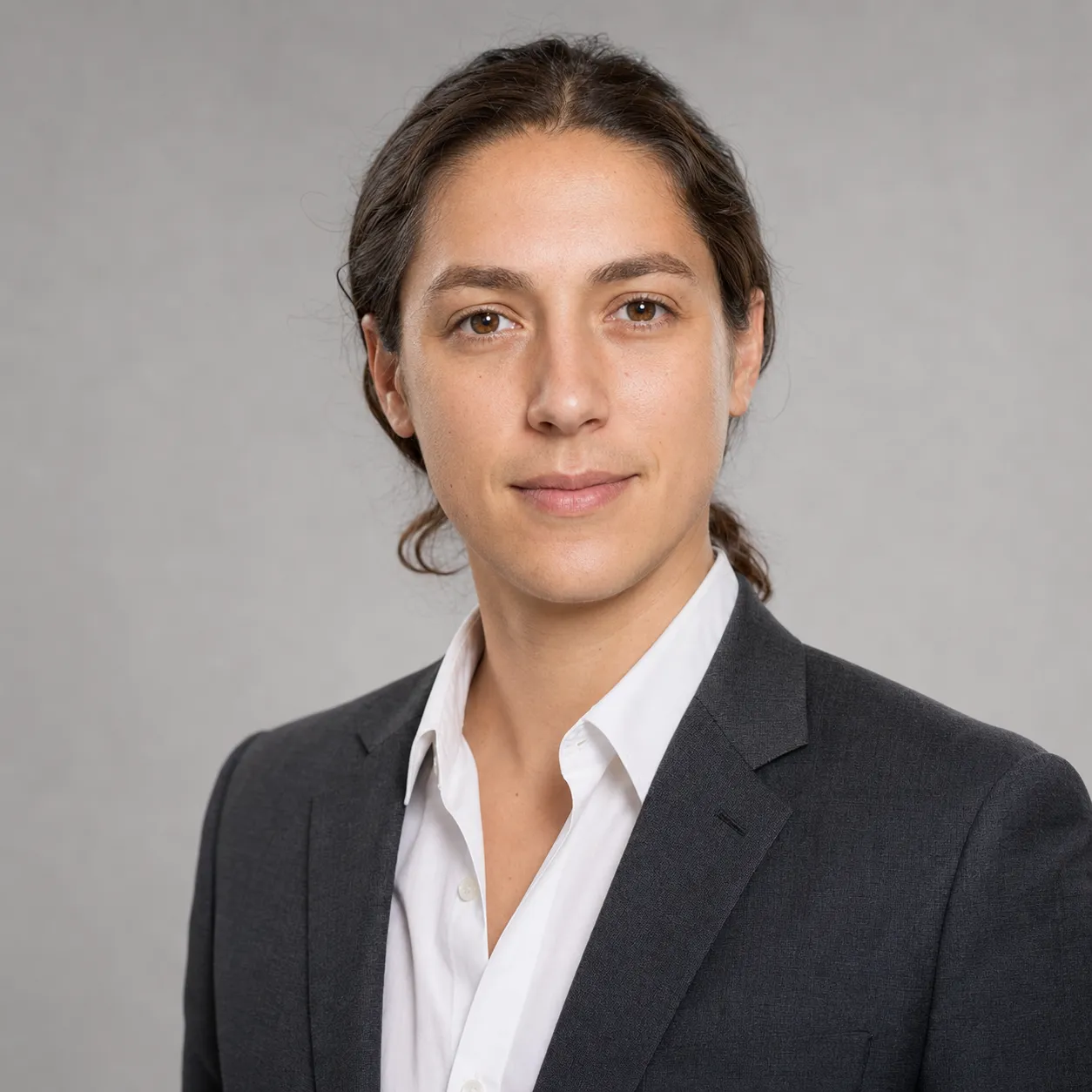
- Wear: a well-tailored charcoal suit jacket over a crisp white open-collar shirt, no tie, against a soft neutral mid-gray backdrop.
- Ditch: the tie, the patterned shirt, the colored blazer.
- Why: finance recruiters pattern-match on quiet seriousness. Goldman Sachs dropped its mandatory-tie rule firm-wide in 2019, following JPMorgan’s 2016 business-casual memo. The open-collar look is now the finance default, not a downgrade. Visual loudness still reads as poor judgment, which is the one trait the screen will not forgive.
Archetype #2: Tech IC (engineer / PM / designer-engineer / data scientist)

- Wear: a soft-shoulder navy blazer relaxed over a plain charcoal tee, against a warm soft-bokeh office backdrop.
- Ditch: the full suit-and-tie, the hoodie, the bedroom-selfie wall behind you.
- Why: tech recruiters pattern-match on “ships software, has taste, isn’t trying too hard.” Stack Overflow’s 2023 Developer Survey reported 42% of professional developers as fully remote and 41% as hybrid; eight-in-ten of your peers are NOT shooting a headshot in a corporate lobby. The headshot has to telegraph “I do real work, and the camera caught me on a Tuesday at my desk.” Both ends of the formality spectrum read wrong.
Archetype #3: Creative (designer / writer / brand / art director)
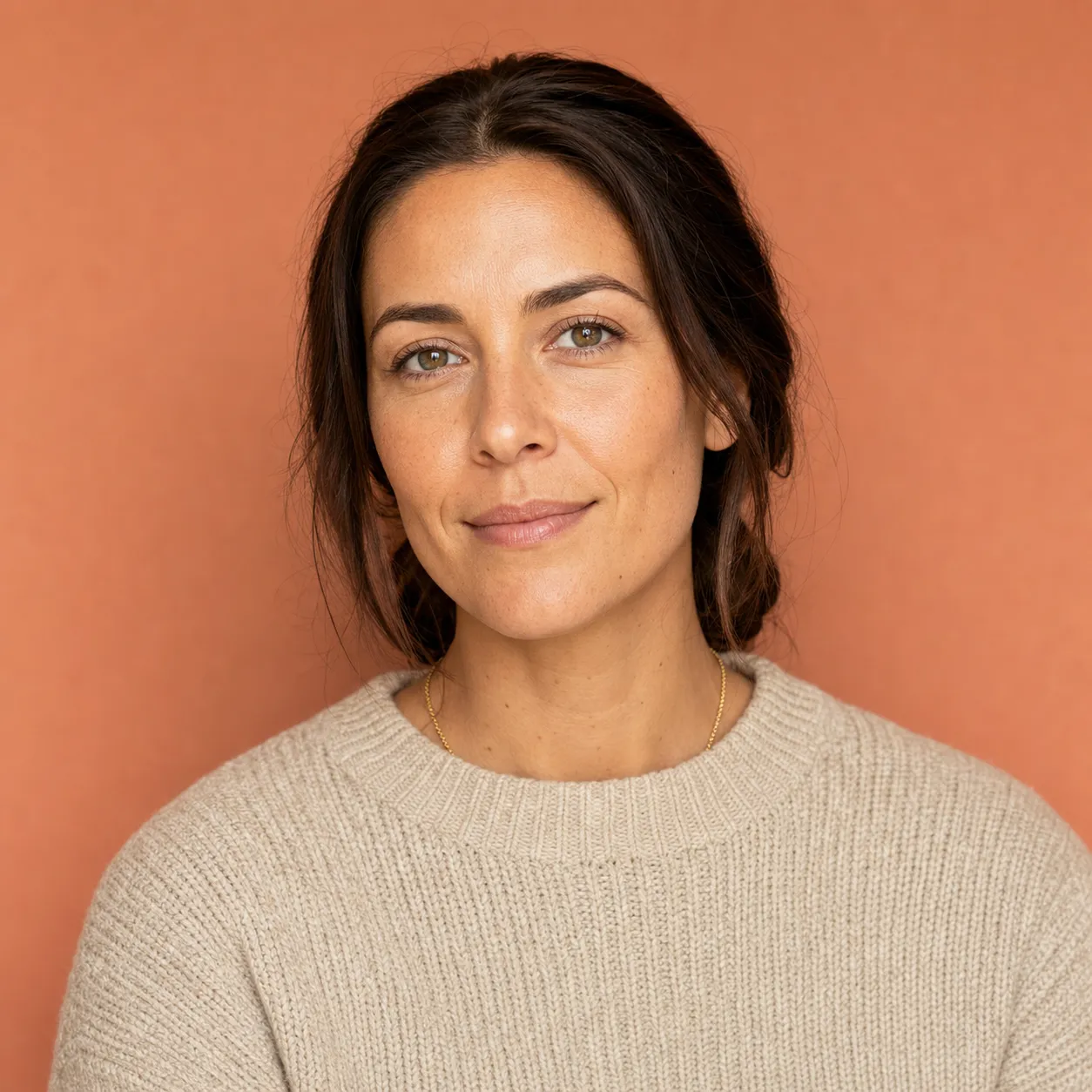
- Wear: a quality oatmeal heavyweight knit, a single thin gold chain, against a soft warm-terracotta painted wall.
- Ditch: the corporate suit, the loud “creative-trying-too-hard” outfit, the busy studio-prop backdrop.
- Why: creative recruiters read considered taste in a single warm color choice. Industry-side reviews of senior-creative portfolios consistently flag personal-brand visual coherence as a top input; statement wardrobes read as taste anxiety.
Archetype #4: Healthcare clinical (physician / NP / PA / clinical specialist)

- Wear: a clean white coat over a sage-green scrub top, stethoscope draped at the collar, against a quiet pale-blue clinical wall.
- Ditch: the blazer-over-scrubs hybrid, the medical-equipment backdrop, the readable hospital badge.
- Why: clinical recruiters need to see the uniform. A well-cited 2005 University of Michigan patient-preference study (Rehman et al., American Journal of Medicine) found patients overwhelmingly preferred physicians in professional attire with a white coat. The visual cue still dominates patient trust two decades later. The patient on the other side of the screen reads it the same way.
Archetype #5: Sales / client-facing (BD / CS / account / partnerships)
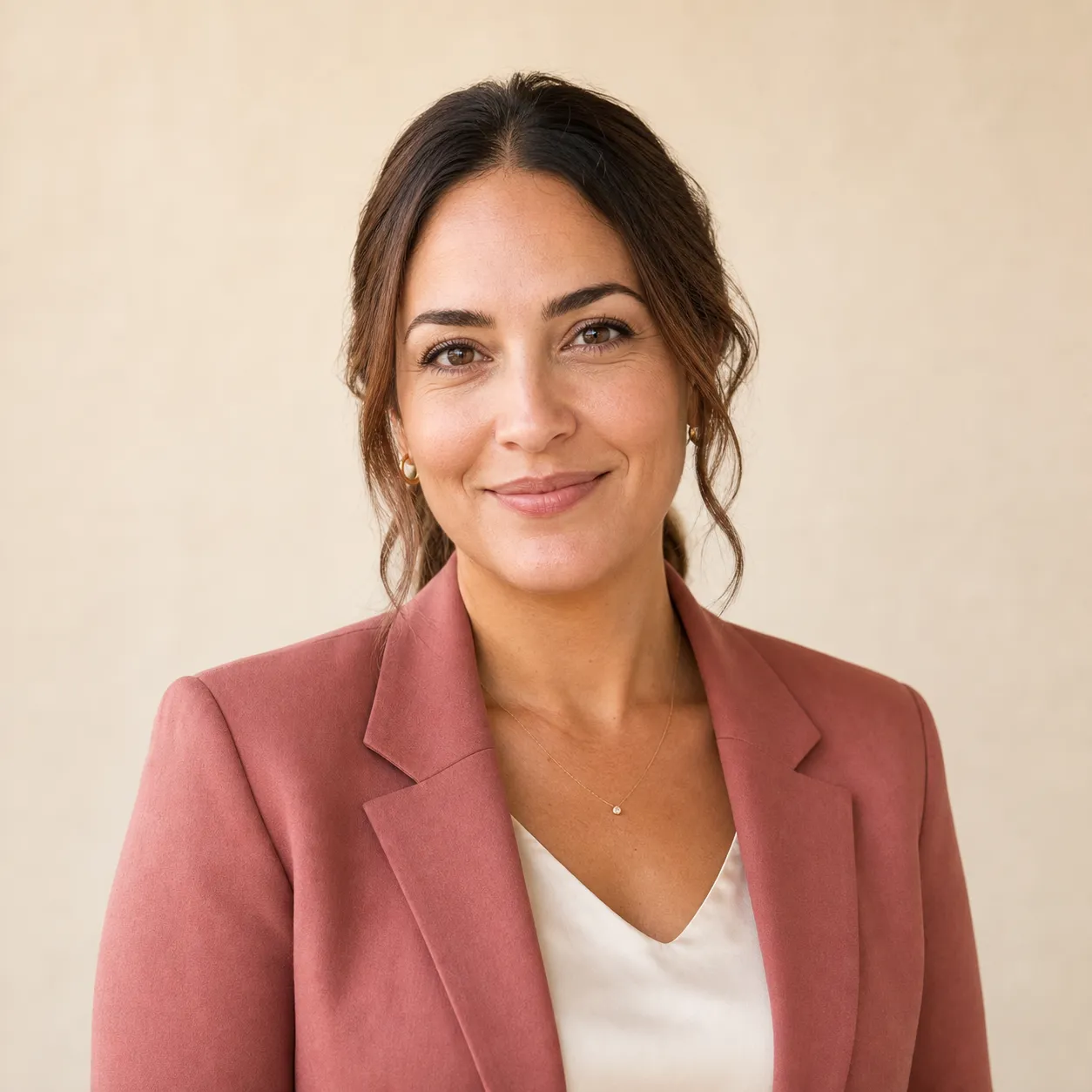
- Wear: a confident-but-restrained dusty-rose blazer over a cream silk shell, against a soft warm-cream backdrop.
- Ditch: the full teeth-bared grin, the multi-color busy wardrobe, the empty-office video-call backdrop.
- Why: sales recruiters discount the over-eager smile and the visual noise. One restrained color does the warmth signaling for you.
Archetype #6: Academic / research (faculty / scientist / scholar / postdoc)
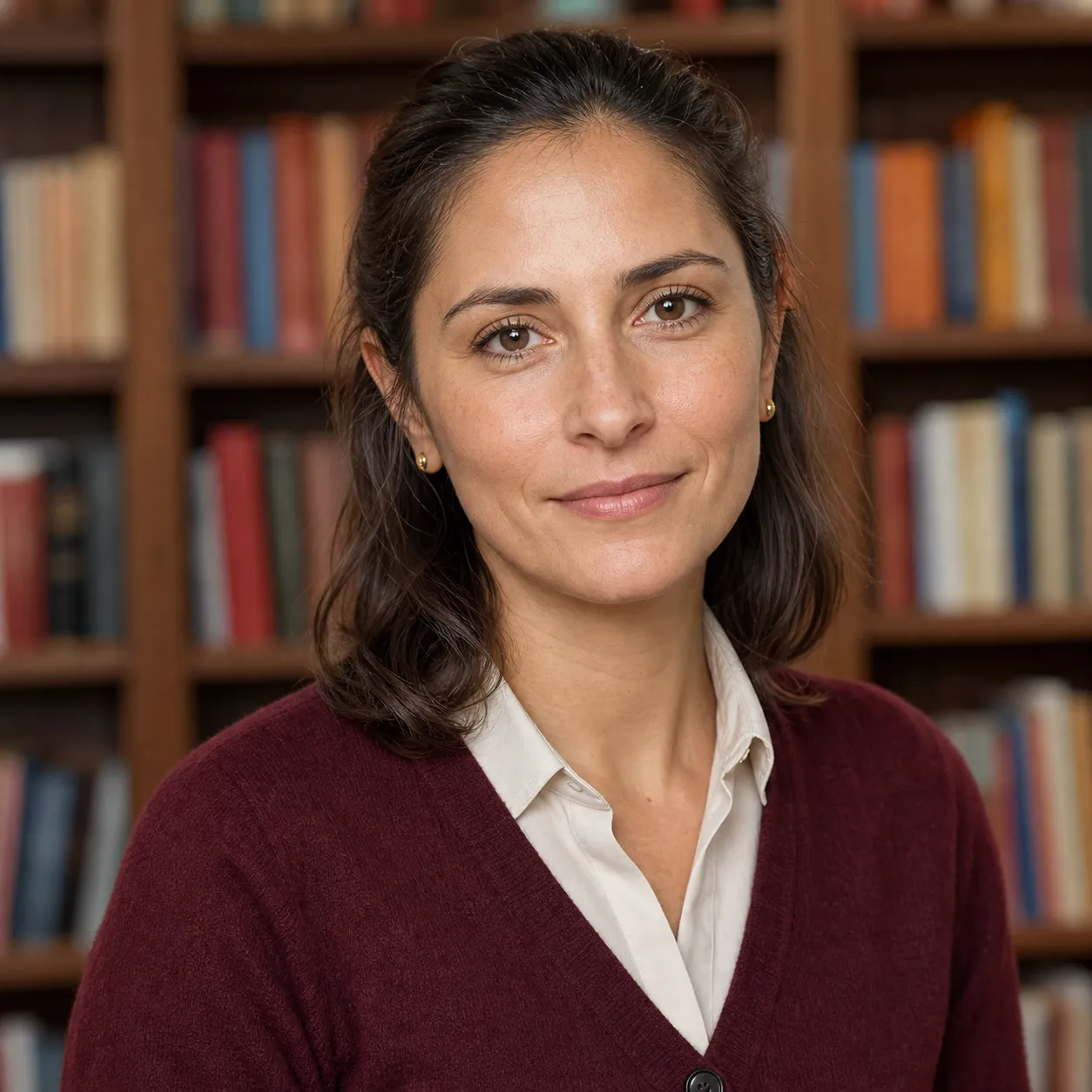
- Wear: a soft burgundy cardigan over a cream button-down, against a softly blurred warm wood book-lined backdrop.
- Ditch: the full suit, the empty wall, the readable book titles fighting for attention.
- Why: academic recruiters read “has done the reading” in the cardigan-plus-books combination. Suits read as “industry person playing academic.”
Archetype #7: 50+ executive (VP / SVP / C-suite / partner / board member)
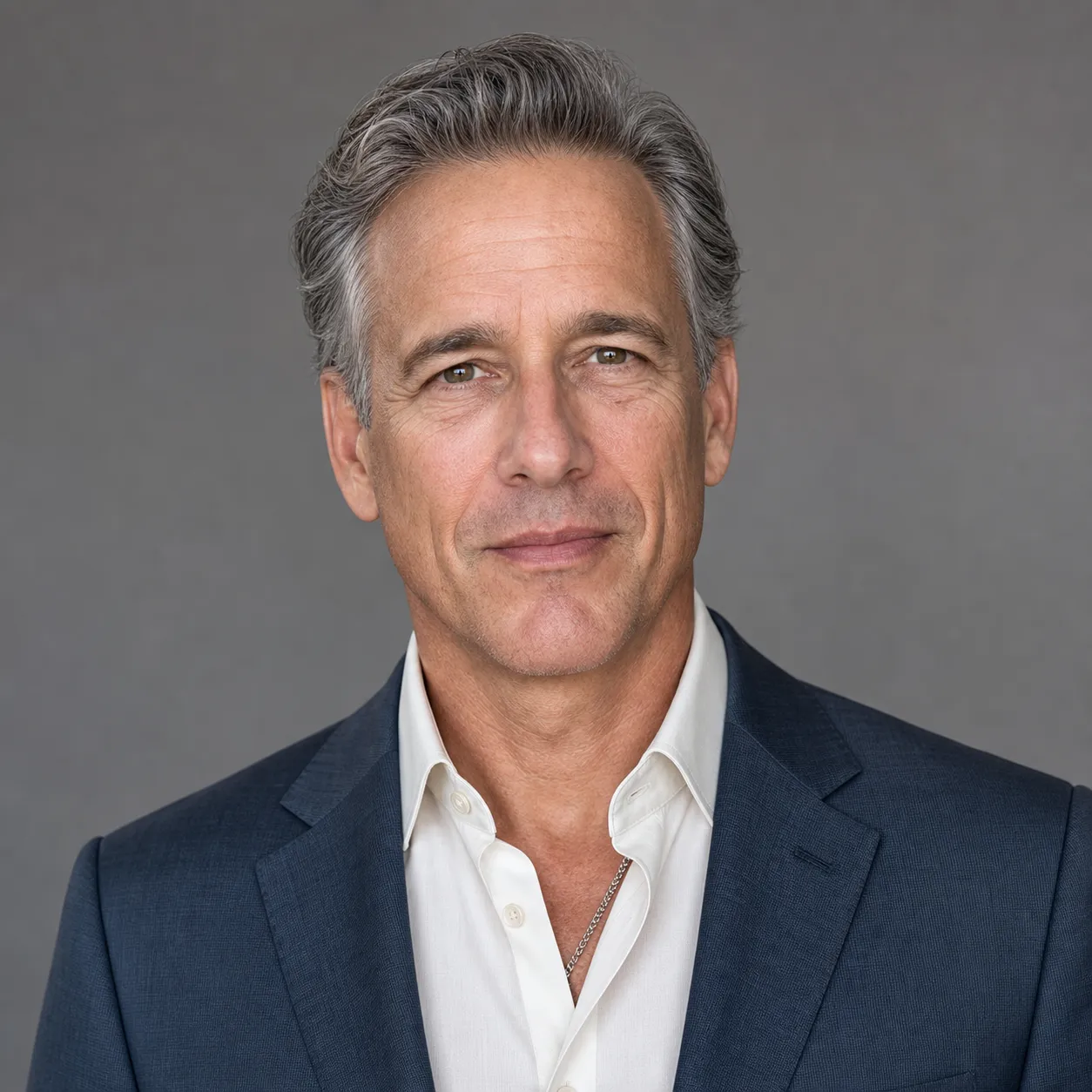
- Wear: a refined slate-blue blazer over an open-collar cream silk shirt, a single understated silver chain, against a soft mid-gray backdrop.
- Ditch: the airbrushed-to-thirty AI-headshot service render, the tie, the loud blazer.
- Why: executive recruiters pattern-match on calm authority. Korn Ferry’s published executive-search research has long flagged “calm, established demeanor” as a top-decile signal in C-suite shortlists; visible age and unforced texture are credibility inputs to that read, not problems to fix.
Seven archetypes. One face. The wardrobe is what swings the read. Capturely’s published guidance for corporate headshots converges on the same rule: industry-fitted attire over generic business formal, every time.
The One Paste That Builds Yours
Upload one clear front-facing photo of yourself, paste the block below into ChatGPT (or Claude, Gemini, or any AI image tool), and swap the single placeholder for the wardrobe row that matches your archetype.
Show the full promptTap to expand
Paste this into your AI (ChatGPT, Claude, Gemini, or any image tool).
REQUIRED upload before pasting: one clear, well-lit front-facing photo of your face.
Then swap the single placeholder {ATTIRE_BY_JOB_TYPE} for the wardrobe row that matches your archetype (the seven-row table is included below the rules).
Generate this image:
A single photoreal 1:1 square LinkedIn-style head-and-shoulders headshot of the person from the uploaded reference image. Match their bone structure, eyes, nose, lips, proportions, and skin tone exactly so the subject is clearly recognizable. The subject sits or stands upright with relaxed shoulders, body angled barely off-axis to camera (about ten degrees), head centered slightly above the vertical midpoint, eyes meeting the camera directly with a calm, grounded, faintly smiling expression. They wear {ATTIRE_BY_JOB_TYPE}. The backdrop is a quiet, uncluttered studio surface appropriate to the wardrobe (neutral mid-gray for finance, warm soft-bokeh office for tech, single-color warm wall for creative, pale-blue clinical for healthcare, warm-cream for sales, blurred warm-wood book wall for academic, or neutral mid-gray for executive) and stays simple enough that the wardrobe carries the archetype signal. Lighting is soft balanced front-light: a large soft key directly in front of the subject with a gentle fill, producing even illumination with only mild natural fall-off on the cheekbones. The subject occupies 60-70% of the vertical frame. Skin shows visible pores, fine micro-texture, and natural micro-asymmetry; no porcelain smoothing. Shot on a 50mm-equivalent lens at approximately f/4, modest shallow depth of field, the backdrop slightly out of focus but never competing. Single 1:1 square LinkedIn-format head-and-shoulders portrait, identity-locked to the uploaded reference.
Rules the AI must follow:
- Aspect ratio 1:1 square LinkedIn head-and-shoulders portrait: strict, locked at the start and the end of the prompt
- Identity preservation is the highest-priority constraint: match the uploaded reference photo’s bone structure, eyes, nose, lips, proportions, and skin tone exactly; the subject must be unmistakably the same person
- Lighting is soft balanced front-light only: a large soft key directly in front of the subject with a gentle fill; do NOT use directional cinematic key from upper-left at forty-five degrees, that is the wrong light for a LinkedIn recruiter-screen headshot
- Subject occupies 60-70% of the vertical frame: tight head-and-shoulders crop, never wider than mid-chest
- Realistic skin texture required: visible pores, fine micro-asymmetry, natural unevenness; no porcelain smoothing, no over-retouched beauty filter, no waxy AI-plastic surface
- Age is preserved: if the uploaded reference shows visible fine lines or age-appropriate texture, keep it; do not airbrush the subject younger
- One human figure only: solo subject; no advisors, no crowd, no background people, no multi-exposure ghosts
- No text, captions, watermarks, logos, brand marks, badge text, or readable signage anywhere in the frame
- Single image output: no contact sheet, no variant grid, no before/after split, no multiple angles in one frame
- All text in English Latin script if any incidental signage appears
- Output the image directly without explaining the prompt back
Replace these placeholders with your details:
- ⚠️ REQUIRED. Upload before pasting: a clear, well-lit front-facing photo of your face (this is the face the AI will keep; without it the portrait will not look like you)
{ATTIRE_BY_JOB_TYPE}= one of the seven archetype wardrobes below. Pick the row that matches your job and paste only the “Wear” cell into the placeholder.
| Your archetype | Wear (paste this into {ATTIRE_BY_JOB_TYPE}) |
|---|---|
| Finance / consulting | a well-tailored charcoal-gray suit jacket over a crisp white open-collar shirt, no tie, modern minimal cut |
| Tech IC (engineer / PM / designer-eng / data scientist) | a soft-shoulder navy blazer worn relaxed and slightly open over a plain charcoal cotton crew-neck tee |
| Creative (designer / writer / brand / art director) | a quality oatmeal heavyweight knit sweater with a wide ribbed collar, a single thin gold chain just visible above the sweater line |
| Healthcare clinical (physician / NP / PA / clinical specialist) | a clean clinical white coat over a soft sage-green scrub top with a v-neckline, a stethoscope draped naturally around the neck |
| Sales / client-facing (BD / CS / account / partnerships) | a confident-but-restrained dusty-rose tailored blazer over a cream silk shell, modern cut |
| Academic / research (faculty / scientist / scholar / postdoc) | a soft burgundy v-neck cardigan over a cream cotton button-down shirt with a small visible collar |
| 50+ executive (VP / SVP / C-suite / partner / board member) | a refined slate-blue tailored blazer over a soft cream silk shirt with an open collar, a single understated silver chain just visible above the collar line |
Bonus tips.
- If your role mixes archetypes (a creative director at a finance firm, a clinician moving into health-tech, an academic going into industry), pick the archetype of the audience you want to win. Recruiters in finance pattern-match against finance; recruiters in tech pattern-match against tech.
- For darker skin tones, the soft balanced front-light setup carries directly without modification; do not let the AI add a directional key light that introduces harsh contrast.
- The 1:1 square crop is the LinkedIn standard. If you need the same identity-locked headshot for a different platform aspect (3:4 for Instagram bio, 16:9 for a conference speaker card), re-render with the aspect line swapped at the start AND end of the prompt. Leave everything else identical.
- Swap the backdrop language if the listed default fights your industry. Example: an “academic” researcher who works in industry can swap “warm wood book-lined backdrop” for “soft neutral mid-gray seamless studio backdrop”. The cardigan still does the archetype signaling without the library context.
The Wardrobe Difference, in One Table
The gallery above, compressed into one screenshot-worthy reference. LinkedIn’s own published profile-photo guidance confirms the broad rule (head-and-shoulders framing, plain background, the face occupying around 60% of the frame). The archetype-specific spec below is what the generic LinkedIn advice does not give you.
| Archetype | Wear | Ditch | Why |
|---|---|---|---|
| Finance / consulting | Charcoal suit jacket, white open-collar shirt, neutral mid-gray backdrop | The tie, the busy patterned shirt, the “fun” colored blazer | Finance recruiters pattern-match on quiet seriousness; visual loudness reads as poor judgment |
| Tech IC | Soft-shoulder navy blazer relaxed over a plain charcoal tee, warm soft-bokeh office backdrop | The suit-and-tie, the hoodie, the bedroom-selfie wall behind you | Tech recruiters pattern-match on “ships software, has taste, isn’t trying too hard”; both ends of the formality spectrum read wrong |
| Creative | Oatmeal heavyweight knit, thin gold chain, single warm-color painted wall | The corporate suit, the loud “creative-trying-too-hard” outfit, the busy studio prop backdrop | Creative recruiters read considered taste in one color choice; statement wardrobes signal taste anxiety |
| Healthcare clinical | White coat over sage scrub top, stethoscope at the collar, quiet pale-blue wall | The blazer-over-scrubs hybrid, the medical-equipment backdrop, the readable hospital badge | Clinical recruiters need to see the uniform; the patient on the other side of the screen reads it the same way |
| Sales / client-facing | Dusty-rose tailored blazer over cream silk shell, soft warm-cream backdrop | The full grin showing teeth, the multi-color busy wardrobe, the empty-office video-call backdrop | Sales recruiters discount the over-eager smile and the visual noise; one restrained color does the warmth signaling |
| Academic / research | Burgundy cardigan over cream button-down, softly blurred warm wood book-lined backdrop | The full suit, the empty wall, the readable book titles fighting for attention | Academic recruiters read “has done the reading” in the cardigan-plus-books combination; suits read as “industry person playing academic” |
| 50+ executive | Slate-blue blazer over cream silk shirt open-collar, single silver chain, mid-gray backdrop | The airbrushed-to-thirty AI-headshot service render, the buttoned-up tie, the loud blazer | Executive recruiters pattern-match on calm authority; visible age and unforced texture are credibility signals, not problems to fix |
The cost arithmetic is worth naming. A professional headshot studio session in the US runs roughly $300 to $1,200 for a single one-hour session, per published rates at studios like Capturely and the editorial-tier prices at boutique New York studios like The Light Committee. Most of that fee is the studio time, not the photograph itself. The wardrobe research the photographer does for you, the wardrobe research above does for free. The remaining variable is whether you can render the headshot itself.
A short detour from the article: the Independent Brand Visual Kit is the free pack we hand new subscribers. Twelve copy-ready AI image prompts (founder portraits, LinkedIn headshots, Etsy listing photos, merch mockups). The pack arrives the moment you subscribe, plus one paste-ready AI move a week after that. The kind you can use on a Tuesday or a Sunday.
Why this prompt works (and how it differs from the founder portrait)
The prompt does four load-bearing things.
It identity-locks to the photo you uploaded. The first instruction in the prompt names the face: bone structure, eyes, nose, lips, proportions, skin tone. That is the highest-priority constraint, not the last. Identity drift is the failure mode of every default AI-headshot service, and the way to defeat it is to put the lock at the top of the prompt and not at the bottom.
It specifies soft balanced front-light, not directional cinematic key. This is the single biggest separator from the editorial founder portrait prompt our sister piece on the About-page founder hero uses. The founder portrait wants Forbes-cover gravitas, which is a directional key from the upper-left at forty-five degrees with a cool fill on the shadow side. The LinkedIn recruiter-screen headshot wants soft balanced front-light: an even broad key with a fill, which is the studio setup Peter Hurley (the photographer behind the bulk of New York’s published professional headshots) has documented across two decades of his published technique guides. Same identity-lock engine, different light, different job.
It forces 1:1 square framing and 60-70% subject occupancy. LinkedIn crops your profile photo into a circle inside a square; their published profile-photo specs hold the displayed image at 400×400 pixels. Anything wider than head-and-shoulders loses to the crop. Anything tighter than mid-chest reads as a cropped-out selfie.
It forbids porcelain skin by name. The methodology piece on why AI images look fake breaks down the wax-figure tell mechanism in detail; the short version is that the model defaults to airbrushed, and the only way to defeat the default is to write the words “visible pores, fine micro-texture, natural micro-asymmetry, no porcelain smoothing” into the rules block. The prompt does.
The separation from the editorial founder portrait is worth showing explicitly. Same engine, two jobs.
| Dimension | Founder editorial portrait | Recruiter-screen LinkedIn headshot |
|---|---|---|
| Reader state | ”I’m selling, my About page failed the prospect" | "I’m being screened, recruiters skip me in six seconds” |
| Aspect | 2:3 vertical, crops cleanly to About page hero and pitch-deck slide | 1:1 square, fills the LinkedIn profile circle and the recruiter tab |
| Lighting | Directional cinematic key from upper-left at forty-five degrees, cool fill on the shadow side | Soft balanced front-light, even illumination, only mild natural fall-off |
| Lens / aperture | 85mm at f/1.4, shallow depth, editorial polish | 50mm-equivalent at around f/4, studio-headshot depth |
| Visual gravity | Dramatic Forbes / book-cover / pitch-deck hero | Quiet pattern-match against the archetype the recruiter is hunting for |
| Pack item | The Cinematic Editorial Hero Portrait prompt | The LinkedIn Recruiter-Screen Headshot prompt (by job type) |
| Companion article | The founder portrait piece on About-page hero photography | This article: LinkedIn by job archetype |
A reader in the job-search phase pastes the recruiter-screen prompt above. The same reader six months later, now founding something, pastes the editorial founder portrait. Both run on the same identity-lock rules. The light, the lens, the aspect, and the framing differ.
FAQ
Q: What should you wear for a LinkedIn headshot?
A: What you wear depends on the job archetype recruiters in your field are pattern-matching against. Finance and consulting want a charcoal suit jacket over a crisp white open-collar shirt against a neutral mid-gray backdrop. Tech ICs want a soft-shoulder navy blazer over a plain charcoal tee against a warm soft-bokeh office backdrop. Creatives want an oatmeal heavyweight knit and a single thin gold chain against one warm-color painted wall. Healthcare clinical wants a white coat over scrubs with a stethoscope at the collar. Sales wants one restrained pop of color (a dusty-rose blazer over cream silk). Academics want a burgundy cardigan over a cream button-down against a softly blurred book-lined wall. Executives at fifty-plus want a slate-blue blazer over an open-collar cream silk shirt with a single silver chain. Pick the one that matches the audience you want to win, not the role you currently hold.
Q: How long do recruiters actually spend on a LinkedIn profile?
A: The widely-cited number is around six seconds. That figure comes from TheLadders’ 2012 eye-tracking study of recruiter screen behavior on résumés and online profiles. The Ladders ran a follow-up study in 2018 that updated the average to 7.4 seconds. Either way, the headshot is the single largest pixel surface in that scan, and it is doing the pattern-match work before the bio gets read.
Q: What is the best background for a LinkedIn headshot?
A: The best background is the one that matches your archetype’s wardrobe. Soft neutral mid-gray for finance and executive (lets the wardrobe carry the credibility signal). Warm soft-bokeh office for tech ICs (hints at shipping work, never specific enough to compete). A single warm-color painted wall for creatives (one color choice signals considered taste). A quiet pale-blue clinical wall for healthcare. A soft warm-cream wall for sales. A softly blurred warm wood book-lined backdrop for academics. The rule that holds across all seven: the backdrop is quiet enough that the wardrobe carries the signal, never noisy enough to compete.
Q: Can I use AI to generate a professional LinkedIn headshot?
A: Yes, and the result reads as real if the prompt does four things. One, it identity-locks to a clear front-facing photo of you that you upload as the reference. Two, it specifies soft balanced front-light rather than the directional cinematic key light editorial founder portraits use (wrong light, wrong job). Three, it forces visible pores and natural micro-asymmetry and forbids porcelain smoothing by name. Four, it locks the 1:1 square aspect at the start and the end of the prompt and keeps the subject at 60-70% frame occupancy. The recruiter-screen prompt later in this piece holds all four. The commercial-use license stays yours.
Key Takeaways
- The recruiter scan is around six seconds (per TheLadders’ 2012 study), updated to 7.4 seconds in the 2018 follow-up. The headshot is doing the pattern-match work before the bio gets read.
- Seven archetypes, one face. Finance, tech, creative, healthcare, sales, academic, and executive each have a specific wardrobe-plus-backdrop spec; the generic “blue blazer, neutral wall” advice is the average that lands wrong for every specific one.
- The LinkedIn recruiter-screen headshot uses soft balanced front-light, not the directional cinematic key the editorial founder portrait uses. Wrong light, wrong job.
- One paste-ready prompt block, identity-locked to your uploaded photo, with a seven-row wardrobe defaults table. Swap one cell. Render. Drop into the LinkedIn profile slot.
The Tuesday Morning, Re-run
The recruiter from the top of this piece opens the eighty-eighth profile at twelve past nine. The thumbnail this time pattern-matches the archetype she is hunting for in the first second. She clicks. The bio gets the four seconds it needed.
Which archetype is yours? The honest answer is: whichever one the recruiter you want is hunting for. Pick that one, paste the prompt, and let the wardrobe do the work the bio does not get a chance to. And if you would rather shoot the headshot yourself, the fundamentals that decide whether your face reads well on camera — angle, light, expression — are the same ones in how to be photogenic. The full pack of career-photo prompts (passport-grade ID photos, eight-outfit personal-brand grids, the founder hero portrait, matched team sets) lives in the Image Prompt Pack for $19. Or generate it the no-prompt way: upload one selfie to Dream Photo Studio’s AI photoshoot, pick your archetype, and it produces the headshot for you.