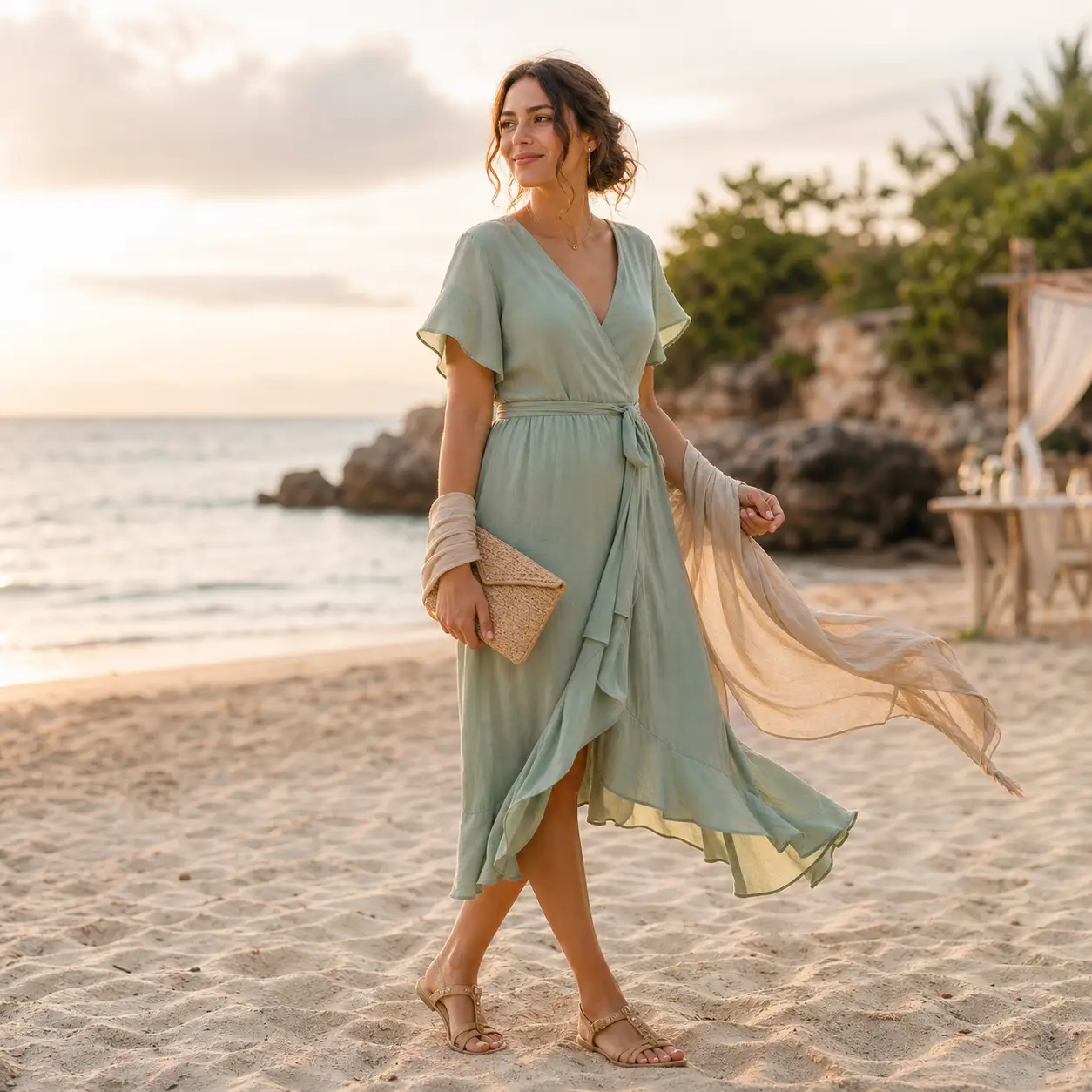
The invitation says “cocktail,” and you already own the dress. Then you read the rest: the ceremony is on a beach. Here is the whole move. Dress to the stated dress code, then let the beach override the details. A cocktail wedding on sand wants different fabric, different shoes, and a different length than the same cocktail wedding in a hotel ballroom. Get those three right and you are dressed for the place, not just the code.
The beach overrides the dress code
Most guests think the dress code decides everything. At a beach wedding, it does not.
The dress code still does its main job. It tells you the formality level: casual, semi-formal, formal. That part is the same as any wedding, and our guide to what to wear to a wedding as a guest walks the full ladder from casual up to black-tie. The Knot’s beach-wedding guidance is firm that the code still rules, so always read the invitation first and dress to what it says.
But the venue changes how you execute it. Sand, heat, wind, and full sun are physics, and they do not care what the invitation says. Call it the beach overrides: the dress code names the rung, and the beach overrides three details on that rung. Those three are fabric, footwear, and length.
This is why a cocktail beach wedding is not a cocktail ballroom. The Knot points out that a waterfront wedding at an upscale club or resort calls for a more formal outfit than a gathering right on the sand, and that everyday attire is only fine if the couple explicitly asks for it. Same word on the invitation, different clothes in your hand. The code sets the level. The beach sets the execution.
Fabric: what breathes and what wilts
The first override is fabric, because heat and humidity decide it for you.
The Knot calls breathable materials like linen and cotton ideal for being outdoors, and treats fabric as a key element of beach attire given the warm, humid conditions you are likely to stand in. Linen, cotton, and chiffon move air and move with the breeze. A heavy, dark, structured fabric does the opposite: it traps heat, shows sweat, and reads stiff in soft outdoor light.
Color follows the same logic. Zola’s beach-wedding guidance recommends lighter colors that complement the scenery over stark black and white, especially for the more formal end. Soft pastels and warm neutrals sit well against sand and water. White, ivory, and cream are still off-limits, because those belong to the bride at any wedding. Heavy black is not banned, but in full midday sun it both absorbs heat and can read severe against a pale beach backdrop.
Zola also notes that formality scales the fabric, not just the color. For semi-formal and formal beach weddings it points to higher-quality breathable materials like silk and linen rather than casual cotton. Breathable is the rule; how refined the weave is moves with the dress code.
Footwear: the no-stilettos-in-sand rule
The second override is the one guests get wrong most often, and it is the easiest to fix.
Stilettos and sand do not mix. The Knot calls stilettos a no-go on the beach and recommends block heels, wedges, dressy flats, or strappy sandals instead, because a chunky heel keeps you from getting stuck in the sand. A thin heel sinks with every step. A wide base floats. That is the entire rule.
| What the beach changes | Do | Skip |
|---|---|---|
| Fabric | Breathable linen, cotton, or chiffon in lighter colors | Heavy, clingy, or dark fabrics that trap heat |
| Footwear | Wedges, block heels, dressy flats, or strappy sandals | Stilettos and thin heels that sink in sand; flip-flops |
| Length | Midi or tea-length that moves with the breeze | Floor-length that drags in sand; strapless in wind |
Sources: The Knot and Zola beach-wedding guest guidance.
Zola sorts the same choice by formality. For a casual beach wedding it suggests dressy sandals or flats; for semi-formal, wedges or thick low heels; for formal, thicker heels or formal flats rather than skinny stilettos. Espadrille wedges are a favorite because they add height without the sink. If you genuinely love a stiletto, Zola offers the workaround guests actually use: wear the nicer heel and bring a flat to change into, or do the reverse and save the heel for indoor photos.
One more line on the casual end. Sneakers can sometimes work at a relaxed beach celebration, but only when the couple has set a genuinely casual tone, so read the invitation before you commit to them. Footwear is the clearest beach override. Length is the one that quietly ruins the photos.
One paste-ready AI move a week, the kind you can use on a Tuesday or a Saturday, plus the free Independent Brand Visual Kit the moment you join. That is the weekly newsletter, built for people who want a real answer instead of a research project.
Length and wind: midi over floor-length that drags
The third override is length, and the wind is what makes it matter.
A floor-length gown that looks perfect indoors drags through sand outdoors and fights you in the breeze. The Knot lists flowy maxis and midis, jumpsuits, and dressy separates as the common beach-guest looks for women, and a midi or tea-length is the beach-smart pick: long enough to read formal, short enough to clear the sand. A jumpsuit is also genuinely allowed here and solves the wind problem outright, since there is no skirt to manage.
Wind is the part guests forget until they are standing in it. The Knot warns to dress for a possible waterfront breeze and suggests skipping strapless styles in favor of something with more support, so a strap or a sleeve holds the shape when the air picks up. A lightweight wrap or sarong earns its place too: it shields you from sun during a long ceremony and gives you something to hold against a gust.
Zola adds that length tracks formality the same way fabric does, from below-the-knee or tea-length for semi-formal up to a long dress for formal, with upscale jumpsuits acceptable across the range. So pick the length the code asks for, then make sure it can survive the sand and the breeze.
Casual beach or beach formal, and the heat
Two rungs cover most beach invitations, and each one bends the three overrides a little differently.
Beach casual leans into comfort. Zola describes it as flowy maxi dresses, high-quality sundresses, and rompers, with dressy flat sandals. Beach formal is the one people misread. Lulus defines beach formal as elegant attire suited for sand and sun, think linen suits, chiffon maxis, wedges, and block heels, with the goal being elevated rather than overdressed. Zola is more specific still: beach formal wants a true long dress, not a casual maxi, and breathable but higher-quality fabrics. For men, Lulus notes beach formal often means linen trousers or a light suit with ties optional, and The Knot adds that you should skip a black suit and choose a color like blue or tan in summer fabrics like linen or seersucker.
Then there is the sun and the heat, which apply at both rungs. Pack a lightweight layer for a cool evening by the water, bring sunglasses for an outdoor ceremony, and keep the wrap within reach. None of this is in the dress code. All of it is in the venue.
Here is the gap none of these rules can close. You can know that a sage linen midi with espadrille wedges is correct for a beach-formal ceremony and still not know whether that dress, in that color, reads right on you against the sand. Our AI outfit try-on takes one photo of you and one photo of any outfit, then shows it on your real body, dressed for the occasion, so you can see the beach look on you before you buy it or pack it.
FAQ
Q: What should a guest wear to a beach wedding?
A: Follow the dress code on the invitation, then adapt it to the sand. The Knot recommends breathable fabrics like linen and cotton, shoes you can walk on sand in such as wedges or dressy flats, and lighter colors over heavy dark ones. A flowy midi dress or a linen suit reads right for most beach weddings.
Q: Can you wear heels to a beach wedding?
A: Block heels and wedges, yes; stilettos, no. The Knot calls stilettos a no-go on sand because thin heels sink, while a chunky heel keeps you steady. Zola suggests wedges or thick low heels for semi-formal beach weddings. If you love a stiletto, wear it for indoor photos and bring a flat for the ceremony on sand.
Q: What does beach formal mean for a wedding guest?
A: Beach formal is elegant attire suited for sand and sun, not a ballroom gown. Lulus describes it as linen suits, chiffon maxis, wedges, and block heels, the goal being elevated rather than overdressed. Zola adds that beach formal wants a long dress or an upscale jumpsuit and breathable but higher-quality fabrics like silk and linen.
Q: What colors should you avoid at a beach wedding?
A: Skip white, ivory, and cream, which are the bride’s, and go easy on heavy black in full sun. Zola advises lighter colors that complement the scenery over stark black and white for formal beach settings. Soft pastels and warm neutrals photograph well against sand and water.
Q: Can a guest go barefoot at a beach wedding?
A: Only if the couple signals it, and only for a ceremony directly on sand. Many guests carry their shoes across the sand and slip them back on for the reception. Flip-flops are not appropriate wedding attire unless the couple hands them out, per The Knot, so a dressy flat sandal is the safer default.
Key Takeaways
- The dress code names the formality level; the beach overrides the execution. Read the invitation first, then adapt for sand, heat, and wind.
- Fabric: choose breathable linen, cotton, or chiffon in lighter colors. The Knot calls these ideal for the warm, humid outdoors; heavy dark fabric traps heat and reads stiff.
- Footwear: wedges, block heels, dressy flats, or strappy sandals. The Knot calls stilettos a no-go because thin heels sink in sand.
- Length: a midi or tea-length clears the sand and survives the breeze better than a floor-length gown, and skipping strapless helps in wind, per The Knot.
- Beach formal means elevated, not a ballroom gown. Lulus and Zola both point to long but breathable looks, linen suits, and lighter colors.
You are dressing for a place, not just a word
The invitation hands you a dress code, and that code still sets the level. But a beach is a place with its own weather, and the place gets a vote. Follow the code, let the beach override the fabric, the shoes, and the length, and you walk the sand looking like you meant to be there.
So before you pack the dress you already own, see the beach look on you first. What is the venue on your invitation actually asking your outfit to survive?