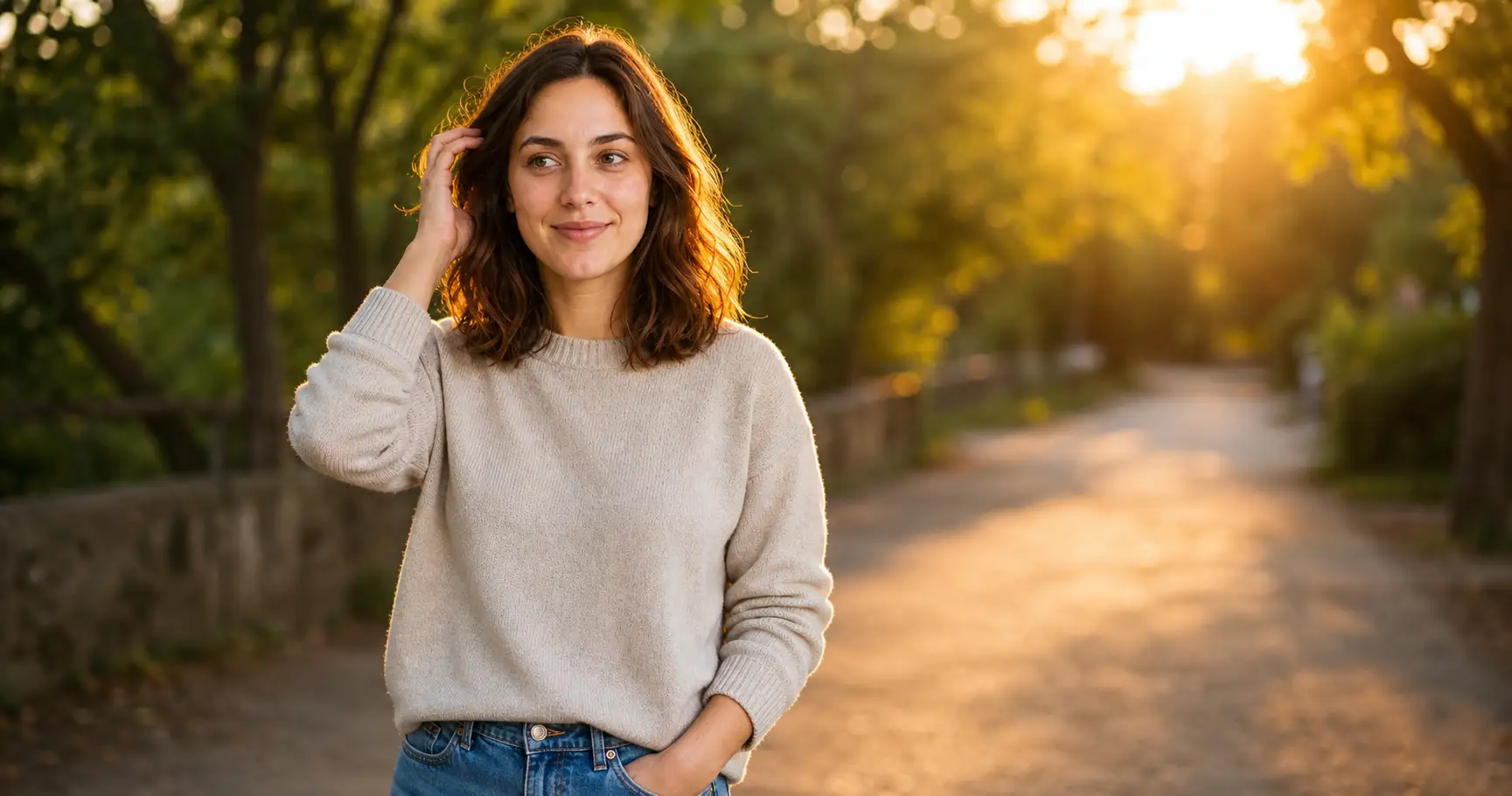
You know the moment. Someone lifts a phone, says “smile,” and your body forgets how to be a body. Your arms turn into two things you’re suddenly very aware of. Your hands hover. Your face does the thing where it tries to look natural and lands somewhere near “hostage photo.” The fix isn’t a better smile. It’s giving your body a task and your hands a job, so the camera catches you doing a small thing instead of bracing for impact. Below are the poses grouped by who they’re for and what they fix, each with the one move that makes it work, plus a way to get yourself into any of them from a single selfie.
Why you look stiff in photos, and the one fix
Start with the part nobody mentions: most of the time it isn’t your face at all. Some of it is just the camera. Hold a phone at arm’s length, a foot or so away, and the lens exaggerates whatever sits closest to it, stretching a nose by roughly 30% versus the same face shot from a few feet back, per a 2018 Rutgers and Stanford study. So if most of your photos are close-up selfies, the lens was stacked against you before you even smiled.
The bigger problem is that “pose for a photo” and “stand there frozen” feel like the exact same instruction to your body. So you give the camera a mannequin, and the mannequin looks weird. You can feel it happening and you still can’t stop it.
There’s actual research on what to do instead. Wharton marketing professor Jonah Berger looked at how people come across in photos and found that candid shots, the ones where you’re not staring straight down the lens, tend to make a better impression than carefully posed ones. The catch is that most “candid” photos in a real shoot are quietly steered. The photographer tells you where to stand and what to do, then catches the real reaction. You can do that part for yourself. And it pays off where it counts: a Georgia Tech analysis of 1.1 million Instagram photos found that pictures with faces in them pull 38% more likes and 32% more comments than photos without one. People react to a face that reads as present, not braced.
Every portrait photographer fixes the stiffness the same handful of ways, and you can steal all of it for free. Turn your body off-square to the lens instead of standing flat to it, the same body-angling that flatters you when you’re learning how to pose for pictures. Put your weight on your back foot so one hip drops and your stance stops looking like a lineup. Pull your chin slightly down and forward. And give your hands somewhere to be: a pocket, a hip, your hair, a coffee. Hands are where the awkward lives. Give them a job and most of it disappears.
Then add a verb. Don’t hold a pose. Do a small thing and let the camera catch you halfway through it.
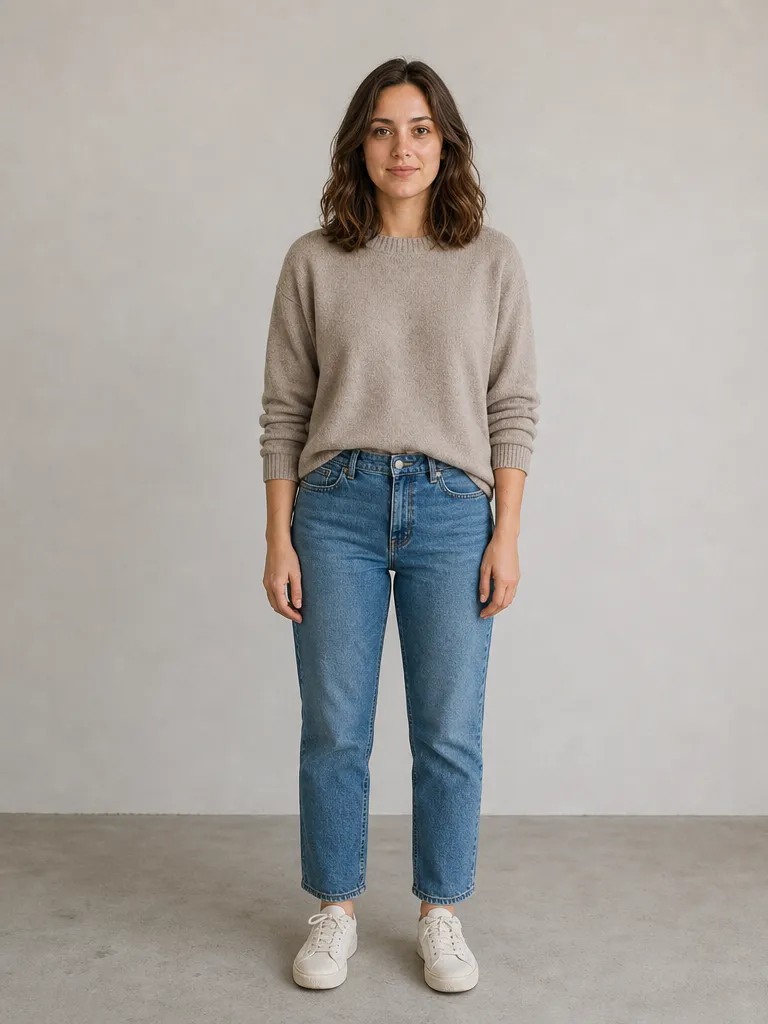
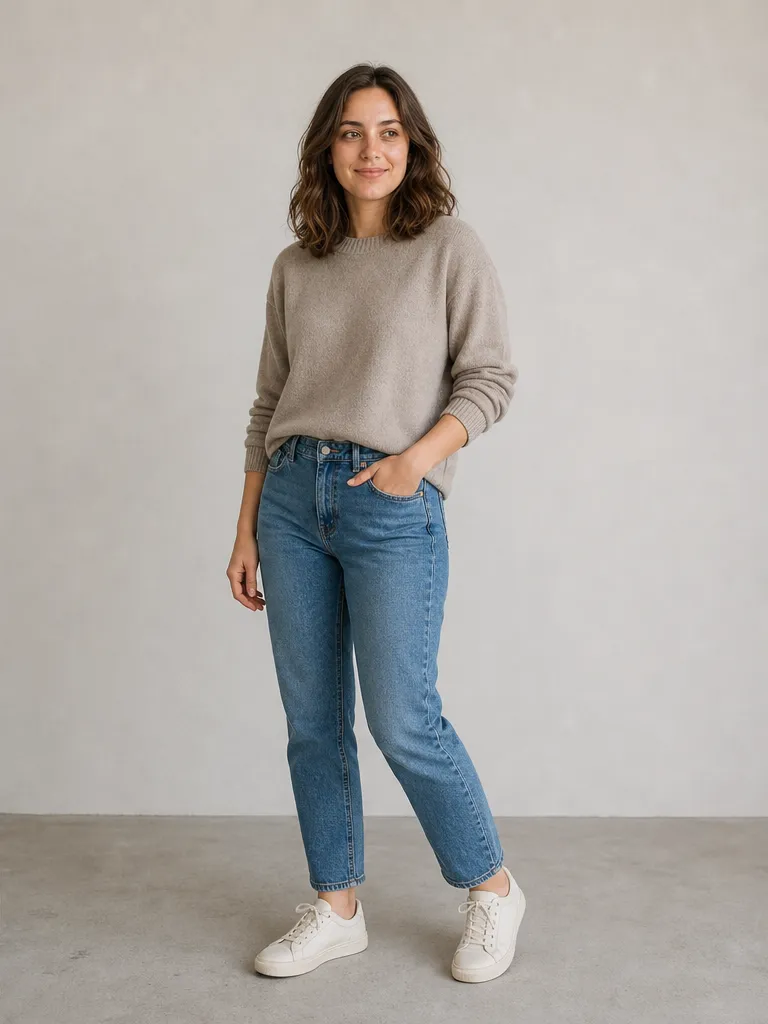
That single switch, a task instead of a pose, is what every idea below is built on.
First, find your fix
30-second diagnostic
What's tripping up your photos?
Answer three quick questions and jump straight to the fix you need.
When you see a photo of yourself, your first thought is...
The shots you delete most are...
If you could fix one thing instantly...
Photo poses and ideas, by who they’re for
You don’t need all of these. Find the group that sounds like you, steal two, and shoot a burst of each. Shooting something specific? There are deeper guides for couples, families, Instagram, and selfies — this page is the general playbook they all build on. And when there’s no one to press the button, how to take good photos of yourself covers capturing any of these solo.
Flattering poses for women
The throughline here is angles and motion. Almost nothing flat-on and still is doing you favors.
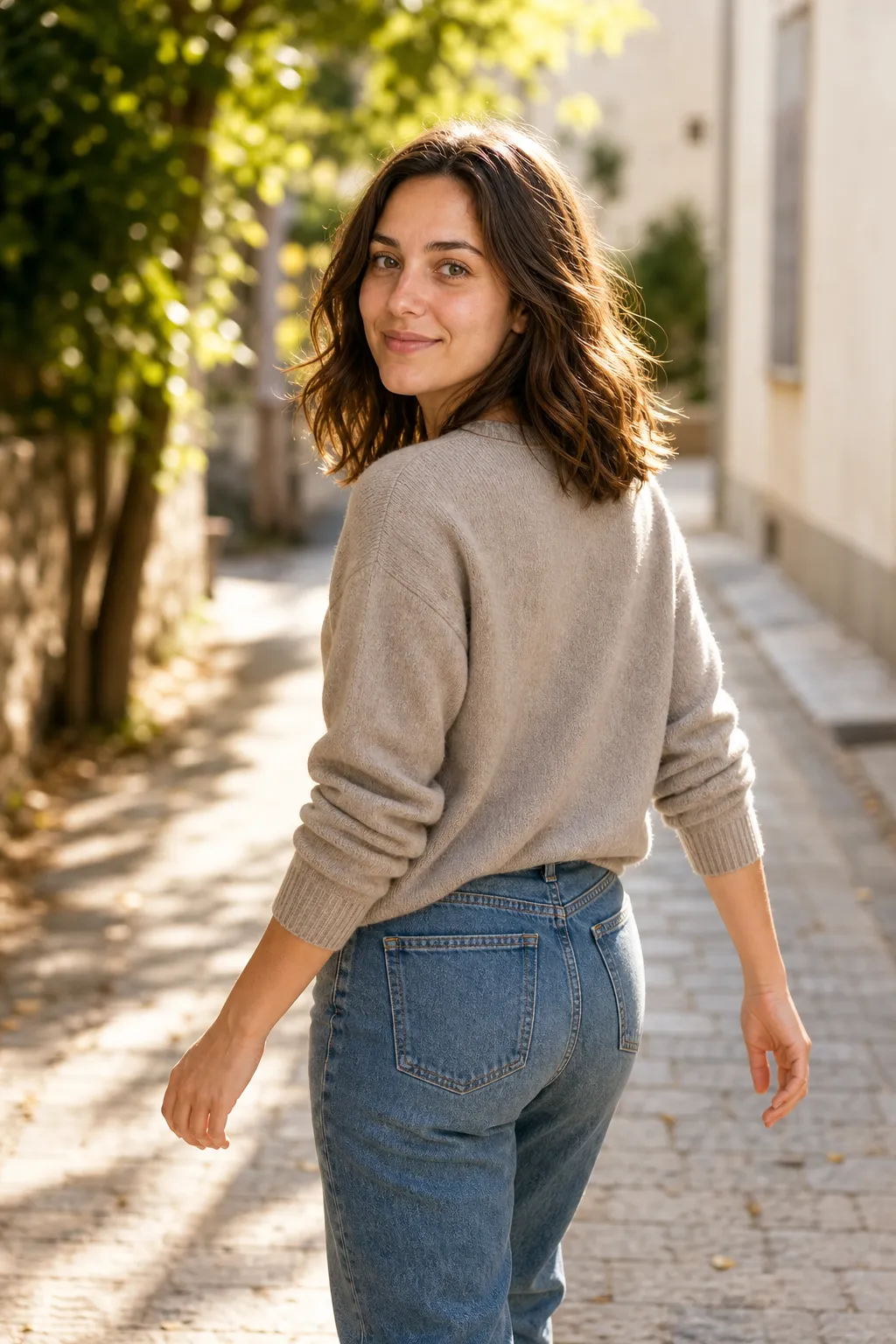

More to try here: sitting on steps with your knees angled to one side, one hand sweeping hair back from your face, looking down and to the side instead of dead at the lens, twirling so a dress or coat catches the air, or perched on a stool with your weight on one hip.
Poses for men
Men freeze in a slightly different way: shoulders square, arms welded to the sides, chin up. The fixes are the same family of moves, just a touch less hair-tucking.
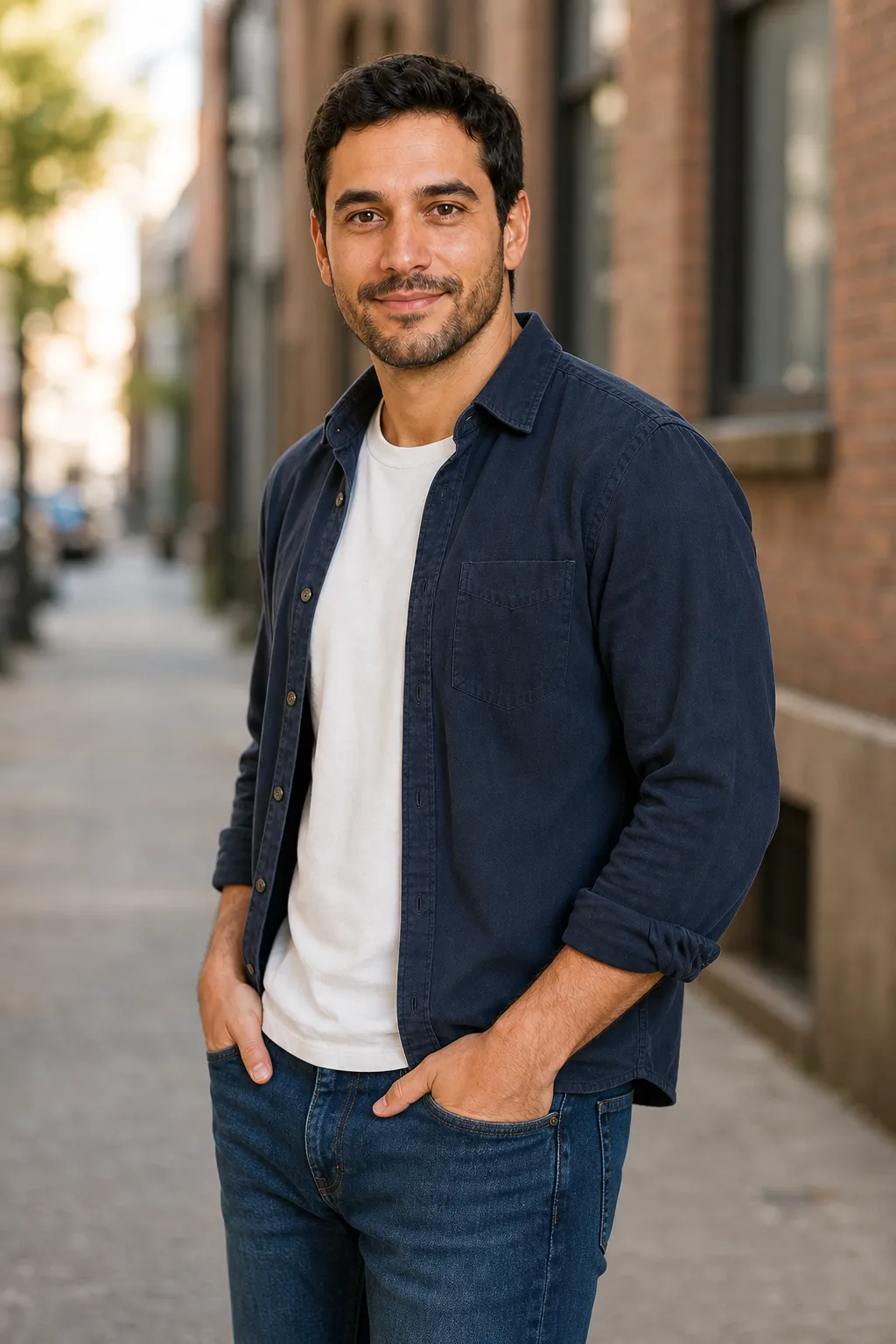
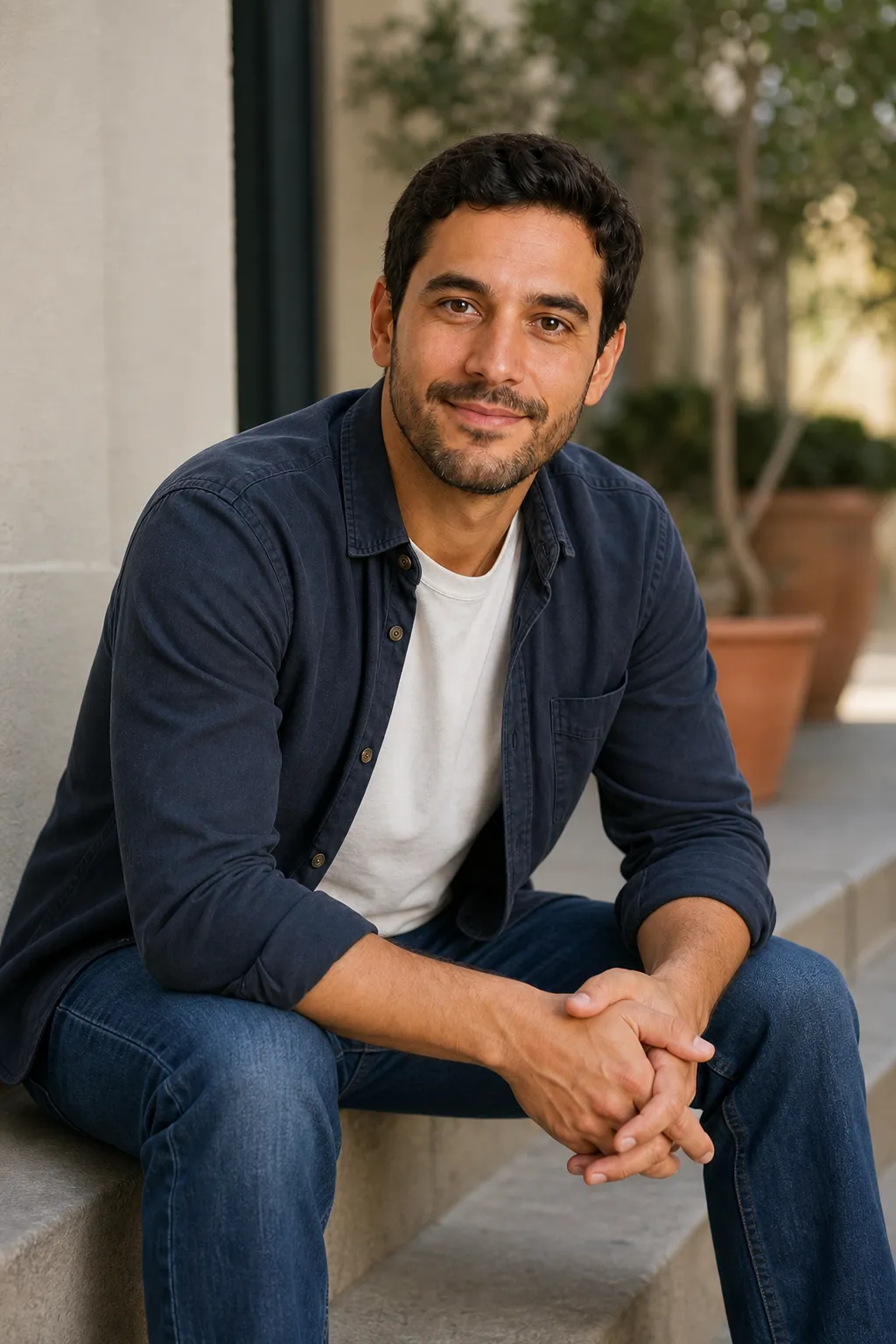
More to try here: one shoulder against a wall with arms loosely folded, walking toward the lens mid-stride, a hand running through the hair, looking off to the side with a small smile, or one foot up on a step with a forearm resting on the raised knee.
What to do with your hands
This is the single most-asked pose question, and it deserves its own group. Hands have one rule: they need a destination. Hovering is the enemy.
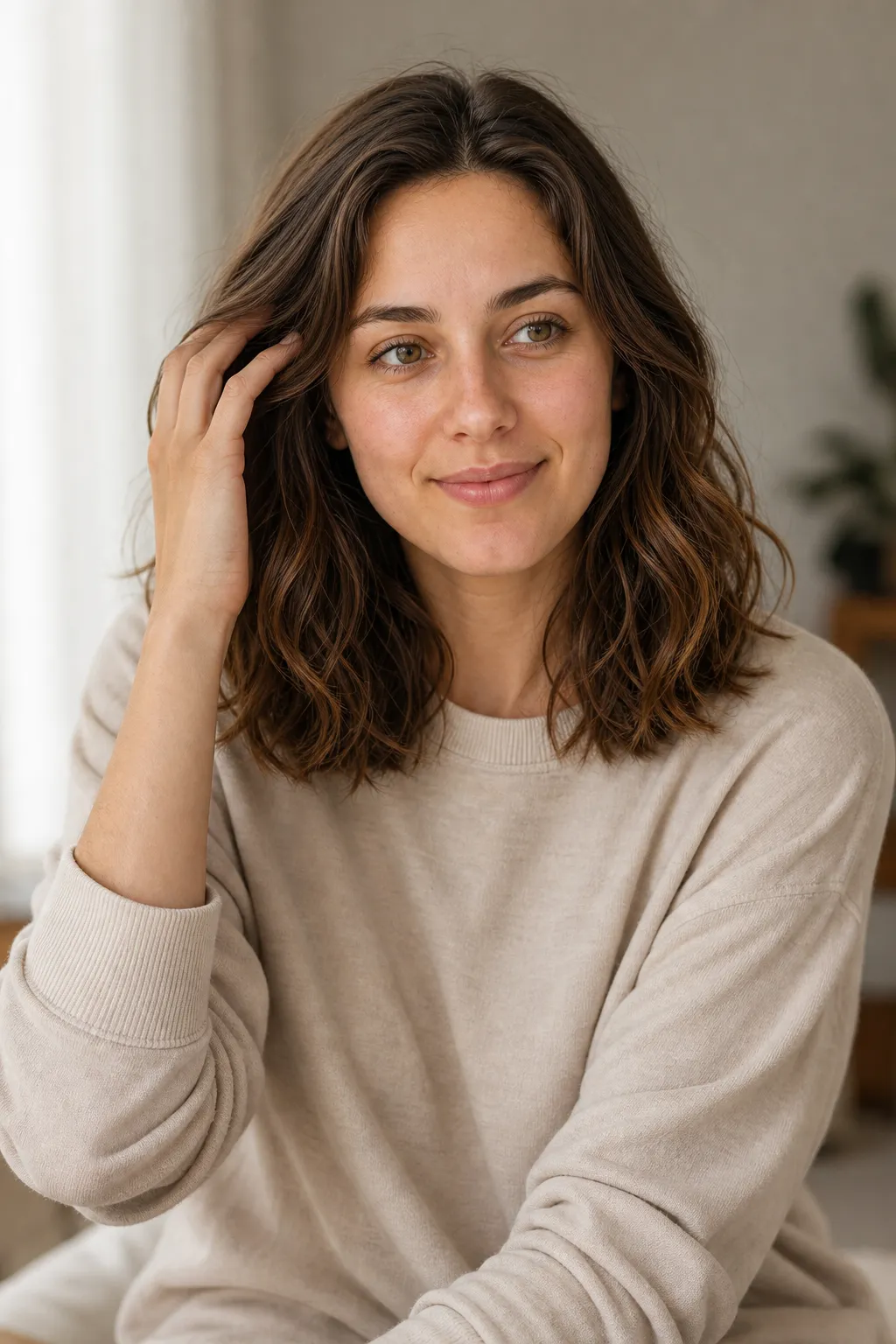
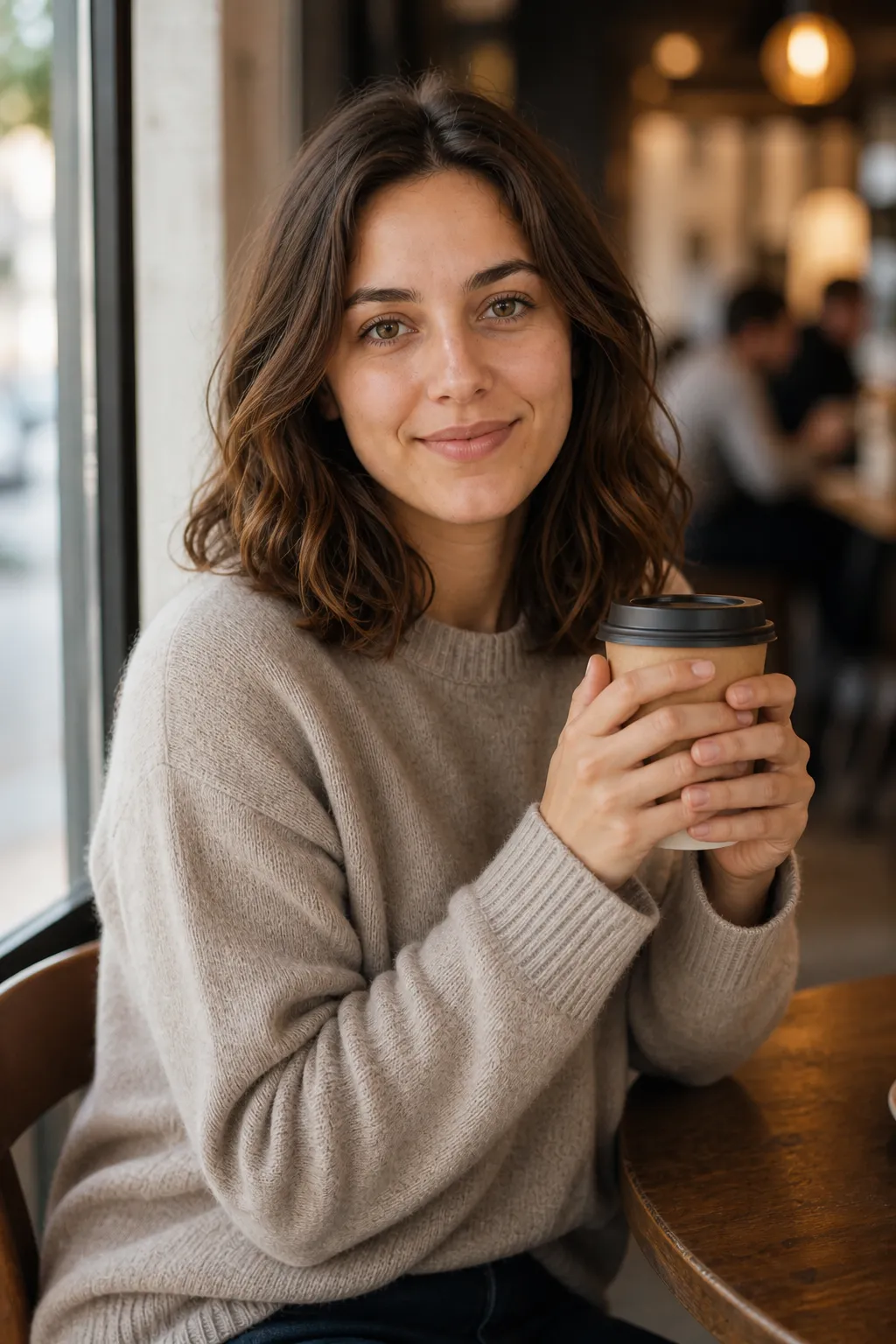
More to try here: one hand loosely in a pocket with the thumb left out, both hands in your back pockets, a hand resting flat on your collarbone, adjusting a sleeve or a watch, or thumbs in the belt loops.
If you end up trying the one-selfie version of any of these, you’ll probably want it for more than just nice photos. New subscribers get a free kit of twelve copy-ready prompts, the brand-photo and headshot kind, and after that it’s one small AI move a week. You can grab it here.
Standing vs sitting
The mistakes are mirror images. Standing, people plant their weight evenly and go rigid. Sitting, they go square and upright like a passport photo.
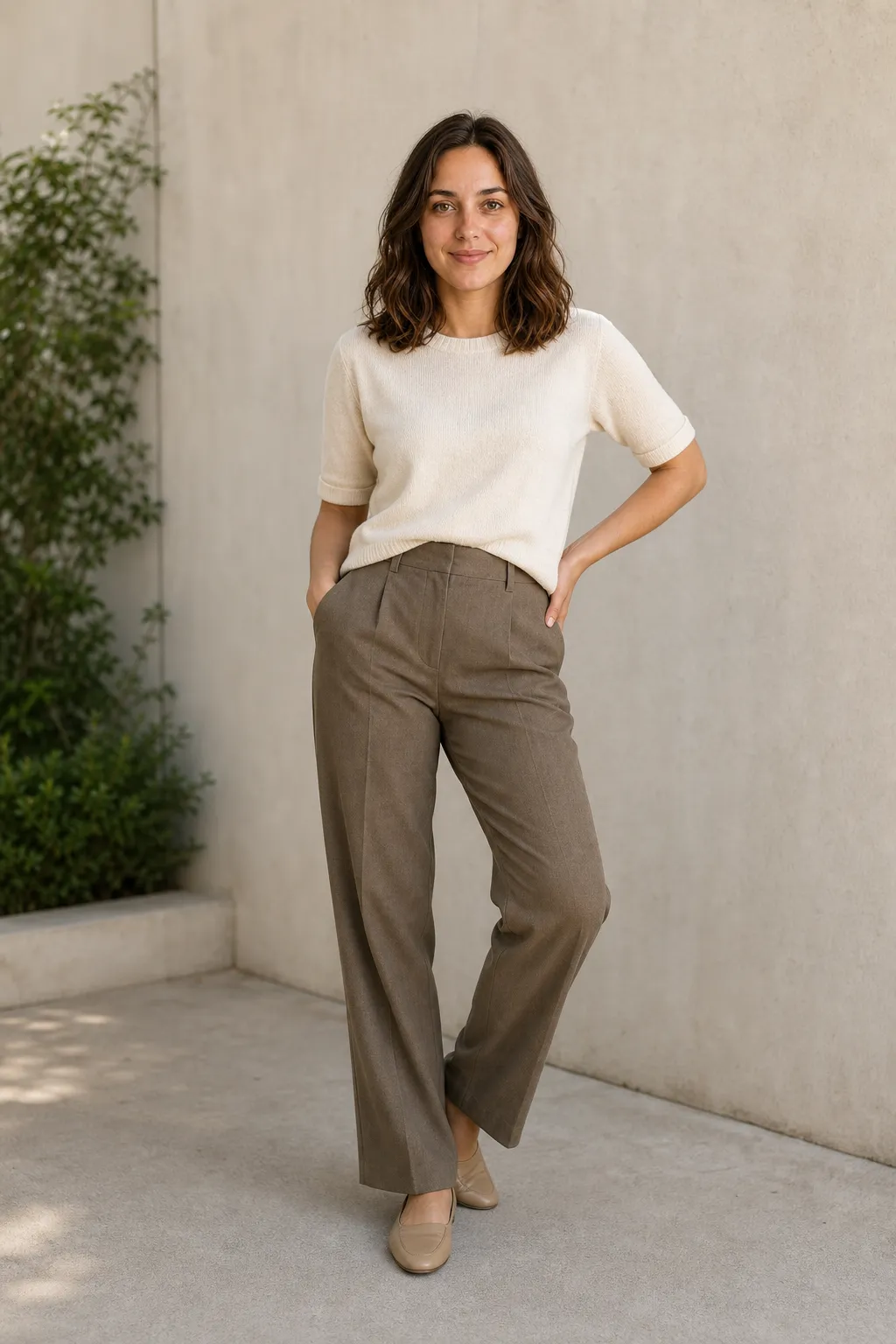
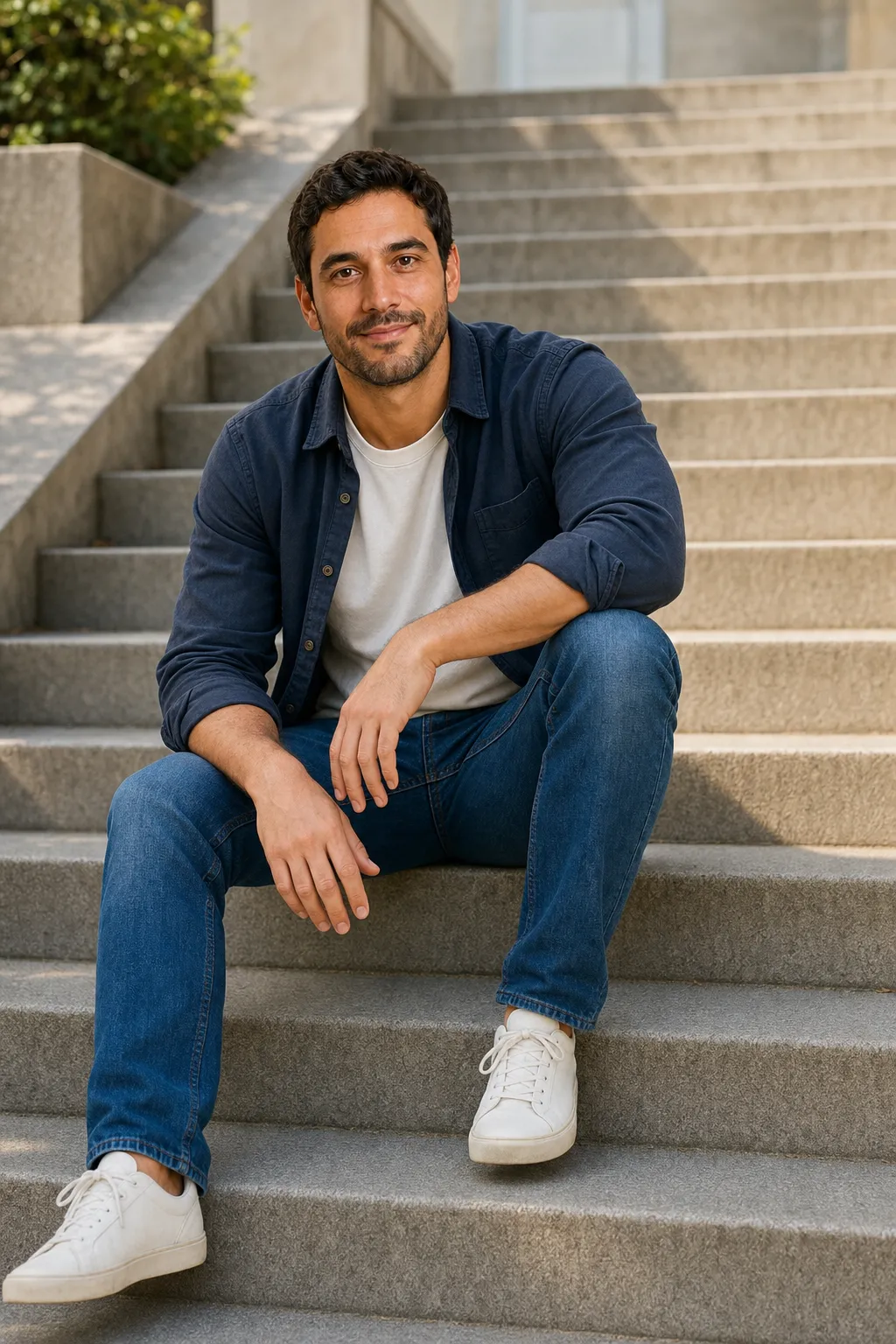
More to try here: standing with your back to a wall and one foot flat against it, sitting sideways on a chair with an arm over the back, standing three-quarters with your hands clasped low in front, or sitting on the floor with your knees up and arms looped around them.
Candid, not posed
This is the un-pose, and it’s the one Berger’s research is really about. The goal is to look like you weren’t ready, on purpose.
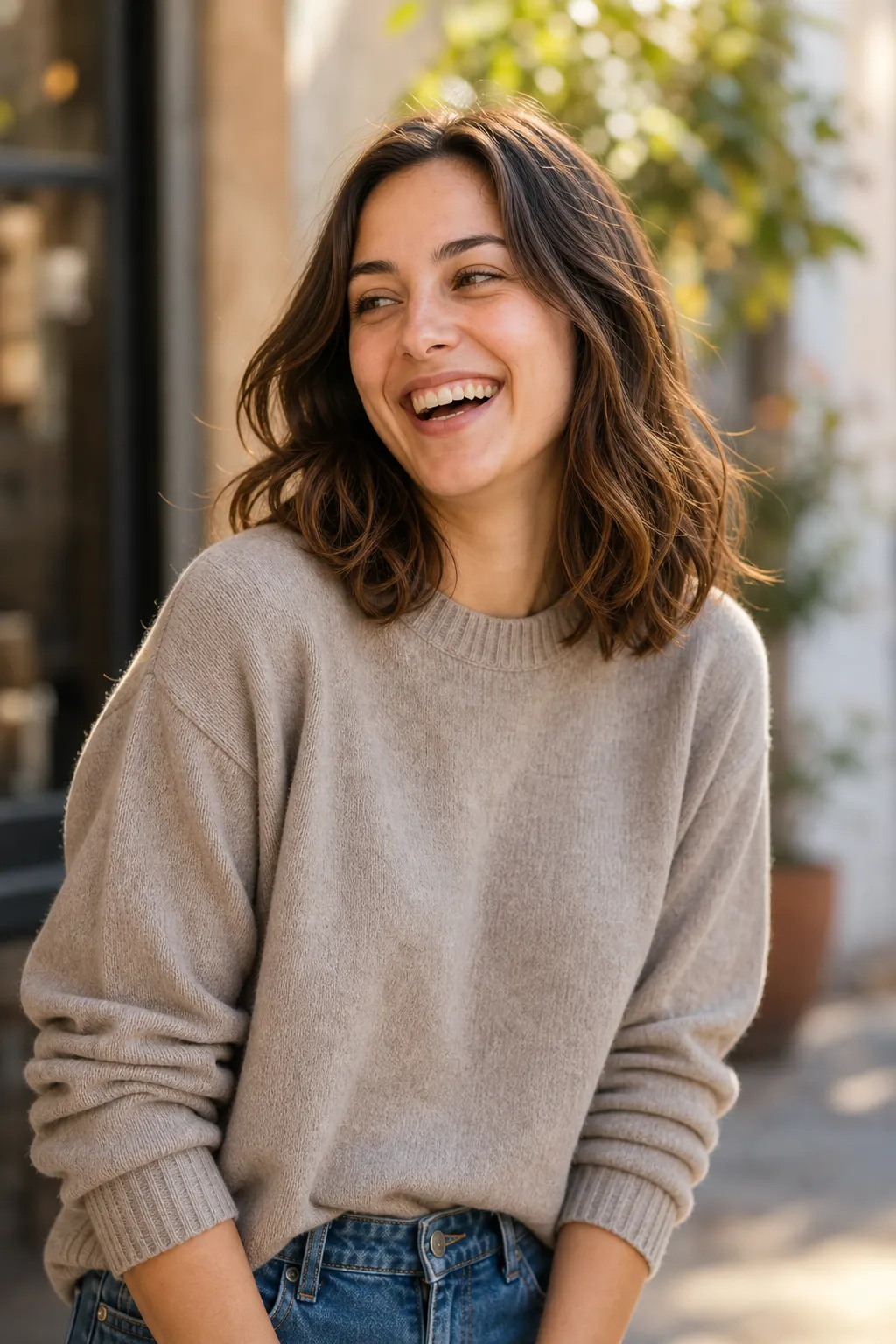

More to try here: looking off-frame at something genuinely interesting, fixing your hair or jacket while the camera rolls, glancing back mid-walk, or being shot from a little distance so you forget the camera is even there.
Skip the photographer: put yourself in any of these
Here’s where the math gets annoying. I went and looked up what a portrait session actually costs, and according to Thumbtack’s 2025 pricing a typical portrait shoot runs around $250, with photographers charging on the order of $150 an hour for the time. That’s a real amount of money to spend to find out you still don’t know what to do with your hands.
So on the days you can’t get someone to take the photo, or you just don’t want to be seen posing in public, there’s a shortcut. You can upload one clear selfie and generate yourself into the pose and the setting, no timer, no tripod, no stranger telling you to “act natural.” It’s the same one-selfie trick people use for a couple photo when there’s no one to hold the camera, pointed at just you. Same poses as everything above. You’re only skipping the part where someone has to press the button. It keeps your actual face, so it still reads as you, not a stranger who vaguely resembles you.
The few things that still make you look stiff
Even with a pose picked, the same handful of habits sneak the stiffness back in. Watch for these.
- Dead hands. The big one. A hand with no job drifts into a weird hover or clamps flat to your thigh. Park them somewhere with intent: a pocket, a hip, your hair, a held cup, the other hand.
- Squaring up to the camera. Standing flat and parallel to the lens reads like a mugshot. Turn a little. Even ten or fifteen degrees off-square changes the whole photo, and shifting your weight to the back foot does the rest.
- Holding the smile. A grin held longer than a second curdles into a grimace. Shoot a burst while you actually talk or laugh, and keep the frame from between the words, not the one where you’re straining out a “cheese.”
- Trying too hard. Berger’s research found that photos which look effortful tend to land worse than ones that look caught in the moment. So don’t stage it for twenty minutes. Pick one small action, do it a few times, and let the camera grab the real version instead of the performance.
FAQ
Q: What are the 7 posing points?
A: It’s a photographer’s checklist for scanning a body before the shutter: eyes, chin, shoulders, hands, hips, the weight-bearing foot, and the overall body angle. You don’t need to memorize it. The shortcut version is the only one that matters: turn off-square to the camera, drop your weight onto your back foot, and give your hands a job. Get those three and the other four mostly sort themselves out.
Q: What is the most flattering way to pose for pictures?
A: Stand at a slight angle instead of square to the lens, put your weight on your back foot so one hip drops, and pull your chin slightly down and forward. The angle slims, the dropped hip looks natural, and the chin-forward move kills the double-chin you get when you shoot up at yourself. Then do a small thing instead of holding it: shift, look away, take a breath out.
Q: What are some easy photo poses?
A: The four that work for almost anyone: a hand loosely in a pocket with your weight on the back foot, leaning a shoulder against a wall with one ankle crossed, walking and glancing back, and holding something like a coffee so your hands have a place to be. None of them need practice. Each one gives your body a task so it stops freezing.
Q: What do I do with my hands in photos?
A: Give them a job so they stop hovering. The reliable options: one hand in a pocket with the thumb out, a hand resting on a hip or in your hair, holding a prop like a cup or a jacket, or both hands loosely clasped if you’re sitting. Flat, stiff, glued to your thighs is the only wrong answer. Anything with a small purpose reads relaxed.
Q: How do you take good photos of yourself without a photographer?
A: Prop your phone somewhere chest-high and use the timer or a watch as a remote, then do the pose instead of staring at the lens. Or upload one clear selfie to a tool that generates you into the pose and setting, which also works on the days you don’t want to be photographed at all. Either way, pick the pose first so you’re not improvising in front of a running timer.
Key Takeaways
- You don’t look stiff because you’re unphotogenic. You look stiff because posing freezes your body. Give it a task instead.
- The three moves that fix almost any photo: angle off-square, put your weight on your back foot, and give your hands a job.
- Hands are the number-one problem. A pocket, a hip, your hair, or a held cup beats letting them hover.
- Add a verb, walk, lean, turn, or laugh, and shoot a burst, not a single frame. The in-between frame is usually the keeper.
- A portrait session runs around $250 (Thumbtack, 2025). One good selfie gets you the same poses for free on the days a shoot isn’t happening.
Try one before you overthink it
You don’t need a studio, a tripod, or a friend with a good eye. Pick one pose from the group that sounds like you, prop your phone chest-high, set the timer, and do the thing instead of posing for it. If it’s bad, it’s a free delete. If it’s not, you’ve got a photo of yourself you’d actually keep, which is more than most camera rolls can say.