The reader opens Hinge on a Sunday night, swipes for forty minutes, and gets one match. She opens her own profile on the way to the bathroom, mirror in her hand, and sees the same problem the swipers on the other side saw: four near-identical head-and-shoulders selfies, all shot in the same bedroom, all taken on the same Tuesday in April, all wearing the same dark sweater. The algorithm did not skip her face. The algorithm skipped the lack of variety. The five photo types below are what fills that gap, and yes, they pass the “is this AI?” sniff test. (If the deeper worry is that you just never look right on camera, that is a separate and fixable thing: how to be photogenic covers the three levers — angle, light, and expression — you actually control.)
What the dating apps actually reward
The dating-app teams have been remarkably public about which photos move the match-rate needle. Hinge’s published guidance on profile photos names a true full-body shot, a confident smile in the lead photo, and a spread of photo types across the six slots as three of the strongest signals it weights. Photofeeler — the photo-testing platform whose research blog at blog.photofeeler.com has run more than ten million peer-rated photo tests — has reported the same pattern across years of data: photo variety and technical photo quality consistently out-perform raw facial attractiveness in blind A/B tests of which profile gets more right-swipes.
Photofeeler, the photo-testing platform built on more than ten million peer ratings, has the cleanest read on the lead photo: across years of data, the one genuinely harmful lead is eye contact with no smile — so a real smile with eye contact beats a face hidden behind sunglasses or lost in a group. OkCupid’s 2010 “4 Big Myths of Profile Pictures” post argued the contrarian opposite for men — look away, don’t smile — but a far larger dataset did not back it up. The underlying mechanism has not changed: a fast-scrolling swiper sees the lead photo for under a second before they decide to flip or to skip.
| Signal | What it does for your match rate | What most profiles get wrong |
|---|---|---|
| Photo variety across ≥5 distinct scenes | The strongest single lever in published dating-app photo studies; variety tells the swiper “this person has a life beyond their bathroom mirror” | Four near-identical head-and-shoulders selfies shot in the same room |
| At least one true full-body shot | Hinge has publicly named the full-body shot as one of the top features it surfaces; profiles without one get visibly skipped | A “full-body” photo that’s actually mid-chest up, or a far-off vacation shot where the face is barely visible |
| Lead photo: eye contact + a real smile | The lead photo is the only photo a fast-scrolling swiper actually sees before deciding; eye contact carries the match-rate lift in every published photo study | Sunglasses in the lead photo, group photo in the lead photo, no smile, or a smile that doesn’t reach the eyes |
| Technical photo quality > facial “hotness” | Light + focus + framing reliably out-perform “more attractive face shot worse” in every blind A/B test the photo-feedback platforms have run | Blurry low-light bedroom selfies, harsh overhead-flash bar photos, cropped-from-group-photo lead shots |
Which means the question is not “what is my best photo.” Variety is about what the algorithm rewards. The question is which five photo types you are missing.
The five photo types your profile is probably missing
The five below are rendered from one identity-reference selfie. The bone structure, the eye shape, the nose, the lips, and the proportions hold across every photo. The wardrobe, the light, and the setting are what swing the read. Pick the one you do not have yet, and paste the prompt.
Photo type #1: Anti-AI candid selfie (the lead-photo slot)
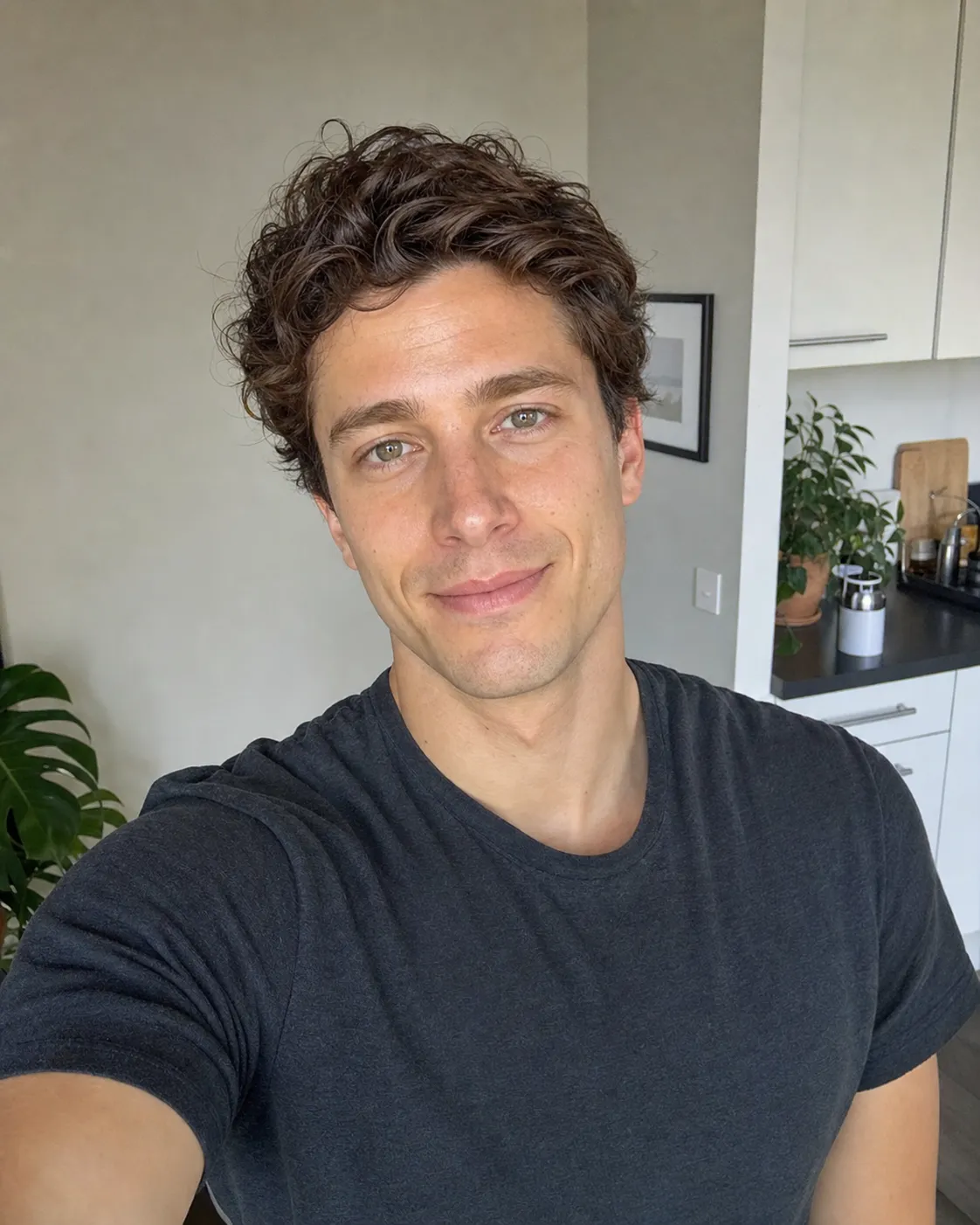
The lead photo is the one a fast-scrolling swiper sees first, and the only photo a meaningful fraction of swipers see at all. It carries the eye-contact-and-smile signal Photofeeler’s testing identifies as the difference between a lead that lands and one that loses to a sunglasses-or-group shot. The prompt below is deliberately written to read as a real iPhone selfie (phone-held angle, soft natural window light, no studio key) rather than as a polished studio render. The trap with AI portraits in this slot is the wax-figure look; the prompt’s rules block defeats it by name.
Paste this when you need a close-up smile photo that reads as a Tuesday-night iPhone selfie, not a render.
Show the full promptTap to expand
Paste this into your AI (ChatGPT, Claude, Gemini, or any AI image tool).
REQUIRED upload before pasting: one clear, well-lit front-facing photo of your face.
Generate this image:
A single photoreal 4:5 vertical dating-profile lead photo of the person in the uploaded reference image, deliberately styled as a real iPhone selfie rather than a polished studio portrait. Match their bone structure, eyes, nose, lips, proportions, and skin tone exactly so the subject is unmistakably the same person. The subject holds their phone with one hand at slightly-above-eye-level, head tilted barely off-axis, looking into the camera with a real warm half-smile, eyes lit, hair slightly windblown with one hair flyaway visible at the temple. Soft natural late-afternoon window light comes from front-and-slightly-left, producing even fill across the face with mild fall-off into the right cheek shadow. They wear {CASUAL_TOP}. The backdrop is {REAL_HOME_INTERIOR}, busy enough to look real, never noisy enough to compete with the face. The subject occupies 55-65% of the vertical frame, framed mid-chest up. Skin shows visible pores, fine micro-texture, natural micro-asymmetry, one or two faint freckles, a slight under-eye shadow from a normal weekday. The image carries the faintest grain of an iPhone front camera at f/2.2 with a hint of chromatic aberration at the highest contrast edges. Phone-held casual selfie composition, NOT studio headshot. Single 4:5 vertical dating-profile lead photo, identity-locked to the uploaded reference.
Rules the AI must follow:
- Aspect ratio 4:5 vertical: strict, locked at the start and the end of the prompt
- Identity preservation is the highest-priority constraint: match the uploaded reference photo’s bone structure, eyes, nose, lips, proportions, and skin tone exactly; the subject must be unmistakably the same person
- The image must read as a real iPhone selfie, not a studio headshot: phone-held angle, soft natural window light, no directional cinematic key
- Realistic skin texture required: visible pores, fine micro-asymmetry, natural unevenness, faint freckles, slight hair flyaways; no porcelain smoothing, no over-retouched beauty filter, no waxy AI-plastic surface
- Age and natural micro-imperfection preserved: under-eye softness, asymmetric smile, real hair texture; do not airbrush
- One human figure only: solo subject; no advisors, no crowd, no background people
- No text, captions, watermarks, logos, brand marks, badge text, or readable signage anywhere in the frame
- Single image output: one 4:5 file; no contact sheet, no variant grid, no before/after split
- All text in English Latin script if any incidental signage appears
- Output the image directly without explaining the prompt back
Replace these placeholders with your details:
- REQUIRED upload before pasting: one clear, well-lit front-facing photo of your face
{CASUAL_TOP}= a plain charcoal cotton t-shirt with no logo, OR an unbuttoned soft chambray shirt over a plain white tee{REAL_HOME_INTERIOR}= a softly-blurred living-room wall with the edge of a kitchen counter and a half-visible houseplant in the background
Photo type #2: At-home cozy lifestyle shot
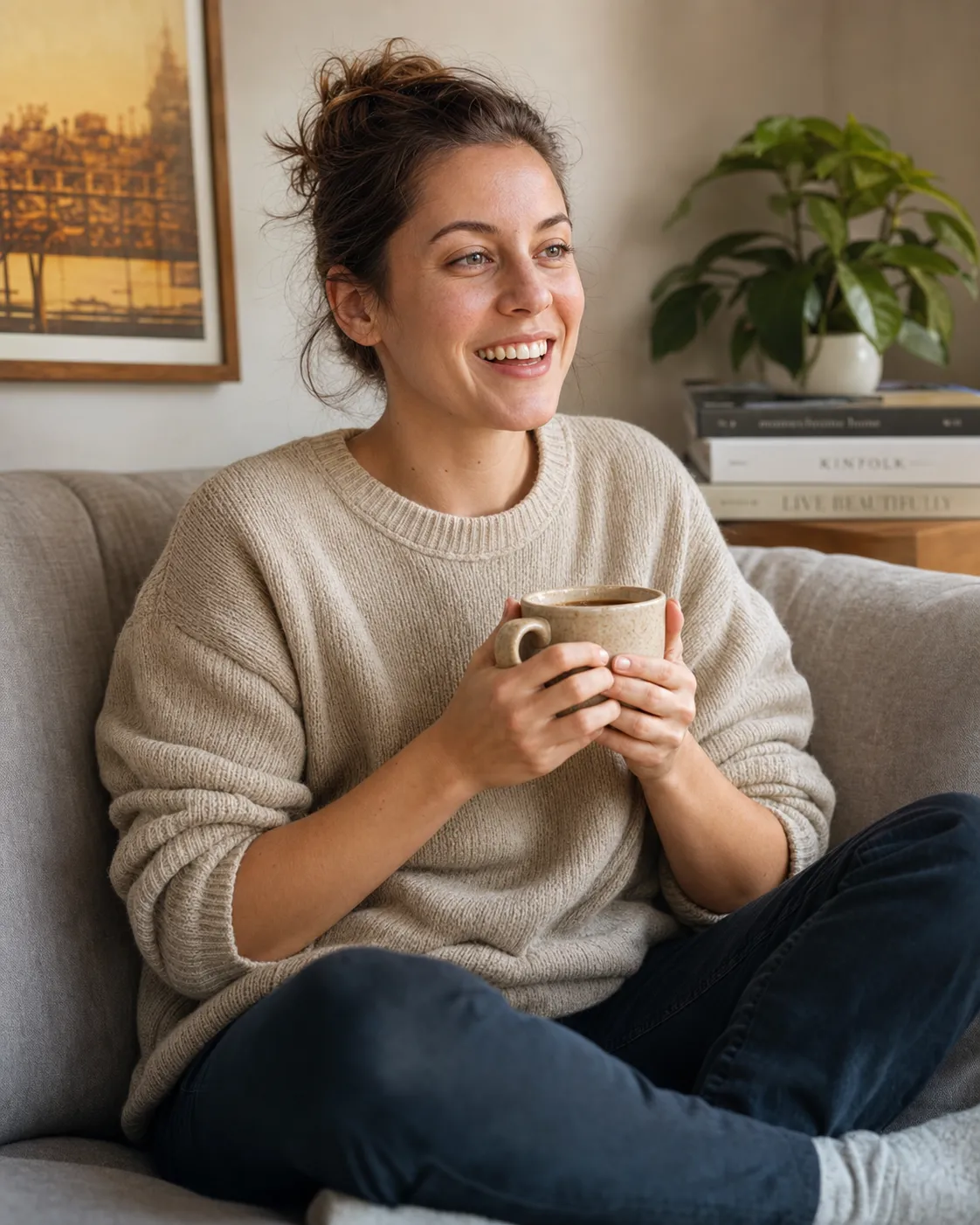
The at-home shot tells the swiper what your Saturday morning actually looks like. It is the second-tile shift away from the lead-photo close-up that earns the “variety” credit Hinge’s profile-photo guidance attributes to higher response rates: different room, different light, different distance from the camera. The prompt forces the room to look lived-in (real plant, real stack of books, real warm-amber framed print) so the photo reads as your actual home and not as a styled rental.
Paste this for the cozy at-home slot. The photo that gives the swiper a glimpse of your Saturday morning.
Show the full promptTap to expand
Paste this into your AI (ChatGPT, Claude, Gemini, or any AI image tool).
REQUIRED upload before pasting: the same clear front-facing photo of your face you used for the first prompt (use the same reference upload across every prompt in this pack so identity locks across all six photos).
Generate this image:
A single photoreal 4:5 vertical dating-profile photo of the person in the uploaded reference image, sitting on a soft-grey linen couch in their own living room on a quiet Saturday morning. Match their bone structure, eyes, nose, lips, proportions, and skin tone exactly so the subject is unmistakably the same person from any earlier photo in the pack. The subject is in a three-quarter pose, body angled toward camera at about twenty degrees, looking slightly off-camera toward an unseen window, caught mid-laugh, not posed. They hold {WARM_DRINK_PROP} in both hands at chest level. They wear {COZY_TOP_AND_BOTTOM}. The background shows the soft-bokeh corner of a real living room: {REAL_HOME_DETAILS}, busy enough to read as their actual home, quiet enough that the subject carries the frame. Soft natural sunlit window light from the right side, warm in tone, with gentle fall-off into the left cheek shadow; no studio lighting, no editorial key. The subject occupies 60-70% of the vertical frame. Skin shows visible pores, fine micro-texture, micro-asymmetry, hair flyaways at the temples. Shot on a 50mm-equivalent lens at approximately f/2.8, modest shallow depth of field, the room slightly soft behind them but never out of recognition. Single 4:5 vertical at-home candid lifestyle photo, identity-locked.
Rules the AI must follow:
- Aspect ratio 4:5 vertical: strict, locked at the start and the end of the prompt
- Identity preservation is the highest-priority constraint: match the uploaded reference photo’s bone structure, eyes, nose, lips, proportions, and skin tone exactly; the subject must read as the same person across every photo in your profile pack
- The setting must read as the subject’s real home, not a styled rental or showroom: real houseplant, real-stacked books, lived-in surfaces
- Soft natural sunlit window light only: no studio key, no editorial directional light, no Forbes-cover gravitas
- Realistic skin texture required: visible pores, fine micro-asymmetry, hair flyaways, natural unevenness; no porcelain smoothing, no over-retouched beauty filter, no waxy AI-plastic surface
- One human figure only: solo subject
- No text, captions, watermarks, logos, brand marks, badge text, or readable signage anywhere in the frame
- Single image output: one 4:5 file; no contact sheet, no variant grid
- All text in English Latin script if any incidental signage appears
- Output the image directly without explaining the prompt back
Replace these placeholders with your details:
- REQUIRED upload before pasting: the same clear front-facing photo of your face you used for the first prompt (use the same one across every prompt in this pack so identity locks across all six photos)
{WARM_DRINK_PROP}= a beige ceramic mug of coffee, OR a clear glass of orange juice, OR a vintage white teacup{COZY_TOP_AND_BOTTOM}= an oatmeal heavyweight knit sweater over dark jeans with sleeves pushed to mid-forearm{REAL_HOME_DETAILS}= one fiddle-leaf-fig plant, a stack of three real books on a side table, and a single warm-amber framed print on the wall behind them
Photo type #3: Outdoor travel candid (the full-body slot)
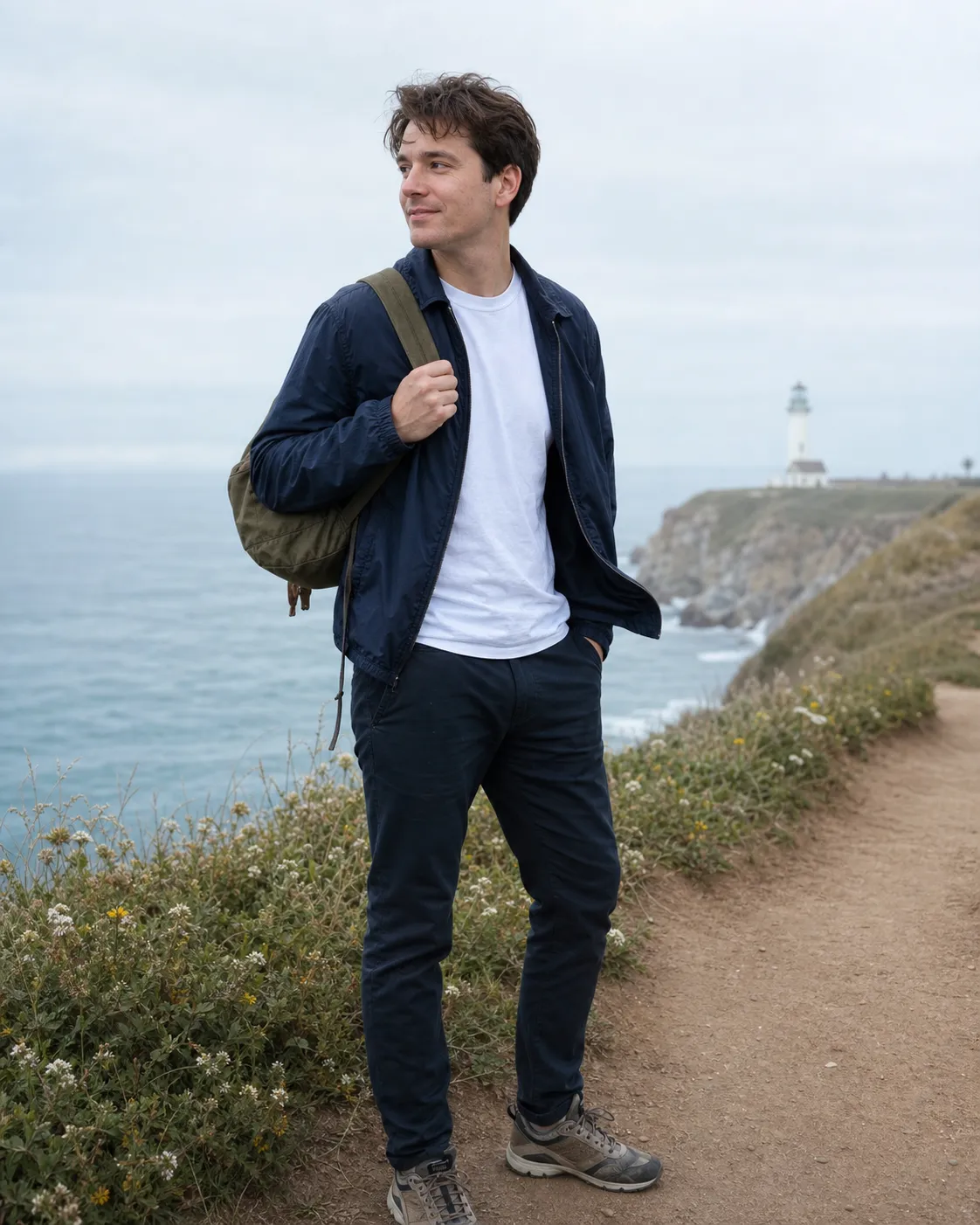
Hinge has named the full-body shot as one of the photo types most missing from underperforming profiles. The lift from adding a single full-body shot to a profile that does not yet have one is, by Hinge’s own published guidance, larger than the lift from any other single change. The prompt below forces “mid-thigh up minimum” as a hard rule so the AI cannot quietly downgrade the shot to a chest-up crop. The lighting rule names soft-overcast diffused daylight rather than golden hour so the photo reads as a real walk rather than a magazine shoot.
Paste this for the outdoor full-body slot. The photo most underperforming profiles are missing.
Show the full promptTap to expand
Paste this into your AI (ChatGPT, Claude, Gemini, or any AI image tool).
REQUIRED upload before pasting: the same reference selfie of your face.
Generate this image:
A single photoreal 4:5 vertical dating-profile photo of the person in the uploaded reference image, standing at the edge of {OUTDOOR_LOCATION} on a soft-overcast late morning, full body visible from mid-thigh up. Match their bone structure, eyes, nose, lips, proportions, and skin tone exactly so the subject reads as the same person as in earlier photos in the pack. The subject stands at three-quarter angle to camera, body weight slightly on the back foot, one hand in the front pocket of dark canvas pants, the other holding {OUTDOOR_PROP}. They wear {OUTDOOR_OUTFIT}. Hair is slightly wind-swept; the wind also lifts the jacket hem softly. They look just off-camera and to the left, faintly smiling at something the viewer cannot see, caught mid-moment, not posed. The light is soft-overcast diffused daylight from above, no harsh shadows, a hint of cool tone in the highlights. The subject occupies 60-70% of the vertical frame and is shown from mid-thigh up so the full-body shot signal is unmistakable. Skin shows visible pores, fine micro-texture, micro-asymmetry, hair flyaways, slight pink in the cheeks from the wind. Shot on a 35mm-equivalent lens at approximately f/4, the background slightly soft but recognizable. Single 4:5 vertical outdoor travel candid photo, identity-locked.
Rules the AI must follow:
- Aspect ratio 4:5 vertical: strict, locked at the start and the end of the prompt
- Identity preservation is the highest-priority constraint: match the uploaded reference photo’s bone structure, eyes, nose, lips, proportions, and skin tone exactly
- Full-body framing required: subject shown from mid-thigh up at minimum; this is the “full body” slot in the profile pack and must read as such at a glance
- Soft-overcast diffused daylight only: no harsh sun, no editorial key light, no golden-hour stylization
- The scene must read as a real place a real person actually walked: real terrain, wind-lifted jacket hem, broken-in shoes, not a polished travel-magazine cover
- Realistic skin texture required: visible pores, fine micro-asymmetry, hair flyaways, wind-blush in the cheeks; no porcelain smoothing, no over-retouched beauty filter, no waxy AI-plastic surface
- One human figure only: solo subject
- No text, captions, watermarks, logos, brand marks, badge text, or readable signage anywhere in the frame
- Single image output: one 4:5 file; no contact sheet, no variant grid
- All text in English Latin script if any incidental signage appears
- Output the image directly without explaining the prompt back
Replace these placeholders with your details:
- REQUIRED upload before pasting: the same clear front-facing photo of your face you used for the earlier prompts
{OUTDOOR_LOCATION}= a coastal cliff path with Atlantic ocean and a distant white-stone lighthouse, OR a forest trail with tall pine trees and dappled light, OR a city rooftop with skyline behind, OR a vineyard row with rolling hills{OUTDOOR_PROP}= a battered olive-green canvas backpack strap held in one hand, OR a coffee cup, OR a folded printed map{OUTDOOR_OUTFIT}= a worn navy lightweight zip-up jacket over a plain white tee, dark canvas pants, and broken-in trail sneakers
Photo type #4: Mid-action hobby candid
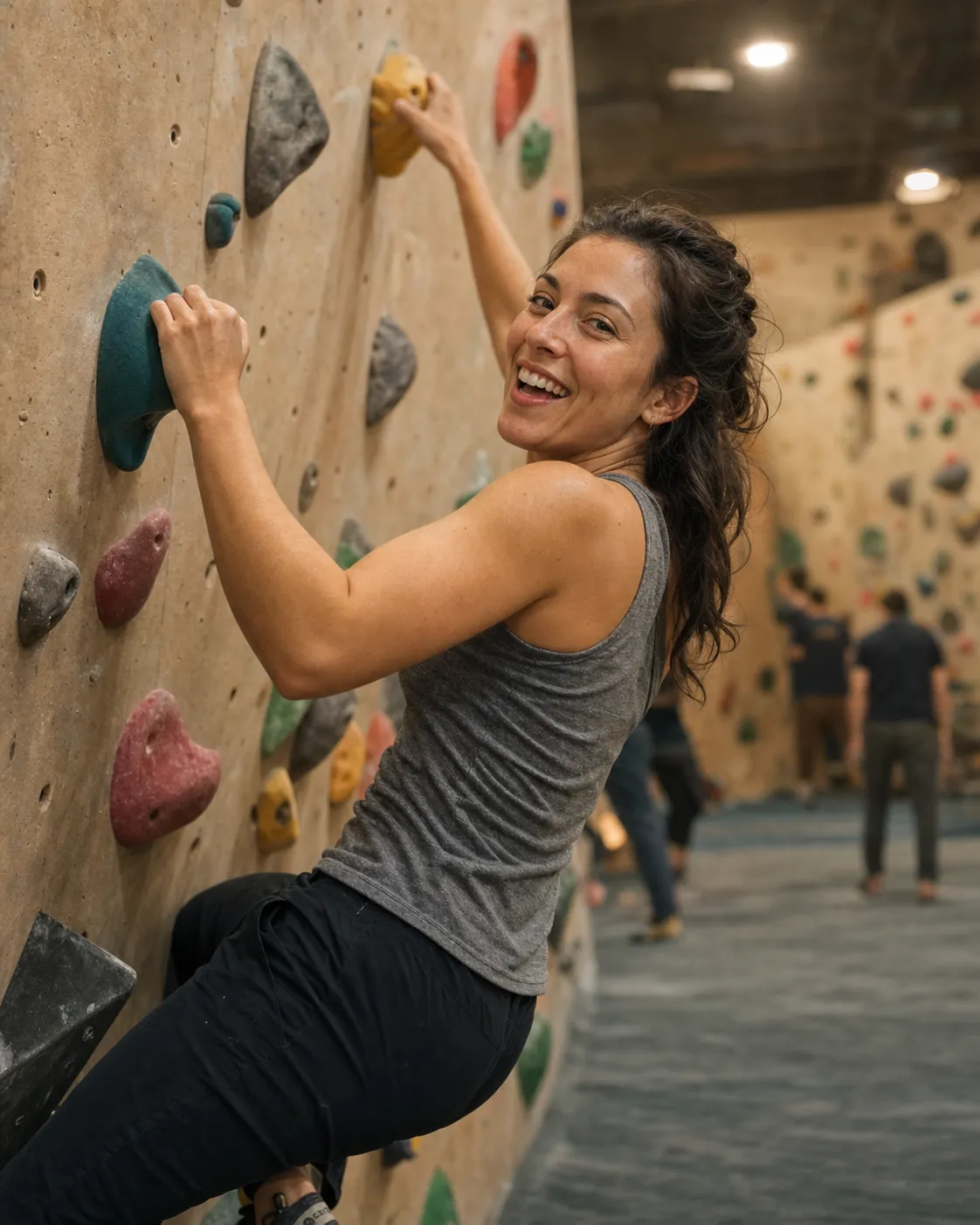
The mid-action hobby photo gives the swiper something concrete to message about. Hinge’s published guidance specifically calls out photos showing a hobby or interest as one of the lift drivers on first-message rates, not just match rates. A close-up smile says “I am a person.” A photo of you reaching for a hold on a climbing wall says “I climb on Tuesdays, here is your opening line.” The hobby is interchangeable — the prompt’s placeholder lets you swap bouldering for painting at an easel, mid-stir at a stovetop, playing acoustic guitar on a couch, or cycling on a tree-lined road. The rules block holds the rest constant: caught mid-action rather than posed, soft setting-appropriate light, no editorial cinematic key.
Paste this when you need the “what I’m into” photo. The one that gives the swiper a conversation hook.
Show the full promptTap to expand
Paste this into your AI (ChatGPT, Claude, Gemini, or any AI image tool).
REQUIRED upload before pasting: the same reference selfie of your face.
Generate this image:
A single photoreal 4:5 vertical dating-profile photo of the person in the uploaded reference image, caught mid-action while {HOBBY_ACTION}. Match their bone structure, eyes, nose, lips, proportions, and skin tone exactly so the subject reads as the same person as in earlier photos in the pack. The subject is mid-move with {HOBBY_BODY_POSITION}, body slightly angled away from camera at about thirty degrees, head turned back toward camera with a real spontaneous laugh, eyes lit. They wear {HOBBY_OUTFIT}. The backdrop is {HOBBY_SETTING}, with slightly out-of-focus context cues visible in soft bokeh further back. The light is soft warm indoor or natural light appropriate to the setting, no harsh shadows, no editorial key. The subject occupies 60-70% of the vertical frame. Skin shows visible pores, fine micro-texture, micro-asymmetry, hair flyaways, a faint flush on the cheeks from exertion or concentration. Shot on a 50mm-equivalent lens at approximately f/2.8, modest shallow depth of field, the setting slightly soft beyond the subject. Single 4:5 vertical mid-action hobby candid photo, identity-locked.
Rules the AI must follow:
- Aspect ratio 4:5 vertical: strict, locked at the start and the end of the prompt
- Identity preservation is the highest-priority constraint: match the uploaded reference photo’s bone structure, eyes, nose, lips, proportions, and skin tone exactly
- The image must read as caught mid-action, not posed: hands placed naturally on real props, body weight distributed as someone actually doing the hobby would, expression mid-laugh or mid-focus rather than staged
- Soft warm setting-appropriate light only: no editorial cinematic key, no Vogue stylization
- Realistic skin texture required: visible pores, fine micro-asymmetry, hair flyaways, exertion or focus flush in cheeks; no porcelain smoothing, no over-retouched beauty filter, no waxy AI-plastic surface
- One human figure only as the sharp subject; very soft-bokeh other people in the deep background are acceptable but must NOT be in focus
- No text, captions, watermarks, logos (including any brand logos on shoes / gear / instruments), brand marks, badge text, or readable signage anywhere in the frame
- Single image output: one 4:5 file; no contact sheet, no variant grid
- All text in English Latin script if any incidental signage appears
- Output the image directly without explaining the prompt back
Replace these placeholders with your details:
- REQUIRED upload before pasting: the same clear front-facing photo of your face you used for the earlier prompts
{HOBBY_ACTION}= bouldering on an indoor climbing wall, OR painting at an easel in a sunlit studio, OR mid-stir at a stovetop cooking pasta, OR playing acoustic guitar on a couch, OR cycling on a tree-lined road{HOBBY_BODY_POSITION}= one hand on a teal climbing hold above shoulder height with the other reaching toward a yellow hold further up (for bouldering), OR brush in right hand mid-stroke with paint palette in left (for painting), OR one hand on a wooden spoon mid-stir, the other on the pot handle (for cooking){HOBBY_OUTFIT}= a heather-grey athletic tank top with dark joggers and climbing shoes (climbing); OR a paint-flecked denim shirt over a tee (painting); OR a soft linen apron over a plain dark tee (cooking){HOBBY_SETTING}= a warm-amber-lit indoor climbing-gym wall covered in colored holds (climbing); OR a window-lit home art studio with brushes in jars (painting); OR a sunlit kitchen with herbs on the counter (cooking)
Photo type #5: Multi-scene consistent profile pack (the master prompt)
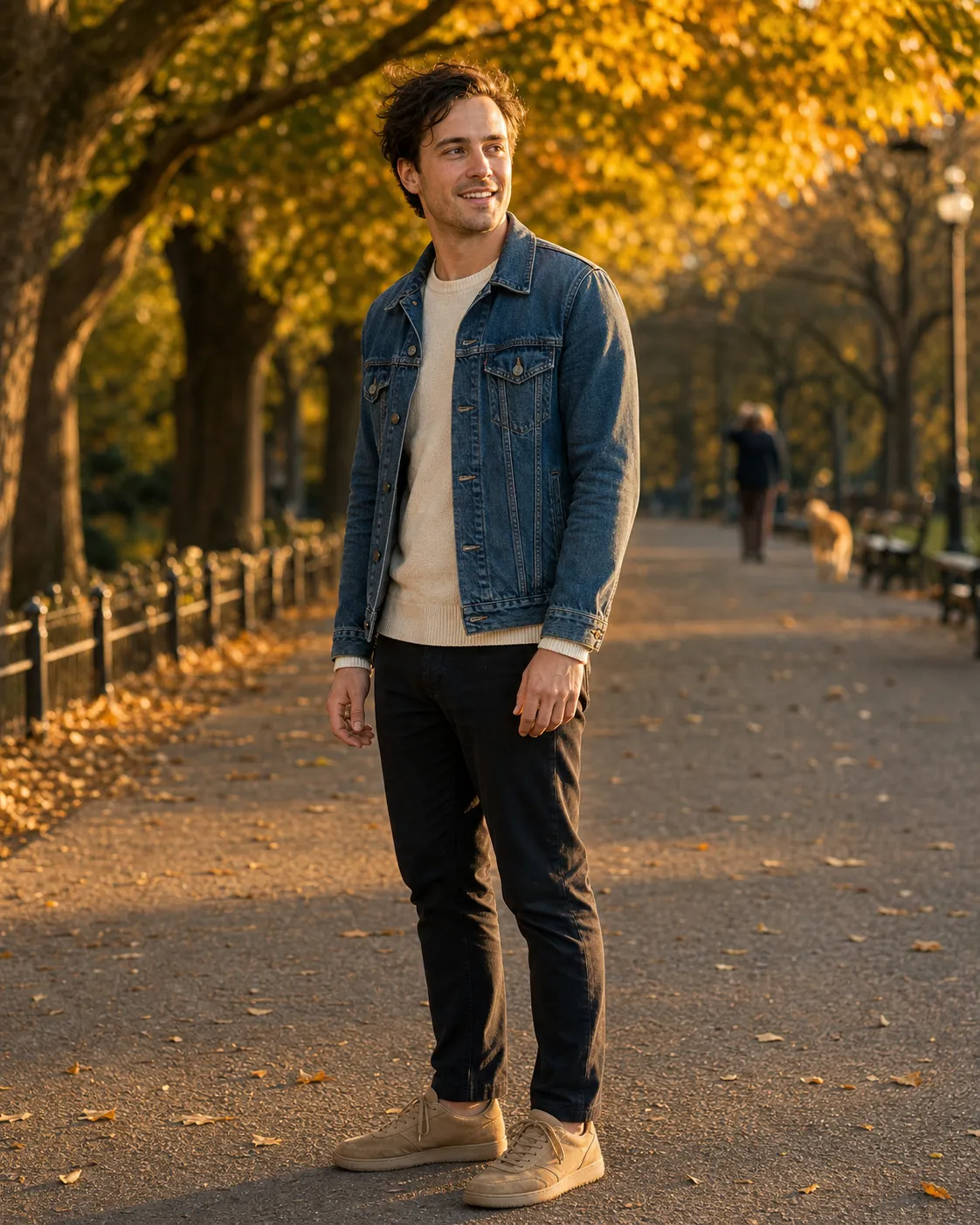
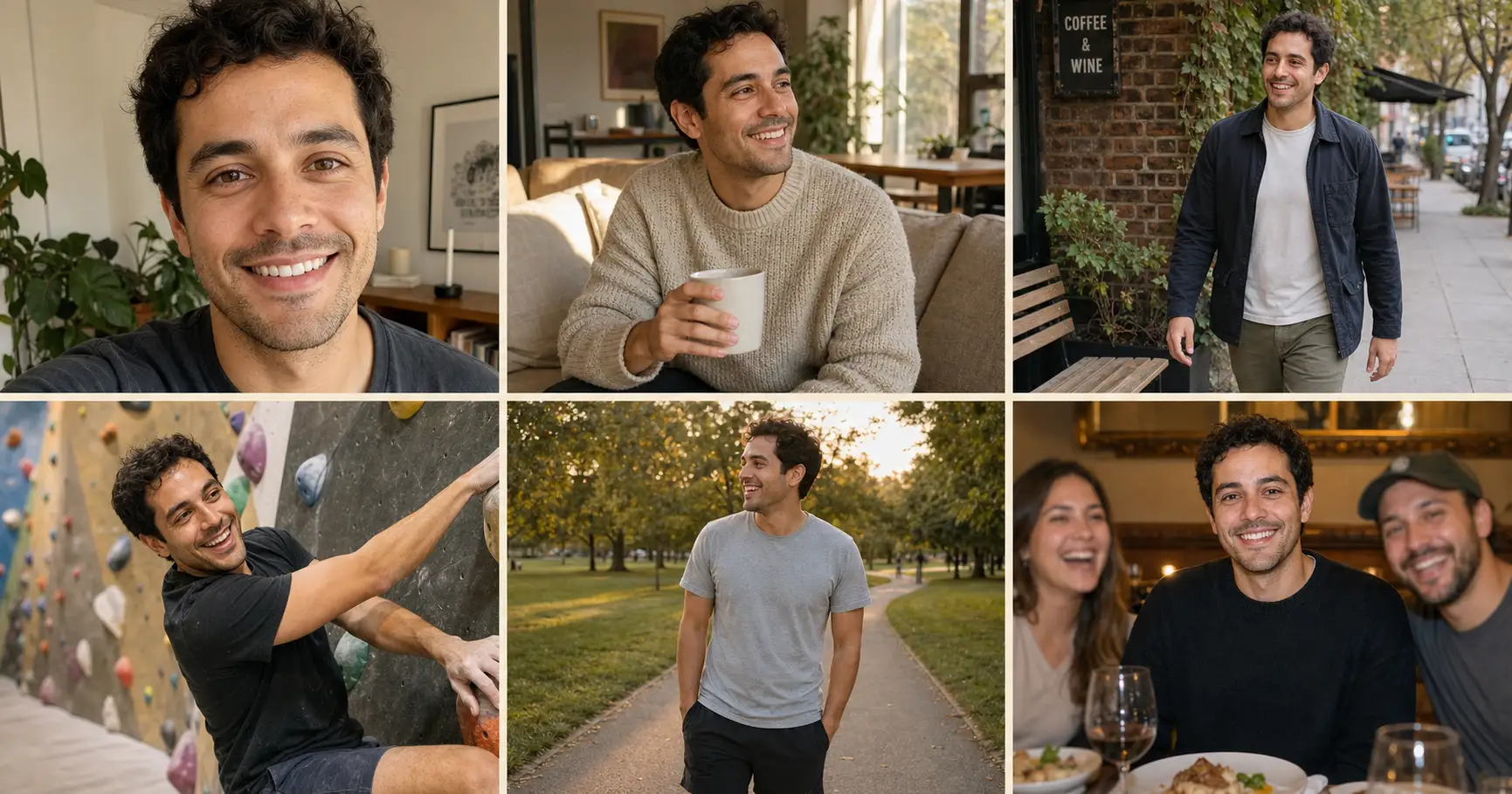
The master pack prompt renders all five scenes (plus a sixth bonus tile, a second close-up at a kitchen counter) in one go, as a 2x3 grid output, with identity locked globally across every tile. This is the move when you want one paste and a full profile pack. The identity-lock rule applies globally, not per-tile, so the same face has to read across all six outputs. The wardrobe, light, and setting differ in every tile by design.
Paste this when you want the AI to render the full pack in one go.
Show the full promptTap to expand
Paste this into your AI (ChatGPT, Claude, Gemini, or any AI image tool).
REQUIRED upload before pasting: one clear, well-lit front-facing photo of your face. The single upload is what locks identity across all six tiles.
Generate this image:
A set of six photoreal 4:5 vertical dating-profile photos of the person in the uploaded reference image, rendered as a single 2-row by 3-column grid output, with the SAME face across all six tiles. Bone structure, eyes, nose, lips, proportions, and skin tone identical in every tile so the subject is unmistakably one person across the whole grid. The six tiles are: Tile 1 is a close-up candid head-and-shoulders selfie with eye contact and a warm half-smile, soft natural window light, plain charcoal cotton tee, quiet at-home interior. Tile 2 is an at-home cozy lifestyle on a grey linen couch in an oatmeal heavyweight knit sweater holding a beige ceramic mug, mid-laugh looking off-camera, soft sunlit living room behind them. Tile 3 is an outdoor full-body candid on a coastal cliff path in a navy zip-up jacket and dark canvas pants with a battered olive backpack strap in hand, soft overcast diffused daylight, full body visible from mid-thigh up. Tile 4 is a mid-action hobby candid mid-laugh while reaching for a hold on an indoor bouldering wall in a heather-grey tank, warm gym overhead light. Tile 5 is a golden-hour outdoor portrait on a maple-shaded park path in a soft denim jacket over a cream sweater, head turned off-camera mid-smile, warm side-light. Tile 6 is a close-up casual second-angle selfie at a sunlit kitchen counter, hair tucked behind one ear, in a plain white tee, late-morning soft light. The wardrobe, light, and setting differ in every tile; the face does not. Each tile shows visible pores, fine micro-texture, natural micro-asymmetry, hair flyaways; no porcelain smoothing, no over-retouched beauty filter, no waxy AI-plastic surface on any face. A thin neutral cream divider (~6px) separates the tiles in the 2x3 grid. Single grid image output, all six tiles identity-locked to the uploaded reference, 2x3 layout.
Rules the AI must follow:
- Output format: single 2x3 grid image, six tiles total, each tile 4:5 vertical, thin neutral cream divider between tiles; strict, locked at the start and the end of the prompt
- Identity preservation is the highest-priority constraint and applies GLOBALLY across all six tiles: the SAME bone structure, eyes, nose, lips, proportions, and skin tone in every tile; the subject must read as ONE person across the entire grid
- Each tile must vary the wardrobe, the light, and the setting; do not repeat any tile’s combination
- Realistic skin texture required on every tile: visible pores, fine micro-asymmetry, hair flyaways, natural unevenness; no porcelain smoothing, no over-retouched beauty filter, no waxy AI-plastic surface on any face
- One human figure per tile: solo subject in every tile; tile 6’s casual kitchen variant is solo, no background people
- No text, captions, watermarks, logos, brand marks, dating-app UI chrome, badge text, or readable signage anywhere in the frame
- Single grid image output: one file containing all six tiles in 2x3 layout; no separate files, no contact sheet outside the 2x3 grid, no extra variants
- All text in English Latin script if any incidental signage appears
- Output the image directly without explaining the prompt back
Replace these placeholders with your details:
- REQUIRED upload before pasting: one clear, well-lit front-facing photo of your face (the same upload you would use for any single-tile prompt above; this single upload is what locks identity across all six tiles)
- (No other placeholders. The tile lineup above is the default; if you want to swap a tile, change only its sentence in the “Generate this image” block above and keep all other rules identical.)
Five photo types, one face. The lock is the same face across all five. The variety is what swings the match rate.
Before the next section, one short detour. The five prompts above are part of a broader pack of twenty-five visual jobs that come up repeatedly in a normal year — the LinkedIn headshot, the founder portrait, the Etsy listing photo, the personal-brand grid, and twenty-one others. The Independent Brand Visual Kit is the free starter pack we send new subscribers: twelve copy-ready AI image prompts plus one paste-ready AI move a week after that. The dating-app pack lives in the full library; the starter kit covers the photo jobs most readers paste next.
The “doesn’t look AI” checklist
A dating-app swiper has a sub-second read on whether a photo looks “off.” Photofeeler’s published research blog has tracked this gap across years of blind testing: photos that score higher on the “trustworthy” and “authentic” axes consistently out-perform photos that score higher on “attractive” but lower on those two. The off-read is rarely conscious. The swiper has not labelled the photo “AI-generated”; they have just clocked something in the face that does not match what real faces do, and the right-swipe finger goes quiet. Six tells run that read. The prompts above already handle all six in the rules block.
The methodology piece on why AI images look fake goes into the underlying mechanism: why the model defaults to porcelain skin and mirror-symmetric faces, and why writing “visible pores, fine micro-asymmetry, hair flyaways, no porcelain smoothing” into the rules block is the only thing that defeats the default. The short version: the prompt does the work. You just have to not paste a softened version of it.
Pass the sniff test on all six and the profile reads as your camera roll, not as a render. That is the floor. Variety is the ceiling.
Assembling the six-photo pack
The lineup matters. Hinge’s lead-photo guidance is unambiguous: the first photo is a close-up of your face, eye contact, real smile. Bumble and Tinder both echo the same recommendation, with looser enforcement. Slots 2-5 are where the variety credit accumulates. Slot 6 is a real group photo from your camera roll, the only photo in the pack you do not render, because the social-proof signal a group photo carries is the one signal the apps’ community guidelines explicitly police.
| Slot | Photo type | Algorithm signal it fills | Prompt to run | Source photo from your roll |
|---|---|---|---|---|
| 1 (lead) | Close-up candid selfie with smile + eye contact | Lead-photo eye contact + warm smile | Anti-AI Candid Selfie | One clear front-facing selfie, well lit, eyes visible |
| 2 | At-home cozy lifestyle | Photo variety + “real life” signal | At-Home Candid Lifestyle Shot | Same identity-reference selfie (used for all rendered slots) |
| 3 | Outdoor full-body candid | Full-body shot + photo variety | Outdoor Travel Candid (full-body) | Same identity-reference selfie |
| 4 | Mid-action hobby | Photo variety + concrete conversation hook | Mid-Action Hobby Candid | Same identity-reference selfie |
| 5 | Golden-hour outdoor portrait | Photo variety + technical photo quality | Multi-Scene Consistent Profile Pack (or rerun Outdoor as a second tile) | Same identity-reference selfie |
| 6 | Group photo (only photo NOT rendered) | Social proof signal (you have actual friends) | None: pull from your real camera roll | A real photo with one or two friends where YOUR face is clearly visible and not edge-cropped |
The one decision the reader has to make is which photo from their camera roll becomes the identity-lock reference upload. The reference photo is what every rendered tile inherits. Pick the photo that shows the version of you that you walk around as today: the right haircut, the current glasses, the actual smile. The lighting can be mediocre; the AI fixes that. The wrong reference identity, anchored into all five renders, cannot be fixed after the fact.
One evening. Six photos. Same face, five different lives.
Not up for an evening of pasting? AI dating photos render the same six-slot pack from one reference selfie inside Dream Photo Studio — same identity-lock, same variety across distinct scenes, nothing to paste.
FAQ
Q: Will the same six-photo dating profile pack work on Tinder, Hinge, and Bumble?
A: Yes, with one slot adjustment. The five rendered types (close-up candid selfie, at-home lifestyle, outdoor full-body, mid-action hobby, second close-up or golden-hour outdoor) plus one real group photo cover every published recommendation Hinge, Bumble, and Tinder have shared about profile photo composition. The slot order matters more on Hinge (the lead photo carries more weight there) than on Tinder (where the swiper sees the lead first but flips through the rest before the right-swipe verdict). Lead with the close-up smile photo on every platform; the rest of the order can flex by app.
Q: My only good photos are five years old. Can the AI still use them as the identity reference?
A: The identity-lock works as long as the reference photo is clearly your face. The AI matches bone structure, eye shape, nose, lips, and skin tone, none of which move much between your late-twenties and your mid-thirties. The trap is the secondary read: if your reference photo shows the haircut, the glasses, or the facial hair from five years ago, the rendered output inherits those too. Pick a reference photo that shows the version of you that you walk around as today, even if the lighting is mediocre. The lighting is fixable; the wrong haircut anchored into every rendered scene is not.
Q: How do I get the full-body photo without a friend with a camera?
A: That is exactly what the outdoor candid prompt above produces. The prompt’s framing rule names “subject shown from mid-thigh up at minimum” as a hard constraint, the lighting rule names “soft-overcast diffused daylight” rather than a studio key, and the identity-lock rule carries your face across from your uploaded selfie. The same logic runs for the mid-action hobby prompt: both produce full-body framing without a tripod, a friend, or a Saturday morning lost to the “let me get a good shot of you walking past the cafe” loop.
Q: Are AI-generated dating profile photos allowed by Tinder, Hinge, and Bumble?
A: The community guidelines for all three apps forbid catfishing: photos of someone who is not you, or photos heavily edited to misrepresent how you look. Identity-locked AI renders of your own face, in clothes you actually wear, in scenes that match the kind of life you actually live, do not cross that line. The line they care about is misrepresentation, not generation method. The photo that breaks the rule is the one where the person on the date does not recognize you when you walk in. The prompts above are written to defend that read.
Q: What makes a good dating profile picture?
A: A good dating profile picture does three things at once: it leads with a close-up where your eyes meet the camera and you are actually smiling, it is one of at least five distinct scenes rather than five near-identical selfies, and it includes one true full-body shot. Hinge and Photofeeler have both publicly attributed higher match rates to photo variety and a full-body shot over raw facial attractiveness. The most common mistake is four head-and-shoulders selfies shot in the same room on the same day: same face, no variety, no full-body. Fix the variety and the full-body slot and the profile reads as a life, not a headshot.
Q: What pictures should I put on a dating profile?
A: Six. A close-up lead photo with eye contact and a real smile, an at-home lifestyle shot, an outdoor full-body shot, a mid-action hobby photo that gives a swiper something to message about, a second varied scene such as a golden-hour outdoor portrait, and one real group photo from your camera roll in the last slot for social proof. That lineup fills every signal the apps reward — lead-photo eye contact, photo variety across distinct scenes, and a true full-body shot — without repeating the same room or the same sweater twice.
Key Takeaways
- Photo variety across five distinct scenes is the single strongest signal Hinge and Photofeeler have publicly attributed to higher match rates. Four near-identical head-and-shoulders selfies fail it.
- Five rendered photo types (close-up candid selfie, at-home lifestyle, outdoor full-body, mid-action hobby, multi-scene pack) fill the gap, all locked to one reference selfie from your camera roll.
- The “doesn’t look AI” check is six tells (waxy skin, too-symmetric face, plastic hair edges, dead eyes, perfect teeth, no real-life context). Every tell is defeated by a named rule already in the prompts.
- One identity-reference selfie. Five prompts. One real group photo from your roll. One evening of paste-and-render. The pack ships before the night is over.
Variations of the pack
The five-photo pack above is the gender-neutral default. These adjacent pieces drill into specific cases — by gender, by app, by photo slot, by demographic, by minimum-input, and by the will-it-look-fake question — using the same identity-lock methodology with a different cut.
- Dating profile photos for men: 7 prompts that don’t look try-hard — the male-coded archetype pack, written against the gym-mirror trope.
- Dating profile photos for women: 7 prompts that don’t look filtered — the female-coded archetype pack and the FaceTune-to-real downgrade rule.
- Hinge vs Bumble vs Tinder: how the “good photo” differs for each app — same six photos, three different slot orders.
- First photo on Hinge: the one rule that decides your match rate — the lead-photo 3-rule stack, deeply argued.
- First photo on Tinder: the square you upload isn’t the photo that gets swiped — the deck-zoom rule and the tenth-of-a-second read.
- First photo on Bumble: the one test that turns a match into a message — the Opener Test and what changed with Opening Moves.
- How to build a full dating photo set when you only have one selfie — the 1-selfie identity-anchor workflow.
- Dating photos without a photographer: make a great one from one selfie — the no-booking, no-session route from a selfie you already have.
- Dating profile photos after 40: the aging-down vs aging-up choice — the aging-preservation rule line.
- Do AI dating photos look fake? How to tell, and how to fix it — the will-it-look-fake and is-it-catfishing objection, plus the two-second self-check to run before you post.
- Selfie poses and ideas: 30 that don’t look try-hard — the front-camera angle and pose fixes behind a good dating selfie.
- Couple poses and photo ideas — for when the profile works and there are two of you to photograph.
- Instagram poses and photo ideas — feed-ready poses for when the photos are for your grid, not an app.
The next Sunday night
The reader from the opening scene opens her app again the following Sunday. The forty-minute swipe-batch returns four matches, not one. Two of them have already opened with a message about the hobby photo. The algorithm did not change. The pack did.
Which photo type are you missing? The honest answer is whichever one is not already on your profile. Pick that prompt first, render it tonight, drop it into your lead slot or your full-body slot tomorrow. The full set of twenty-five visual prompts (dating, LinkedIn, founder portrait, Etsy listing, personal-brand grid, and twenty more) lives in the $19 Image Prompt Pack. Prefer to skip the prompt entirely? The same dating photos generate from one selfie inside Dream Photo Studio — upload, pick the look, done.