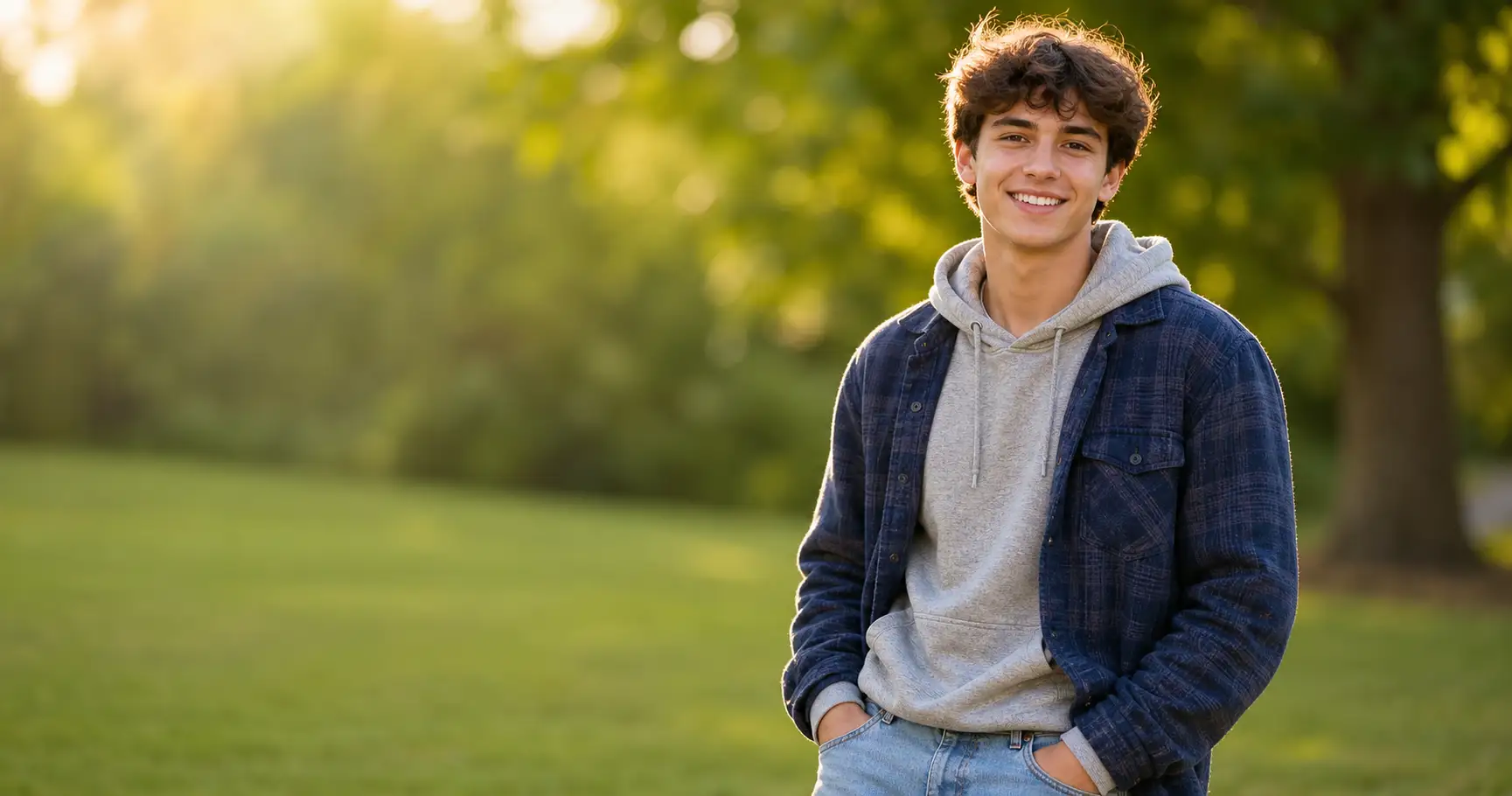
The whole point of senior pictures is one person, photographed right at the moment they are turning into themselves. There is no partner to coordinate with and no group to blend into. Most sessions also come with a few outfit changes built in. So the wardrobe job is not matching anyone. It is showing range and personality: a handful of looks that, side by side, say this is who they are.
Plan Two to Four Looks
Start with a number, not a closet. Most senior sessions include outfit changes, and the question parents ask first is how many to bring.
Match the count to the session length. Maris Kirs Photography recommends 2 outfits for a one-hour session, 3 to 4 for a two-hour session, and up to 6 for three hours. Two to four is the range most seniors actually use, and it is the right place to aim.
The mistake is to read that as a volume target and pack six near-identical hoodies. Volume is not the goal. Range is. Three looks that each say something different about the senior beat six that all say the same thing.
So pick a number, then range it on purpose. The simplest spread that covers a real person:
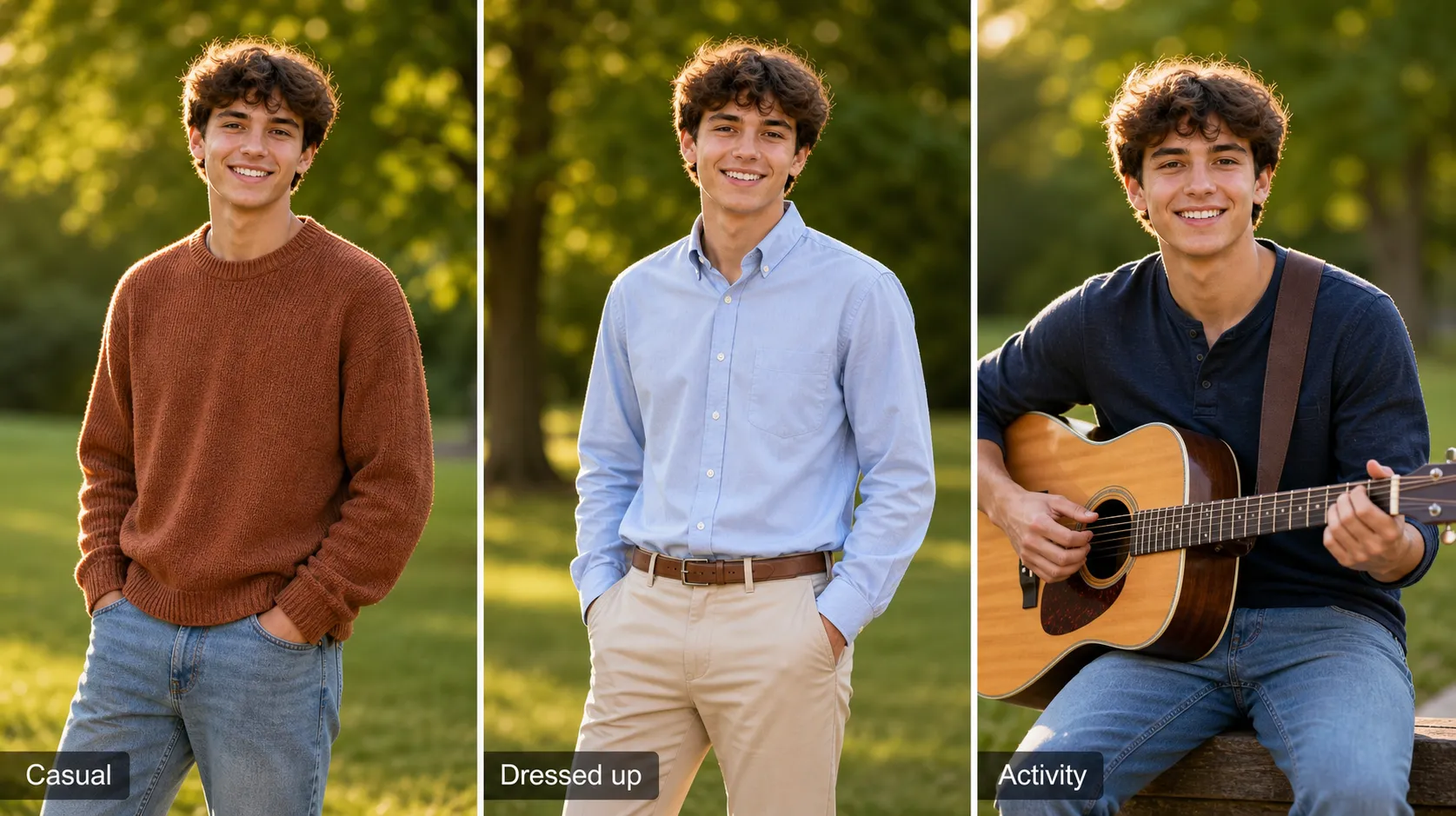
- One casual look. What they actually wear on a Tuesday. The photo that looks like them.
- One dressed-up look. A dress, a jumpsuit, or a button-down and tailored trousers. The frame-worthy shot grandparents want.
- One that shows an activity. A sport jersey, an instrument, a hobby. The photo only this senior could take.
If the package allows a fourth, add a second casual or a seasonal layer. The order matters less than the spread. Decide how many, then make every look earn its slot.
The same senior, three different slots. Casual, dressed-up, and an activity look, side by side.
Dress Like Who They Actually Are
Here is the part most outfit guides get backwards. They hand the senior a list of rules and hope a person shows up inside them. Run it the other way. Start with the senior, then let the rules clean up the edges.
This is the one shoot built entirely around them. A senior who lives in vintage band tees should be photographed in a vintage band tee, not a borrowed blazer they will never wear again. The picture is supposed to age into a yearbook and a hallway wall, and the version of them it should hold is the real one.
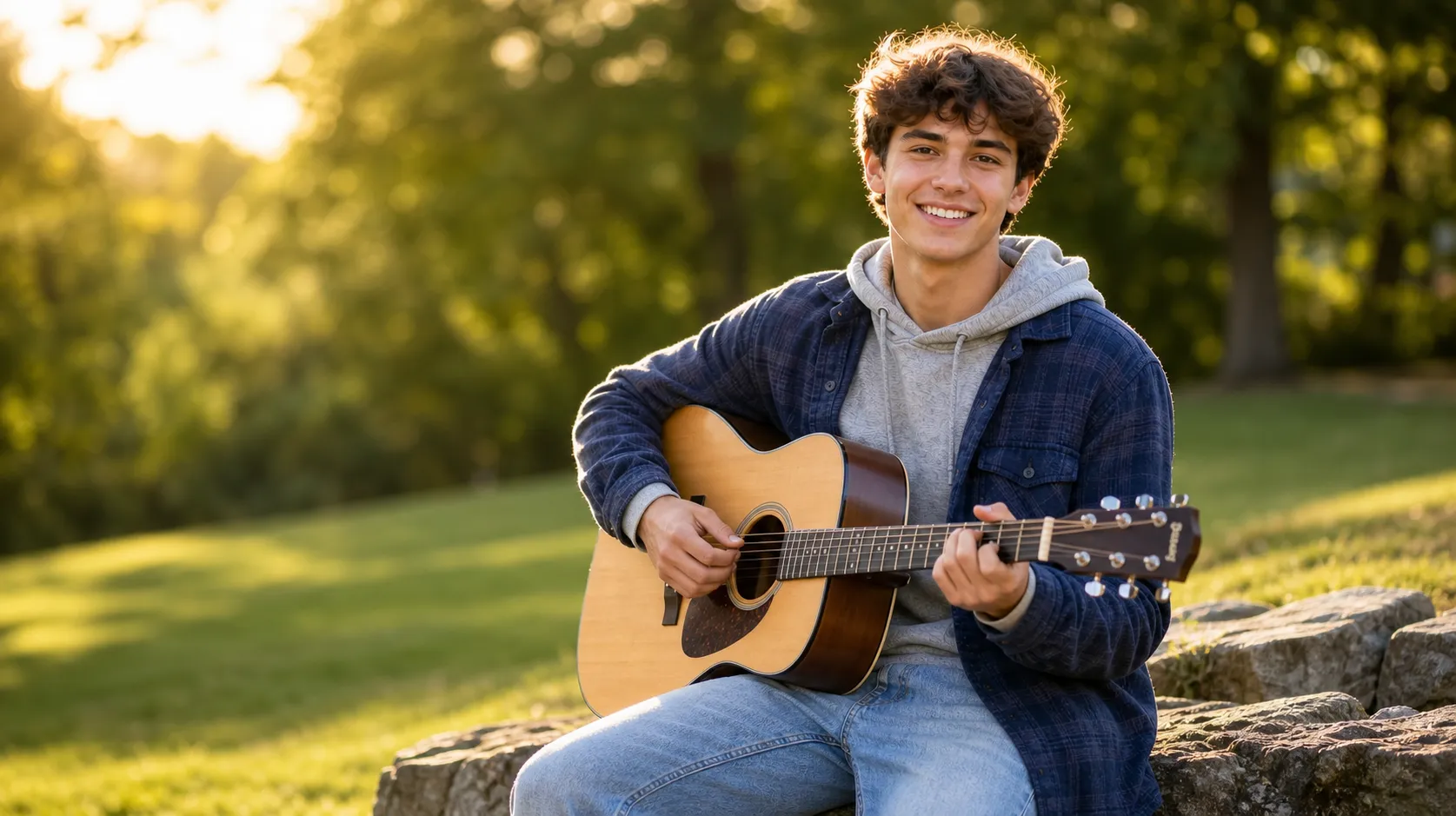
So let the senior lead. The activity look especially is where personality gets to walk in. Bring the actual thing:
- The varsity jersey, the cleats, the ball.
- The guitar, the violin, the drumsticks.
- The paintbrush, the camera, the well-loved skateboard.
- The team hoodie, the theater costume, the dance shoes.
A prop the senior loves does two jobs at once. It tells the viewer who they are, and it gives nervous hands something to hold, which loosens the whole pose. Generic rules make a generic photo. Personality makes a photo that could only be them.
Build the Looks From a Capsule
Knowing you want range is one thing. Generating the actual looks without dumping the whole wardrobe into a bag is another. A small capsule does it cleanly.
The tidiest version is the 3-3-3 rule. To be clear about where it comes from: it is a general capsule-wardrobe rule made popular by fashion creator Rachel Spencer, built for packing light on a trip, not for photo sessions. According to HELLO! magazine, it works like this: pick 3 tops, 3 bottoms, and 3 pairs of shoes, and those nine pieces mix and match into up to 27 outfits. Sterling Style Academy frames the same formula as a capsule built for mixing, and notes some versions swap the third group for 3 layers, like jackets or cardigans.
The senior is not going to shoot 27 looks. The number is not the point. The point is that nine pieces the senior already owns and likes can generate the two to four looks they need, without overpacking and without buying anything new.
A quick way to run it: lay nine favorite pieces on the bed, then build the casual, the dressed-up, and the activity look out of them. If three real outfits fall out easily, the set is good. If they fight each other, swap a piece and try again. Build the small set first. Pull the looks from it second.
Fit, and What Photographs Well
Fit comes before everything else here. A look that does not fit fights the senior in every frame: too tight rides up when they sit, too loose tents and hides them. The fastest test is to put each outfit on and move in it. Sit, bend, reach. If it pulls or rides, it limits the poses before the camera ever sees it.
After fit, only a couple of optics notes are worth flagging. Pure bright white tends to blow out, since the sensor cannot hold its full range and a clipped highlight cannot be recovered, per Canon’s dynamic-range guidance. Big logos and busy text pull the eye off the face. That is enough to keep in mind for a senior shoot. For the full screen of colors and patterns the camera handles badly, the detailed list lives in our guides on what to wear for pictures and what colors to wear in photos.
If you want to see how a look reads before the session, you can turn one selfie into an AI photoshoot and preview the senior’s colors and angles in good light. For the posing half of looking natural, see how to be photogenic, and the same prep scales down to the quick stuff like how to look good for picture day.
One paste-ready AI move a week, the kind you can use on a Tuesday or a Sunday. Subscribe to the newsletter and the Independent Brand Visual Kit, a set of copy-ready photo prompts, is yours free: join here.
The Parent-Teen Truce
There is usually a quiet standoff behind every senior session. The parent is paying, and pictures a polished, dressed-up shot for the announcement. The senior wants to look like the person their friends actually know. Both are right, which is why the looks should split the difference instead of one side winning.
The cleanest deal: the senior leads on taste, the parent steers on logistics. Their style, their props, their call on what feels like them. The parent makes sure one dressed-up look is in the bag for the grandparents, that everything fits and is clean, and that nothing finely striped or neon-bright sneaks in.
For parents, the move is to steer gently and let go of the rest. A senior who feels dressed as themselves relaxes, and a relaxed face photographs better than a perfect outfit on a stiff one. The photos that get framed years later are almost never the ones where the teen looks like someone else’s idea of them.
FAQ
Q: What is the 3-3-3 rule for clothes?
A: The 3-3-3 rule is a general capsule-wardrobe formula made popular by fashion creator Rachel Spencer: pick 3 tops, 3 bottoms, and 3 pairs of shoes, which mix and match into up to 27 outfits, per HELLO! magazine. Some stylist guides swap the third group for 3 layers like jackets or cardigans. It was built for packing light, not for senior photos, but it works perfectly to generate a few coordinated looks from one small set of clothes the senior already owns.
Q: How many outfits do you need for senior pics?
A: Match the number to the session length. Maris Kirs Photography suggests 2 outfits for a one-hour session, 3 to 4 for two hours, and up to 6 for three hours. Two to four is the range most seniors actually use. Aim for range over volume: one casual look, one dressed-up look, and one that shows a sport, instrument, or hobby covers more of who they are than six near-identical fits.
Q: Are you supposed to wear white for senior pictures?
A: No, and pure bright white is often the harder choice on camera. White reflects light back and clips to a flat patch before anything else in the frame, and a blown highlight cannot be recovered, per Canon’s dynamic-range guidance. If the senior loves a clean, airy look, cream or ivory keeps the softness without the blowout.
Q: What colors do not photograph well?
A: Neon and highly saturated colors are the main offenders. A saturated garment bounces its own color onto the skin and leaves a cast that reads unnatural, as Fstoppers explains. Pure bright white blows out, and head-to-toe black next to white pushes the scene to two extremes the sensor cannot hold. Muted, mid-depth colors and warm neutrals are the safe starting point.
Q: What not to wear for senior photos?
A: Skip anything that fights the camera or hides the senior: clothes that do not actually fit, pure bright white, neon or hot-saturated colors, tight fine patterns like pinstripes that can shimmer on camera, and big logos or text that date the shot and pull the eye off the face. Beyond that, let the senior wear what feels like them.
Key Takeaways
- Plan two to four outfit changes, matched to the session length, and range them across casual, dressed-up, and an activity look.
- Aim for range and personality, not volume. One sport, instrument, or hobby look does more than six near-identical fits.
- Let the senior lead on taste. Their real style, props, and personality make a photo only they could take.
- Build the looks from a small capsule, like the general 3-3-3 packing rule, so you generate outfits without overpacking.
- Fit comes first, then a couple of optics checks. The detailed color-and-pattern screen lives in the linked guides.
Let Them Look Like Themselves
Lay the planned looks out one more time and ask three simple questions. Is there a casual one, a dressed-up one, and one that shows what they love? Does each one fit and let them move? And does the senior, looking at the pile, actually recognize themselves in it?
Get those right and the photos hold the real person, not a costume version of them. And if you want a low-stakes dry run first, you can turn one selfie into a full AI photoshoot and preview how a coordinated, well-lit look comes together before the real session.