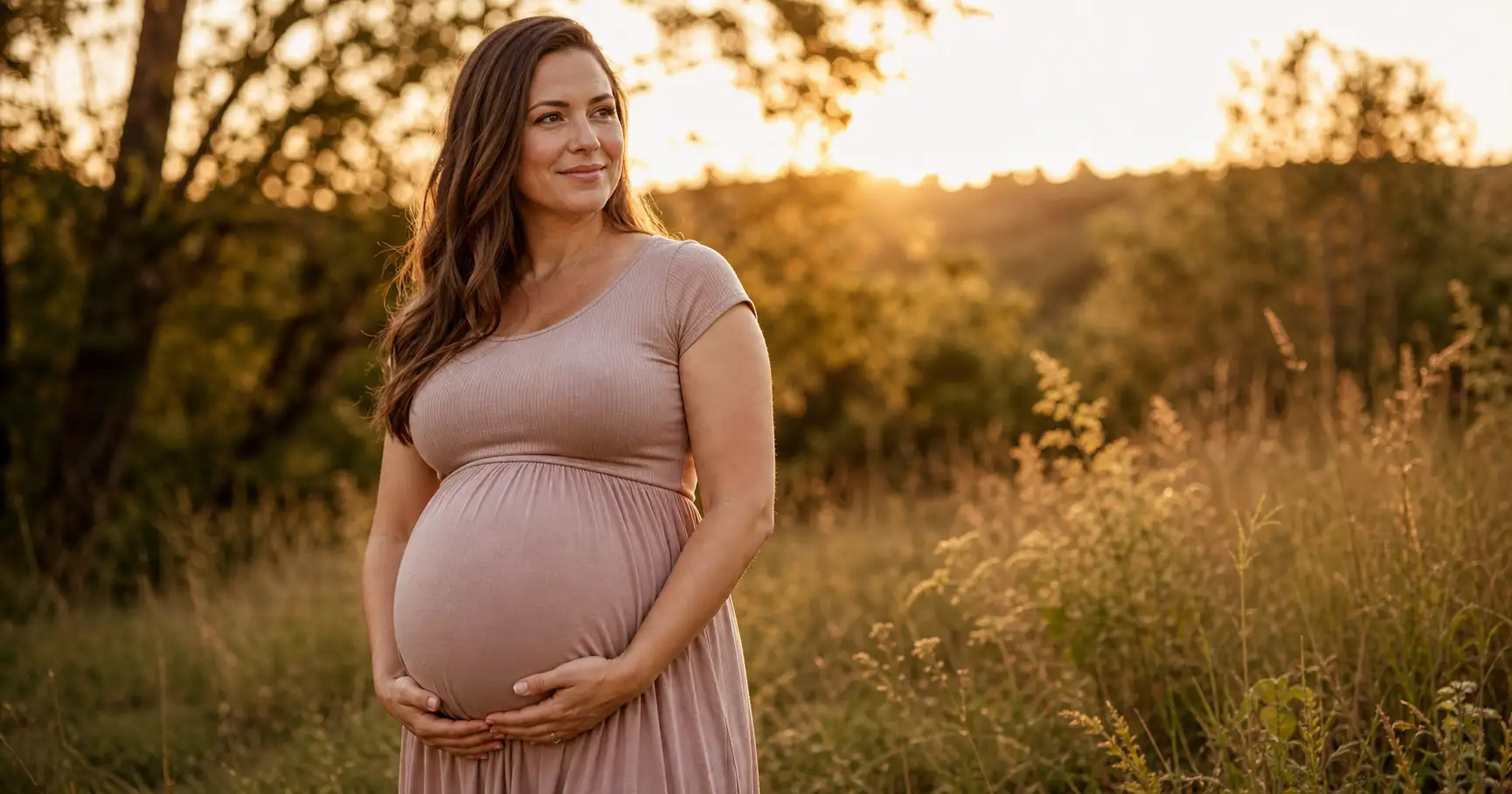
A maternity shoot has one job that no other shoot has. An engagement session is about two faces. A family session is about everyone in the frame. A maternity session is about one thing: the bump. Get the wardrobe wrong and you do not just look ordinary. You hide the single thing the whole afternoon exists to celebrate.
Here is where most of the regret comes from, and it is not the obvious place. It is rarely a dress that was too tight. It is almost always a loose, flowing dress that felt safe in the mirror and then, in the photos, read as “big” instead of “pregnant.” The fabric drowned the bump. The instinct to hide is the thing that backfires.
Skim, Don’t Tent
There is one rule that does more work than every other rule combined, so learn it first and let the rest follow from it.
Skim the bump. Do not tent it.
A tent is any dress that falls straight down from your bust like a curtain, the way a lot of loose maternity dresses do. It feels forgiving in the fitting room because it touches nothing. That is exactly the problem. With no fabric following the curve of the belly, the camera has no round shape to read, so it reads the widest line instead, which is the hem swinging out past your hips. You look bigger, not pregnant. The dress did its job. Its job just happened to be the opposite of yours.
Skimming is the fix. A skimming dress is cut close enough that the fabric rides over the bump and traces its outline, then keeps moving. You are not squeezing into anything. You are letting the cloth do what a tent refuses to do, which is admit there is a beautiful round shape underneath. Becca Jean Photography, whose maternity-wardrobe guide ranks first on Google for this exact question, puts the same idea in fitting terms: choose a dress that is snug to just above the belly, then let it flare from there.
Look at the difference. Same person, same color, same light. Only the fit changes.
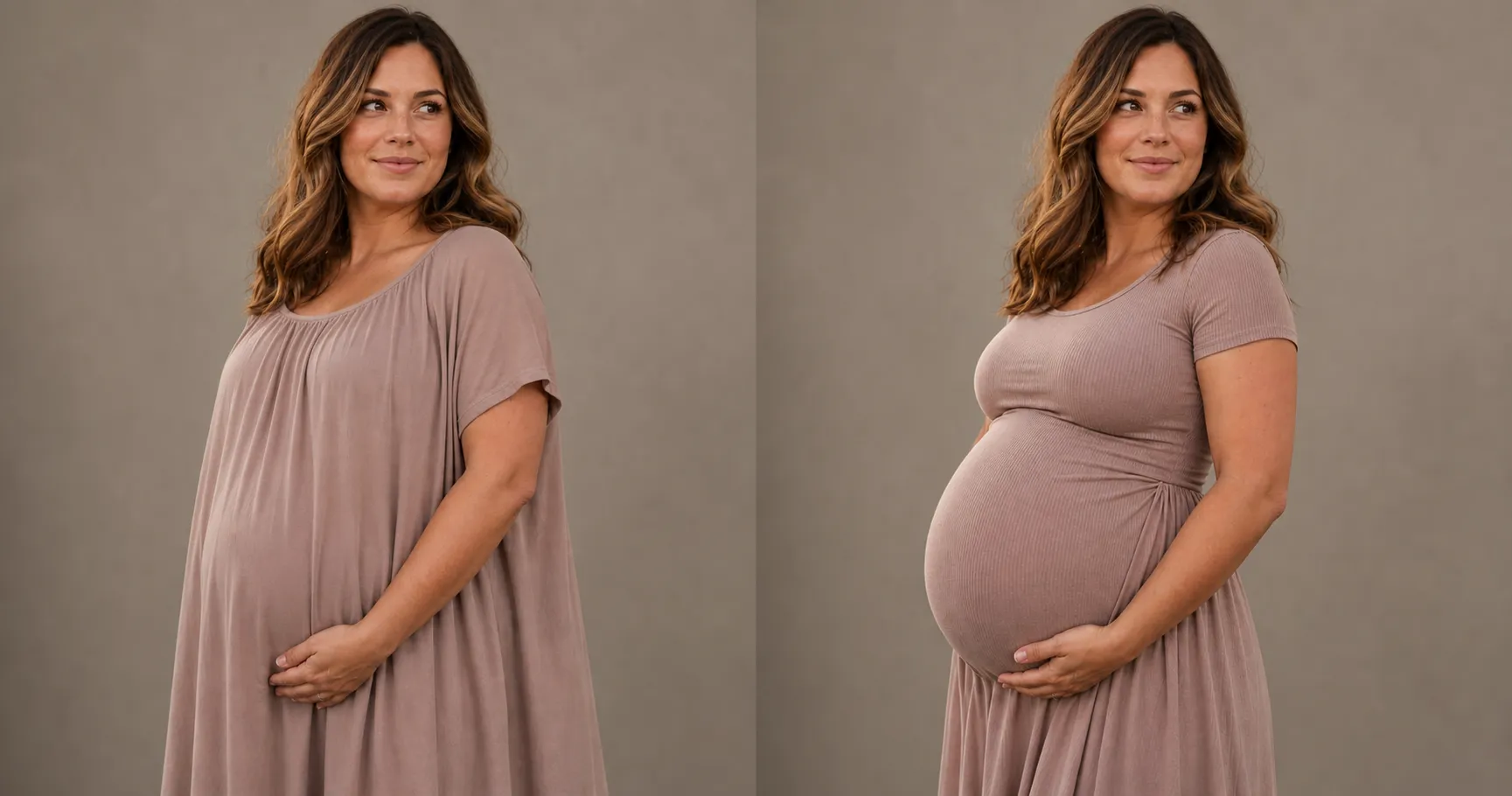
The tent reads as bigger. The skim reads as pregnant. The difference is not the body. The difference is whether the fabric follows the curve or runs from it. Everything that follows is a way of getting that one thing right.
Fabrics That Move
If skimming is the rule, fabric is how you obey it. A dress can be cut to skim and still fail, because a stiff fabric holds its own shape instead of yours. The cloth has to be soft enough to fall onto the bump and follow it.
Soft stretch knits are the workhorse here. Jersey, ribbed knit, and fine modal cling gently and drape over the curve instead of hanging off it. They move when you move, which matters more than it sounds, because the best maternity frames are rarely stiff and posed. They are a small twirl, a hand sweeping the belly, the skirt catching a little wind. A fabric that has some flow gives you those shots. A fabric that has none gives you a mannequin. PNW maternity photographer Neyssa Lee draws the same line, steering clients toward soft, draping fabrics like chiffon and jersey and away from stiff cotton and overly clingy stretch that catches every line.
Then there is the maternity designer’s quiet trick: ruching. Ruching is fabric gathered into soft folds along the side seam, and it does two jobs at once. It pulls the cloth snug across the front so it skims the bump, and the gathered folds stretch as you grow, so the same dress fits for weeks. If you are buying one thing for the shoot, buy the one with ruching at the sides.
You have a choice within the rule. A true bodycon dress, stretchy and fitted top to bottom, gives you the sharpest, most sculptural bump shape, which photographs beautifully standing still. A piece that skims on top and releases into a little flow below gives you movement and twirl shots instead. Neither is wrong. Bring one of each if you can, and you walk away with range.
Necklines and Silhouettes That Flatter
Fabric settles what the dress is made of. The neckline and the silhouette settle where it sits, and on a changing body that placement is the whole game.
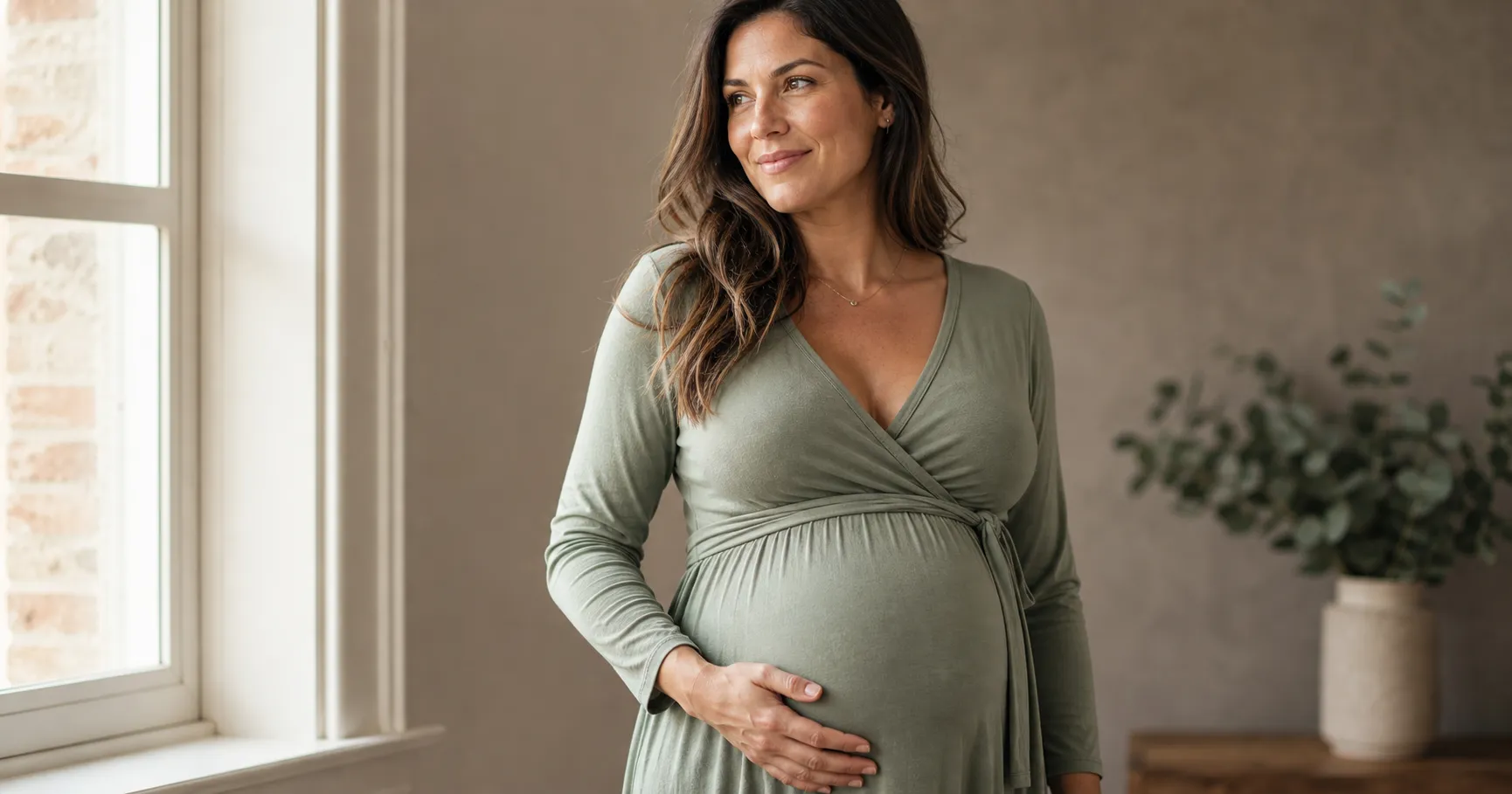
Start with the neck. A V-neck draws a long vertical line down the center of your body toward the bump, and it opens up the chest, which keeps the frame from feeling top-heavy as your bust fills out in late pregnancy. A wrap neckline does the same work and adds an adjustable closure you can loosen as the weeks pass. Both flatter far more reliably than a high, round, closed neck, which tends to read as a solid block above the belly.
Now the seam, which is where most dresses are won or lost. An empire silhouette places its waist seam just under the bust and above the belly, so the fabric falls clean and unbroken over the roundest part of you. A wrap silhouette ties at that same high point. The principle is simple and it is the one thing to remember about silhouette:
The seam belongs above the bump, not across it. Above it, the seam frames the curve. Across it, the dress fights the curve.
That is why the empire and the wrap keep winning for maternity. They put the structure of the dress exactly where it flatters, and they leave the bump itself in smooth, uninterrupted cloth.
How you then stand and turn to use that silhouette is its own skill, and it is covered in our guide on how to be photogenic.
One paste-ready AI move a week, the kind you can use on a Tuesday or a Sunday, plus the Independent Brand Visual Kit free when you sign up: join the newsletter here.
If you want a low-stakes dry run before you commit to a dress, you can turn one photo into a full AI photoshoot and see how a skimming, soft-toned look reads on camera first.
When in Your Pregnancy to Shoot
The right dress only pays off if the bump is ready for it, and that is a question of timing. Treat what follows as scheduling guidance from photographers, not medical advice; the only person who knows the right week for your body is you.
Most photographers point to a similar window. Candid Studios calls about 30 to 36 weeks the sweet spot, when the bump is full and round but you are usually still comfortable enough to stand and move for an hour. If you are carrying multiples, the same guide suggests booking earlier, around 26 to 30 weeks, since the belly tends to show sooner. If you have been pregnant before and show early, lean toward the front of the window too.
The wardrobe reason to wait is straightforward. The fuller the bump, the more a skimming fabric has to grip, and the more clearly that round shape reads on camera. A skimming dress on a barely-there bump is just a fitted dress. The same dress at 34 weeks is a maternity portrait. Time it so the fabric has something to follow.
Color, and Bringing in a Partner
Color is the easy part, and it stays easy if you do not overthink it. Soft solid tones like ivory, blush, sage, taupe, and the warm earth tones are the reliable default, because a solid color keeps the eye on the bump and your face instead of on a busy print or a big logo. One quiet caution from camera optics: skip stark bright white outdoors, where it can blow out next to skin. The full logic, including which colors suit which complexion, is its own subject covered in our guides on what to wear for pictures and what colors to wear in photos.
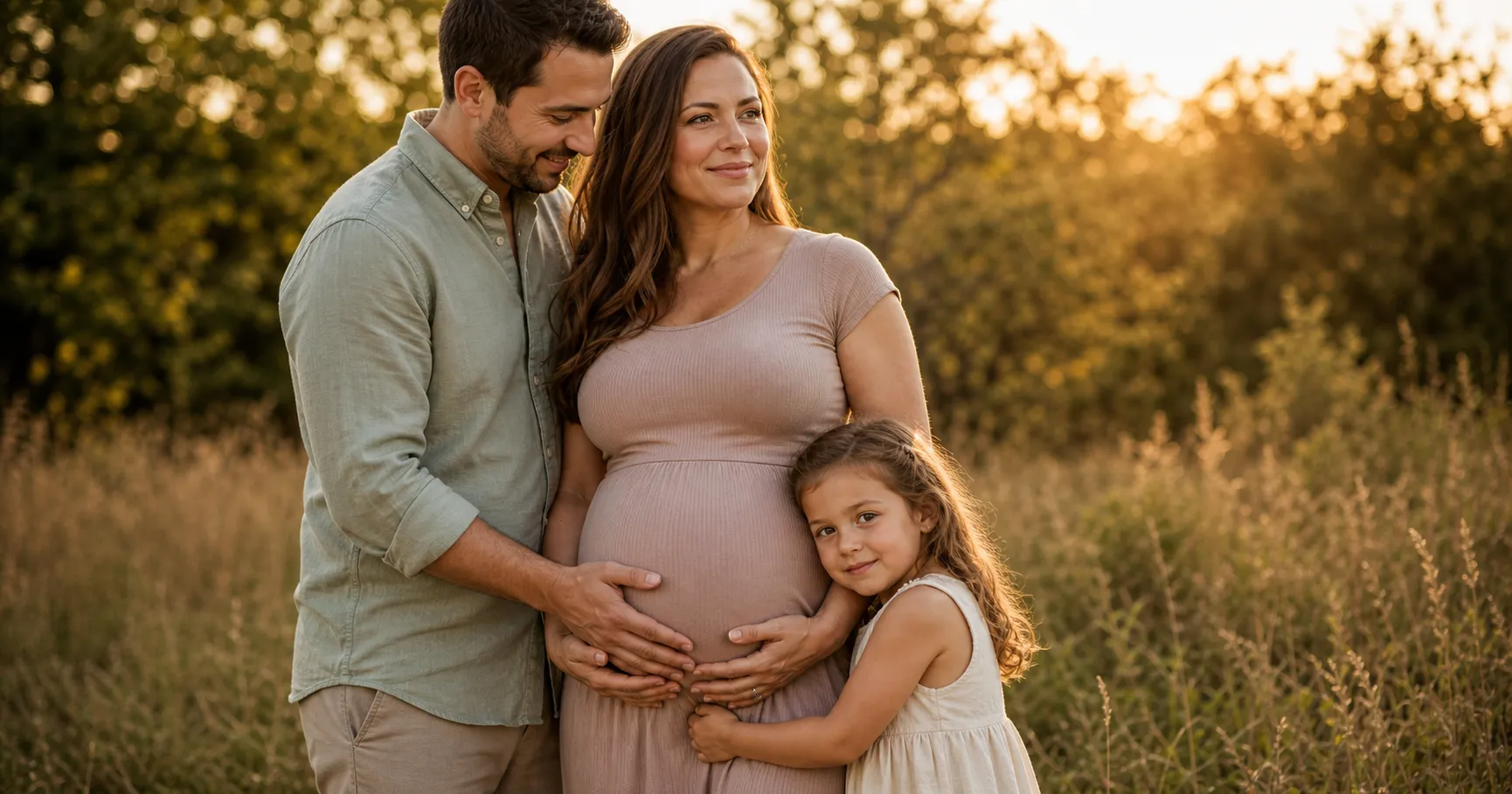
If a partner or an older child is in the frame, coordinate, do not match. Pull one or two shades from your palette and dress them in those, so a partner in a soft sage shirt and a sibling in cream sit in the same family of tones without anyone wearing the identical thing. The same soft-solid rule applies to them: nothing loud, nothing that competes with the bump for the eye. The same coordinate-the-look thinking runs through the engagement-photo wardrobe guide, tuned here for one bump plus the people around it.
Once the outfits are settled, the other half of a good session is what you do with them. Our maternity photo ideas and poses guide covers how to stand and frame the bump, and if you are sharing the news with these images, see our pregnancy announcement photo ideas.
FAQ
Q: Should I wear fitted or loose clothes for maternity photos?
A: Fitted, or at least fitted on top. A maternity shoot has one job the others do not, which is to show the bump, and a loose tent works against it: the fabric falls straight from the bust and you read as simply bigger, not pregnant. Stretchy fabric that skims the curve shows the round shape while still feeling comfortable. If you love a flowing gown, look for an empire or wrap style with a seam that sits just above the bump.
Q: What is the best fabric for maternity photos?
A: A soft stretch knit. Jersey, ribbed knit, and fine modal cling gently and follow the curve of the bump instead of hanging off it, which is exactly what you want on camera. Ruching gathered at the side seam is the maternity designer’s trick: it pulls the fabric snug across the belly and skims the shape. Save heavy, stiff fabric for a coat, not the dress, because stiff cloth holds its own shape instead of yours.
Q: What neckline is most flattering for maternity photos?
A: A V-neck or a wrap. Both draw a long vertical line down toward the bump and open up the chest, which keeps the frame from feeling top-heavy as your bust changes. An empire or wrap silhouette places its seam just under the bust and above the belly, so the fabric falls cleanly over the roundest part. The seam is the whole game: above the bump it frames the curve, across the middle of it the dress fights the shape.
Q: What month of pregnancy should you do maternity photos?
A: Most photographers point to about 30 to 36 weeks. The bump is full and round but you are usually still comfortable enough to enjoy the session. Candid Studios calls 30 to 36 weeks the sweet spot, and suggests 26 to 30 weeks if you are carrying multiples. If you have been pregnant before and show sooner, lean toward the earlier end. This is scheduling guidance from photographers, not medical advice, so pick the week your own body feels best.
Q: What color should I wear for maternity photos?
A: Soft solid tones like ivory, blush, sage, taupe, and warm earth tones are the reliable default, because a solid color keeps the eye on the bump and your face instead of on a busy print. One quiet caution from camera optics: skip stark bright white outdoors, since it can blow out next to skin. The full logic by skin tone lives in our guide on what colors to wear in photos.
Key Takeaways
- Skim the bump, don’t tent it. Fabric that follows the curve reads as pregnant; a loose tent reads as bulk.
- Pick a soft stretch knit such as jersey or ribbed, and look for ruching at the side that pulls the cloth snug and grows with you.
- Choose a V-neck or wrap, and keep the dress seam above the bump, never across it.
- Shoot around 30 to 36 weeks, earlier for multiples or if you show sooner; this is photographer scheduling guidance, not medical advice.
- Color is the easy part: soft solids keep the focus on the bump, and a partner or sibling should coordinate, not match.
One Last Check Before the Shoot
Hold the dress up and ask one question, the one the whole shoot turns on. If you put it on, will the fabric follow the round shape of the bump, or will it fall straight past it and hide the very thing you are there to photograph?
And if you want to see a skimming, soft-toned version of yourself before the day arrives, turn one photo into an AI photoshoot and preview how it comes together.